Pick up a modern smartphone and you are holding a small piece of aerospace engineering in your hand. The frame around the screen, the part that takes the knocks when the phone is dropped, is often made from a metal that is stronger than steel, lighter than aluminium, and stubbornly resistant to rust. It is not pure titanium, though the marketing may say so. It is a titanium alloy — titanium mixed with a small amount of other metals, carefully chosen to make it stronger, easier to shape, and better suited to the job it has to do.
A titanium alloy is, in plain terms, titanium with help. Pure titanium is already a remarkable metal: light, strong, and almost immune to corrosion. But on its own it is soft, hard to machine, and not as strong as engineers would like. Mix in a little aluminium and a little vanadium, and you get a material that is far stronger, still light, and still resistant to salt water and heat. That mixture, known as Ti-6Al-4V, is the most widely used titanium alloy in the world, and it turns up in jet engines, racing cars, medical implants, and the phone in your pocket.

What Goes Into the Mix
An alloy is a mixture, and the recipe matters. Titanium alloys are grouped by what is added to the titanium and by the crystal structure that results. The most common group, called alpha-beta alloys, mixes titanium with aluminium, which stabilises one crystal form, and vanadium, which stabilises another. The combination gives a metal that is strong at room temperature, reasonably easy to forge and machine, and able to be heat-treated to make it stronger still. Ti-6Al-4V — six percent aluminium, four percent vanadium, the rest titanium — is the workhorse of this family, and it accounts for more than half of all titanium alloy used.
Why It Is Strong and Light
The numbers explain the appeal. Titanium has a density of about 4.5 grams per cubic centimetre, against about 7.8 for steel and 2.7 for aluminium. That makes it roughly forty percent lighter than steel, while a good titanium alloy can be as strong as many steels, and stronger than aluminium by a wide margin. That is why it is used where every gram counts.
Strength is only part of the story. Titanium alloy is also remarkably resistant to corrosion, because it forms a thin, invisible layer of titanium oxide on its surface the moment it meets air. That layer seals the metal underneath, and if it is scratched, it reforms almost instantly. Salt water, which eats steel and pits aluminium, barely touches titanium alloy, which is why it is used in submarines, offshore platforms, and ship parts that live permanently in the sea.
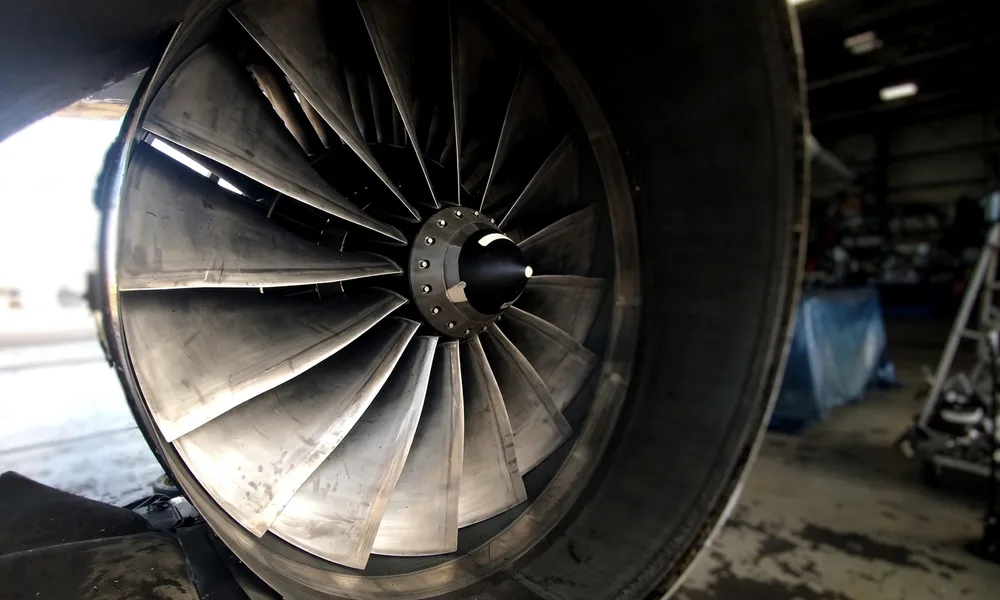
Heat is the third part of the appeal. Titanium alloy keeps much of its strength at temperatures where aluminium would soften and fail, up to several hundred degrees Celsius for the common grades, and higher for the specialist ones. That is why it is used in jet engines, where the metal must survive hot gas and high stress at the same time, and in exhaust systems, where the heat is intense and the weight must be low. The guide to how a titanium exhaust system is made shows the metal in one of its most demanding jobs, bent and welded into a system that must be light, strong, and heat-proof all at once.
How It Is Made, and Why It Costs So Much
Titanium alloy is expensive, and the reasons start with the raw material. Titanium is abundant in the Earth’s crust, but it is almost never found as a pure metal; it is locked up in ores, mainly ilmenite and rutile, and extracting it takes a long, energy-hungry process. The ore is converted to titanium tetrachloride, a corrosive liquid, which is then reduced with magnesium in a sealed vessel at high temperature, producing a spongy mass of titanium called sponge.

Where You Will Find It
The most famous home of titanium alloy is the sky. Jet engines use it for fan blades, discs, and casings, where the combination of light weight, strength, and heat resistance is unmatched. Airframes use it for fasteners, brackets, and structural parts, especially in the hot areas near the engines and in the landing gear, where strength matters most. Spacecraft use it for pressure vessels, brackets, and engine parts, where every gram saved is a gram of payload gained.
On the ground, it appears in the places where performance matters more than price. Racing cars use it for suspension parts, exhausts, and fasteners, saving weight where it counts most — the unsprung parts that must move with the wheels. Bicycles use it for frames that are light, springy, and immune to rust. Golf clubs use it for heads that must be light and strong. And consumer electronics use it for frames and cases, where the metal’s feel, its resistance to scratches, and its premium look are part of the product. The phone frame that prompted this article is the most recent, and the most everyday, example.
The Grades, and How to Tell Them Apart
Not all titanium alloys are the same, and the grading system tells you what you are looking at. The most common grade, Ti-6Al-4V, is often called Grade 5, and it is the default choice for engineering: strong, reliable, and widely available. Grade 23 is a purer version of the same alloy, with lower oxygen and iron, used for medical implants where purity matters. Commercially pure titanium, Grades 1 to 4, is unalloyed or lightly alloyed, softer and more formable, and used where corrosion resistance matters more than strength, such as in chemical plants and marine fittings.
The comparison with other metals is instructive. Aluminium is cheaper and easier to work, but it is weaker and it softens at high temperature. Steel is cheaper and stronger in absolute terms, but it is heavy and it rusts. A titanium alloy is the compromise that is not really a compromise: it gives up a little strength to steel and a little lightness to aluminium, and in return it gives corrosion resistance and heat resistance that neither can match. The guide to how a smartphone titanium frame is made shows the metal in a consumer product, where the same trade-offs — weight, strength, and finish — decide whether it is worth the cost. Aluminium forging, covered in the guide to how aluminium forging is made, shows the same balance of weight, cost, and strength in a cheaper metal.
What Comes Next for the Metal
A titanium alloy, then, is titanium made better by company: a small addition of aluminium and vanadium, or of other metals, that turns a good metal into a great one. It is stronger than steel for its weight, lighter than steel by a wide margin, resistant to salt water and heat, and tolerated by the human body. It is expensive, hard to make, and hard to work, and it is used sparingly, where it earns its keep. But in those places — in a jet engine, in a racing car, in a hip replacement, in the frame of the phone in your hand — there is nothing else that does the job quite as well.


