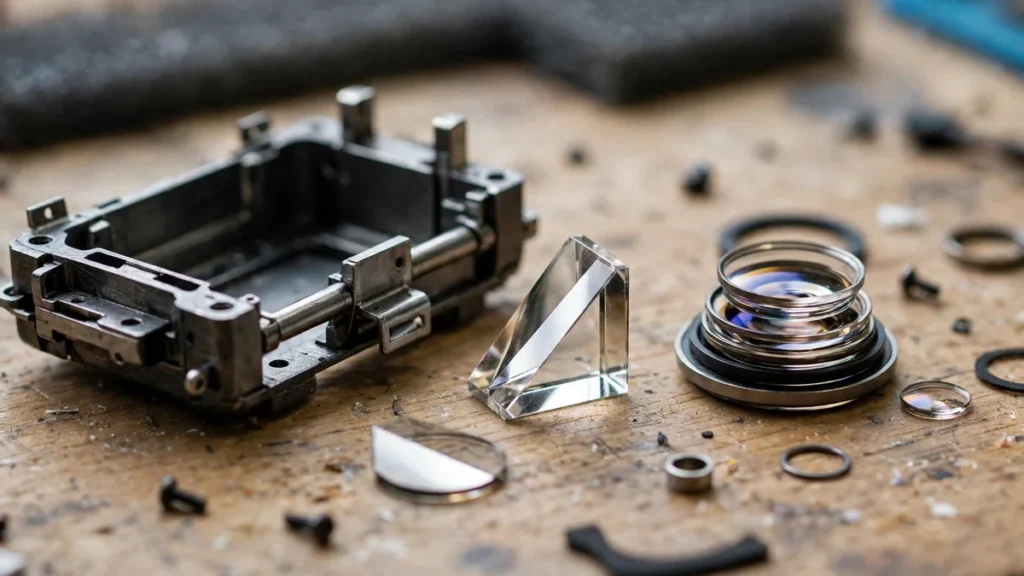
Fold a sheet of glass in half and it shatters. Fold a phone screen in half, two hundred thousand times, and it is supposed to keep glowing as if nothing happened. That contradiction is the central drama of the foldable display: a screen that must be as flexible as paper and as durable as a window, thin enough to bend around a hinge yet tough enough to survive pockets, keys and daily abuse. The materials that make it possible did not exist in a usable form twenty years ago, and some of them were invented specifically for this one impossible job.
The first foldable phones were fragile, and everyone knew it. Screens creased, dust crept under the surface, and a single grain of sand could kill a display. The machines that followed were a quiet revolution in materials science, built on glass thinner than a human hair and adhesives that stretch without peeling. To understand a foldable phone, you have to stop thinking of a screen as a solid object and start thinking of it as a stack of skins.
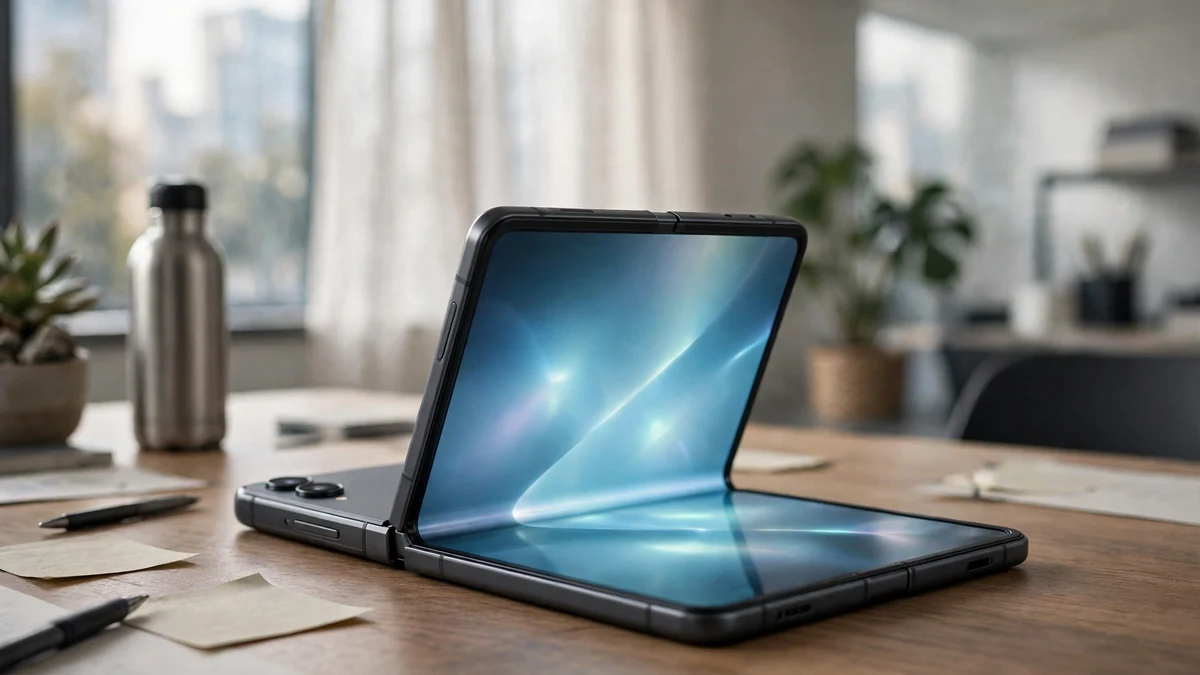
The Materials Behind the Display
The foundation is a flexible OLED panel, built not on rigid glass but on a base of polyimide, a amber-coloured polymer that survives the high temperatures of display manufacturing and then bends like film. On top of the polyimide sit the thin-film transistors that switch each pixel, made from low-temperature polycrystalline silicon, and the organic light-emitting layers themselves, compounds that glow red, green or blue when current passes through them. The whole stack is sealed under a thin-film encapsulation of alternating ceramic and polymer layers, because a single molecule of water reaching the organic layers would kill the pixel it touches.
The most famous layer is the cover: ultra-thin glass, or UTG, a sheet of chemically strengthened glass just 30 microns thick, about a third the width of a human hair. At that thickness glass becomes flexible, bending without breaking, yet it still feels like glass under a fingertip and resists scratches far better than any plastic. Below the UTG sits a layer of pressure-sensitive adhesive engineered to stretch and relax with every fold. The hinge that carries all of this is its own masterpiece of engineering, as described in how a foldable phone hinge is made, and the display it protects descends from the rigid panels explained in how an OLED display panel is made.
Every layer in the stack must bend at a different radius, because the layers on the outside of a fold travel further than the layers on the inside. Engineers solve this with a neutral plane, a mathematical sweet spot in the stack where stretching and compression cancel out, and they place the fragile transistor layer exactly there. It is less like building a screen and more like tailoring a suit that must survive being folded in half every day.
How It Is Made
A foldable display starts as a flat sheet in a cleanroom and ends as a stack of films that can survive a lifetime of folding. The manufacturing runs through six key steps.
- Coat the polyimide base. Liquid polyimide is spread over a rigid glass carrier and baked into a flexible film, giving the display a substrate that can later be peeled away.
- Build the transistors. Thin-film transistors are deposited layer by layer using photolithography, with the fragile circuits placed on the stack’s neutral plane.
- Deposit the OLED layers. Organic light-emitting materials are evaporated onto the panel in a vacuum chamber, pixel by pixel, through fine metal masks.
- Seal the panel. Alternating layers of ceramic and polymer are deposited over the OLEDs, forming a barrier that blocks water and oxygen from reaching the organic materials.
- Peel and laminate. The flexible panel is laser-lifted from its glass carrier, then laminated to ultra-thin glass and protective films with stretchable adhesive.
- Fold-test every panel. Each display is folded and unfolded by machine thousands of times, inspected for dead pixels and creases, and only the survivors are fitted to phones.

Why These Materials Win
Polyimide wins because it is one of the few polymers that can survive the temperatures of transistor manufacturing and still bend without cracking. Ultra-thin glass wins because it restores the hard, premium feel of a glass screen while bending like plastic, and because it blocks water and oxygen far better than any polymer film. The viscoelastic adhesives win because a rigid glue would peel or crack within weeks of folding, while these soft layers absorb the movement and spring back. The ceramic-polymer encapsulation wins because it keeps the fragile organic layers alive for years, even though it is thinner than a coat of paint.
The failures tell the same story in reverse. A crease that deepens over time means the neutral plane was miscalculated. A dead line of pixels at the fold means a transistor cracked under repeated stress. A cloudy patch means moisture breached the encapsulation. Each failure pushed engineers toward thinner glass, softer adhesives and smarter stack design. The next frontier is displays that roll or stretch rather than fold, and the materials lessons learned here will shape them too, just as they are already shaping the tiny, brilliant panels of the future, like the technology in what a Micro-LED display is really made of.
Specifications
| Specification | Detail |
|---|---|
| Panel type | Flexible AMOLED on polyimide substrate |
| Cover glass | Ultra-thin glass, about 30 microns thick |
| Transistors | Low-temperature polycrystalline silicon (LTPS) |
| Encapsulation | Alternating ceramic and polymer thin films |
| Adhesive | Viscoelastic pressure-sensitive adhesive |
| Fold durability | Rated for 200,000 folds or more on recent models |
| Bend radius | As tight as about 1.5 millimetres at the fold |
| Panel thickness | Well under 1 millimetre for the display stack |
Price
The foldable display is the single most expensive part of a foldable phone, and its price dominates the repair bill. Official screen replacements for flagship foldables typically cost several hundred dollars (estimate), and in some markets an inner-display replacement can approach half the price of the phone itself (estimate). The panel itself is estimated to cost manufacturers several times more than a rigid phone display of the same size (estimate), because the yields are lower and every panel must survive a gruelling fold test before it ships.

Rare Fact
The ultra-thin glass in a foldable phone is made by taking ordinary display glass and thinning it down with acid until it is just 30 microns thick, then chemically strengthening it by exchanging small sodium ions for larger potassium ions. At that thickness the glass is so flexible it can be rolled into a tube, and yet a single sheet of it still protects the fragile organic display beneath from scratches, water and oxygen. Early foldables used only plastic covers, and they scratched if you looked at them too hard; the arrival of ultra-thin glass is the main reason modern foldables feel like real phones instead of fragile prototypes.
That is the marvel of the foldable display: a screen that behaves like paper, protects like glass, and survives being folded in half more times than most people will open their phone in a year. It is a stack of materials that were never meant to meet, bent into a shape that glass was never meant to take, and it works because every layer was designed to forgive the movement of the layers around it.