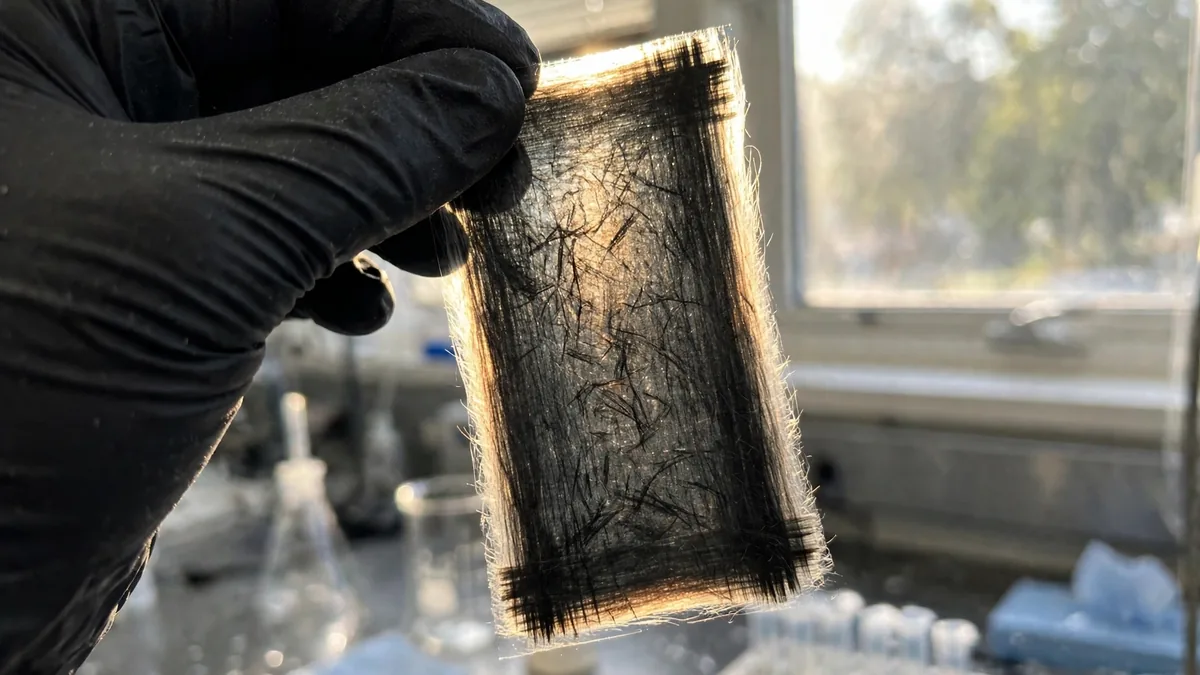
In a laboratory outside Manchester, a researcher holds up a sheet of material so thin it is almost invisible, then folds it, stretches it and lays it across two pencils like a tiny bridge. It is graphene, a single layer of carbon atoms arranged in a honeycomb, and by weight it is stronger than steel and more conductive than copper. The researcher smiles and says the sheet in her hand is worth more than the equipment around it. The room laughs, but she is not joking.
Graphene was first isolated with sticky tape and a pencil, which makes its price seem like a trick. The catch is that a flake in a lab is not a product. Turning graphene into a composite, a material that can be built into a bike frame, a car panel or an aircraft wing, means making it pure, making it in quantity, and mixing it evenly into resins and fibres without clumping or breaking. Every step is difficult, and the few companies that can do it well charge accordingly. This is why it costs so much.
Why It Costs So Much
Reason 1: Pure graphene is extraordinarily hard to make
Graphene is one atom thick, and making it without defects is a battle against physics. The best material comes from chemical vapour deposition, where carbon gas is laid down atom by atom onto copper foil in a furnace running at around 1,000 degrees Celsius. The process is slow, the yield is low, and a single speck of dust can ruin a sheet. Cheaper methods, like exfoliating graphite, produce flakes of mixed sizes and quality that do not perform the same way. The gap between lab-grade graphene and industrial-grade graphene is the first reason for the price.
Reason 2: Mixing it into a composite without ruining it
Graphene’s strength comes from its perfect honeycomb of carbon atoms, and that structure is easily damaged. Stir graphene flakes into a resin too roughly and they clump together; handle them too gently and they never spread evenly. Manufacturers use high-shear mixers, ultrasonic baths and careful chemistry to disperse the flakes, then lock them in place as the resin cures. The science of getting that dispersion right is told in how a graphene composite works, where the flakes, the resin and the fibres must all cooperate. A badly mixed composite can be weaker than the material it was meant to improve.
Reason 3: The raw material is scarce at high quality
High-quality graphite, the starting point for most graphene, is mined in only a handful of places, and the best natural flake graphite is a limited resource. Synthetic routes need expensive precursors, furnaces and gases, and the energy bill alone is large. A kilogram of research-grade graphene powder can cost thousands of dollars, and a finished composite part uses only a small fraction of graphene by weight, yet that small fraction dominates the material bill. Until production scales up, which it has been promising to do for a decade, prices stay high.

Reason 4: Testing is slow, specialised and expensive
A composite that will fly in an aircraft or carry a rider down a mountain must be tested to destruction, and graphene composites are tested with tools most factories do not own: electron microscopes, Raman spectrometers and fatigue rigs that cycle a part millions of times. Each batch must be checked for dispersion, bonding and defects, because a void the size of a pinhead can start a crack. The testing is done by specialists, the equipment costs a fortune, and certification paperwork adds months and money.
Reason 5: The labour is rare and highly trained
There are not many people in the world who know how to handle graphene at scale. The work sits at the crossing of chemistry, materials science and manufacturing, and a technician who can run a deposition furnace, read a Raman spectrum and lay up a composite panel is a rare hire. Companies compete for a small pool of experts, and their salaries are reflected in the price of every part. Training a new team takes years, and a single mistake by an inexperienced hand can scrap a batch worth thousands.
Reason 6: Tiny volumes spread huge development costs
Graphene composites are still a young industry, and most parts are made in small runs for racing teams, aerospace trials and premium products. The research, the tooling and the certification for a single part are spread across a handful of units, so each one carries a large share of the development cost. The related world of carbon nanotubes faces the same economics, as discussed in why the carbon nanotube composite is so expensive, and both materials are waiting for the day when volume production finally arrives. The materials science behind the composites, from fibres to resins, is covered in graphene composite materials engineering.
Graphene Composite at a Glance
| Feature | Detail |
|---|---|
| What it is | Graphene flakes or sheets dispersed in a resin or fibre matrix |
| Thickness of graphene | One atom, about 0.34 nanometres |
| Strength | Around 200 times stronger than steel by weight |
| Conductivity | Excellent electrical and thermal conductor |
| Typical loading | Often under 1 percent graphene by weight |
| Common uses | Bike frames, car panels, helmets, aircraft parts, batteries |
| Production method | Chemical vapour deposition or graphite exfoliation |
| Key challenge | Even dispersion without damaging the flakes |
What Does It Cost?
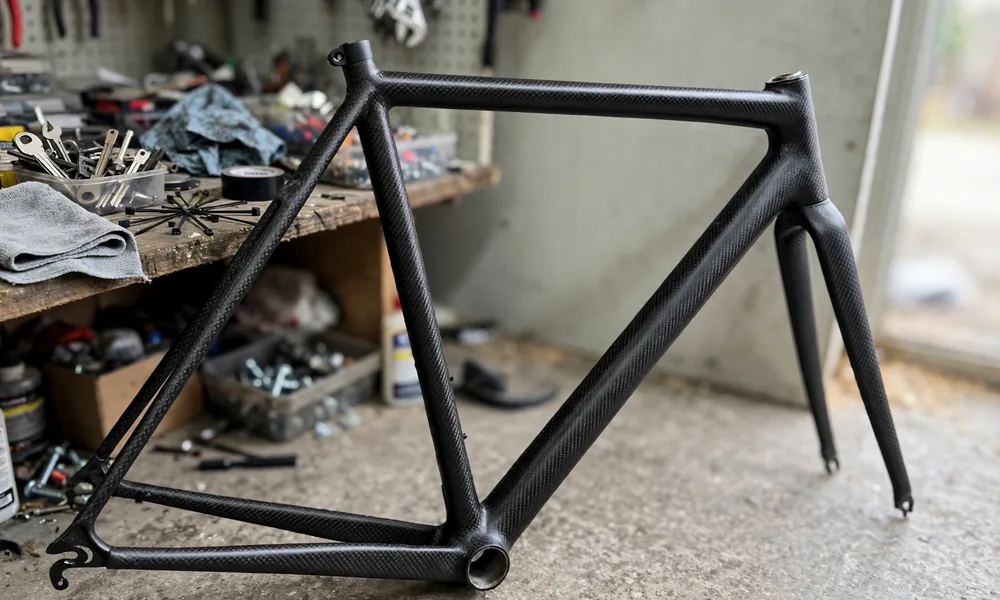
As rough estimates, research-grade graphene powder typically costs around $100 to $1,000 per gram depending on quality, a graphene-enhanced resin costs roughly $200 to $500 per kilogram, and a finished composite part, such as a bike frame, can run from about $2,000 to $8,000 or more. Those figures are estimates, not quotes, and the real number depends on the grade, the supplier and the part. The graphene itself is usually the largest single share of the material cost, followed by labour and testing, with tooling and certification making up the rest. Prices fall a little each year, but slowly.
| Part of the cost | Estimated share of the cost |
|---|---|
| Graphene material | About 35 to 45 percent |
| Resins, fibres and lay-up | About 20 to 25 percent |
| Labour and handling | About 15 to 20 percent |
| Testing and certification | About 10 to 15 percent |
A Rare Fact
Graphene was first isolated in 2004 by two researchers at the University of Manchester, Andre Geim and Konstantin Novoselov, using sticky tape to peel layers from a lump of graphite, the same material found in a pencil. They won the Nobel Prize in Physics in 2010, just six years later, one of the fastest Nobel awards in history. The tape method is still used in labs today, and a piece of graphene made that way can be lifted with a piece of tape, folded, and still conduct electricity. The most expensive material in the world began as a Friday-night experiment with office supplies.
A graphene composite looks like dark plastic or carbon fibre and is priced like a precious metal, because in a sense it is one: a material one atom thick, made in furnaces at a thousand degrees, mixed by specialists, and tested with instruments most factories will never own. It costs so much because purity is hard, dispersion is harder, volumes are tiny, and the people who can do it are few. Pay for all of that and you get a part lighter and stronger than anything else on earth; wait for the price to fall, and you may be waiting a while.


