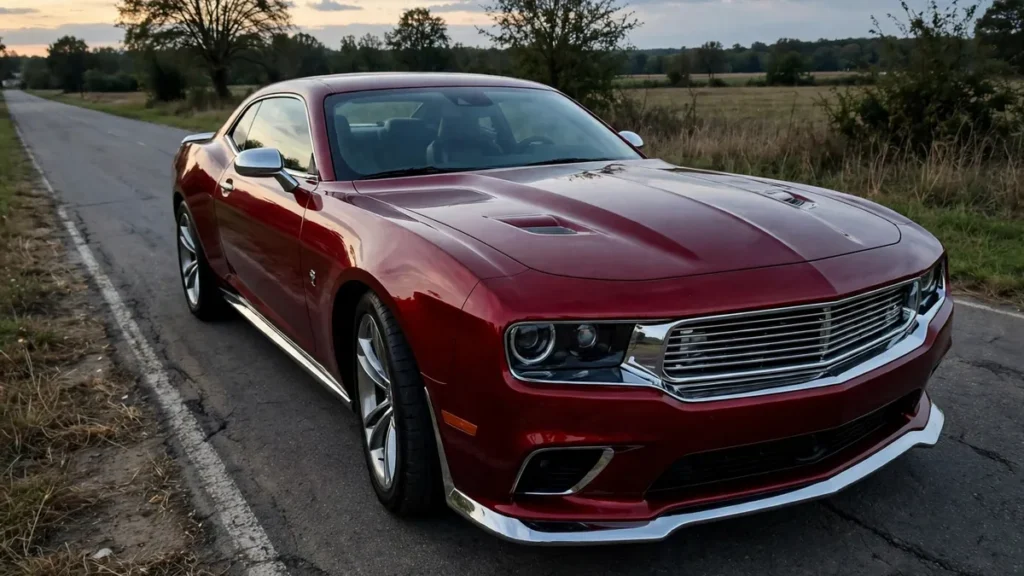
Pick up a hypercar wheel and something feels wrong. It is far too light for its size. A wheel that looks like it should weigh as much as a suitcase lifts with two fingers, and the weave of black carbon fibre catches the light like woven cloth. It looks less like a car part than something from a racing yacht — and making one takes the same kind of care, equipment and money.
Carbon wheels are the most extreme example of a simple idea: weight is the enemy. Every kilogram a wheel carries has to be spun up, slowed down and steered, and a lighter wheel makes a car faster, sharper and more comfortable. Forged alloy wheels are already light, but carbon fibre goes further still. The catch is that a carbon wheel is not cast or machined. It is built, layer by layer, by hand, from a material that costs a fortune and tolerates no mistakes — which is why a set can cost more than a good used car.
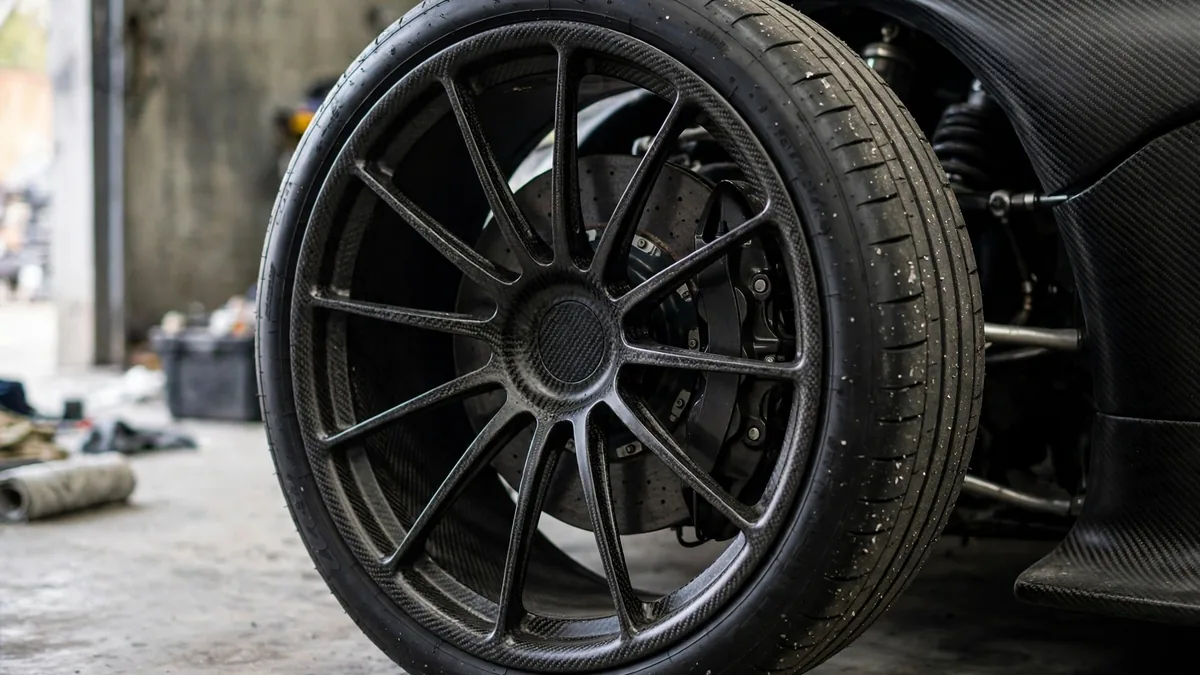
Why Hypercar Carbon Wheels Cost So Much
A carbon wheel looks simple from the outside — a rim, some spokes, a hub. Inside that shape is a long chain of expensive materials, slow handwork and testing that no ordinary wheel ever needs. Here are the seven reasons the price climbs so high.
Reason 1: The fibre itself is expensive
Carbon fibre starts as a precursor thread, usually polyacrylonitrile, heated, stretched and baked until almost everything except carbon is driven off. The process takes days, uses enormous amounts of energy, and the best aerospace-grade fibre comes from only a handful of factories. A wheel needs many layers of this cloth, and the raw material alone costs far more than the aluminium in a forged wheel. Before a single layer is laid, the specification is worked out in the same detail as the hypercar carbon wheels manufacturing process, because every ply has a job to do.
Reason 2: The layup is done by hand
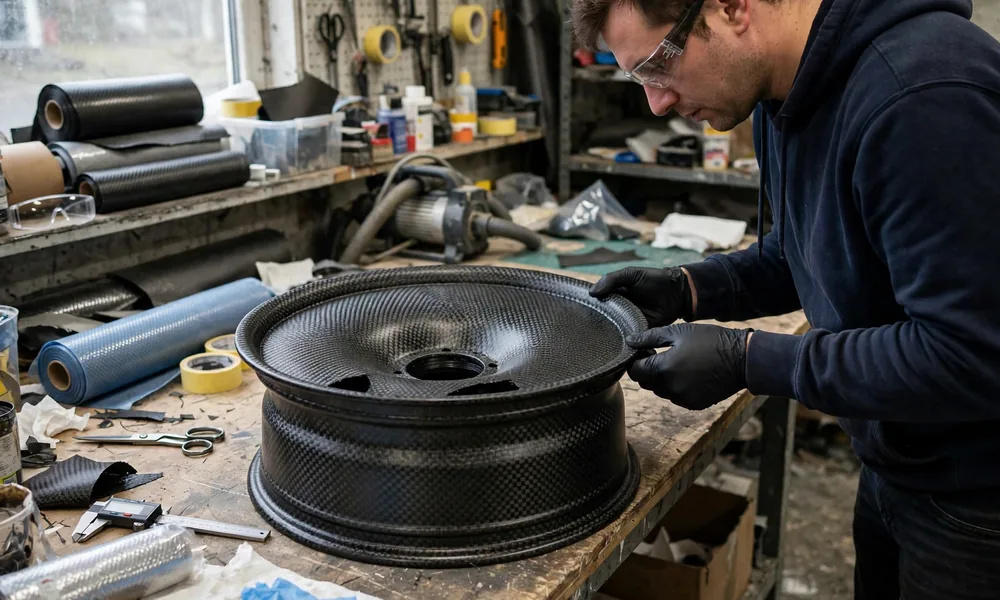
Each wheel is built by laying dozens of pieces of carbon cloth into a mould, one at a time, each cut to a pattern and placed at an exact angle. A spoke needs fibres running one way, a rim another, and the hub needs extra layers to carry the bolt loads. The work is slow and skilled: a trained laminator may spend a full working day on one wheel, and a mistake — a wrinkle, a gap, a piece laid the wrong way — can mean starting again. Robots can help, but the curves still need human hands.
Reason 3: Curing takes a giant oven and hours of heat
Once the cloth is laid up, the wheel is sealed in a vacuum bag and cured in an autoclave — a pressurised oven running at around 120 to 180 degrees Celsius for several hours. The heat and pressure bond the layers into one solid piece, and the cycle cannot be rushed: cool it too fast and the resin cracks, heat it unevenly and the wheel warps. Autoclaves are expensive to buy and run, and each wheel ties one up for hours. Curing is the quiet bottleneck, and one reason volumes stay tiny.
Reason 4: Machining carbon is slow and costly
A cured wheel still needs machining: bolt holes, the centre bore, the valve hole and the bead seat where the tyre sits. Carbon fibre eats cutting tools, because the fibres are abrasive, and it must be cut slowly with diamond tooling and dust extraction. One wrong cut can scrap a wheel worth thousands of dollars (estimate), so machining is done in small steps with constant measurement. Precision matters too: a wheel even slightly out of round will shake a hypercar at speed, so tolerances are tighter than on any alloy wheel.
Reason 5: Every wheel is tested like an aircraft part
A carbon wheel cannot be inspected by eye alone, because the most dangerous damage hides inside the layers. Each wheel is checked with ultrasound or X-ray, then tested on rigs that spin it, load it and hammer it with forces far beyond anything it will meet on the road. Some wheels are tested to destruction, so the maker knows exactly where the limit is. It is the same level of testing brakes receive, which is why the carbon ceramic brakes on a hypercar are specified with similar care. Testing adds cost, but a wheel failure at 200 mph is not an option.
Reason 6: A kerb strike can write off the whole wheel
Carbon fibre is strong, but it is brittle in a way metal is not. An alloy wheel bends when it hits a kerb; a carbon wheel can crack inside while looking fine outside. That is why owners are told to have any struck wheel inspected or replaced, and why one damaged wheel can cost $5,000 to $10,000 (estimate) to replace. The maker builds in that risk: warranties, inspection services and replacement stock all add to the price of every wheel sold.
Reason 7: Almost nobody makes them
The final reason is scarcity. Only a few companies in the world have the autoclaves, the laminators, the testing rigs and the certification to make carbon wheels for road hypercars, and each makes them in small numbers — hundreds or low thousands a year, not millions. There is no mass-market factory to spread the cost across, and no cheap material that does the same job. A buyer pays for a tiny, specialised supply chain, and for the knowledge of a small group of people who know how to do it. Understanding how a hypercar carbon wheel works makes the price easier to accept, even if it never makes it small.
Hypercar Carbon Wheels at a Glance
| Specification | Detail |
|---|---|
| Main material | Carbon fibre composite with epoxy resin |
| Weight per wheel | About 6 to 8 kg (estimate) |
| Weight saving vs forged alloy | About 30 to 40 percent (estimate) |
| Manufacturing method | Hand layup, autoclave cure |
| Curing temperature | About 120 to 180°C |
| Set of four, typical price | $15,000 to $40,000 (estimate) |
| Main benefit | Lower unsprung and rotating mass |
| Inspection needed | Ultrasound or X-ray after any impact |

What Does It Cost?
A set of four carbon fibre wheels for a hypercar typically costs between $15,000 and $40,000 (estimate), with the most exclusive designs costing more (estimate). That buys a wheel roughly a third lighter than the best forged alloy equivalent, which sharpens steering, improves ride quality and lets the suspension work less hard. It also buys the testing and certification behind a wheel that will survive forces no road car should ever produce. For a hypercar owner, the wheels are not jewellery. They are one of the few parts that make the car measurably faster everywhere — in a straight line, through a corner and over a bump — and that is what the money really pays for.
A Rare Fact
Some carbon fibre hypercar wheels are so light that the tyre fitted to them weighs more than the wheel itself. A high-performance tyre can weigh around 10 kilograms, while the wheel it wraps around can weigh as little as 6 kilograms — a reversal of everything drivers expect, where the metal has always been the heavy part. It is a small detail, but it explains the whole idea: on a hypercar, the wheel has stopped being a lump of metal and become engineering so light that the rubber is the heavyweight.