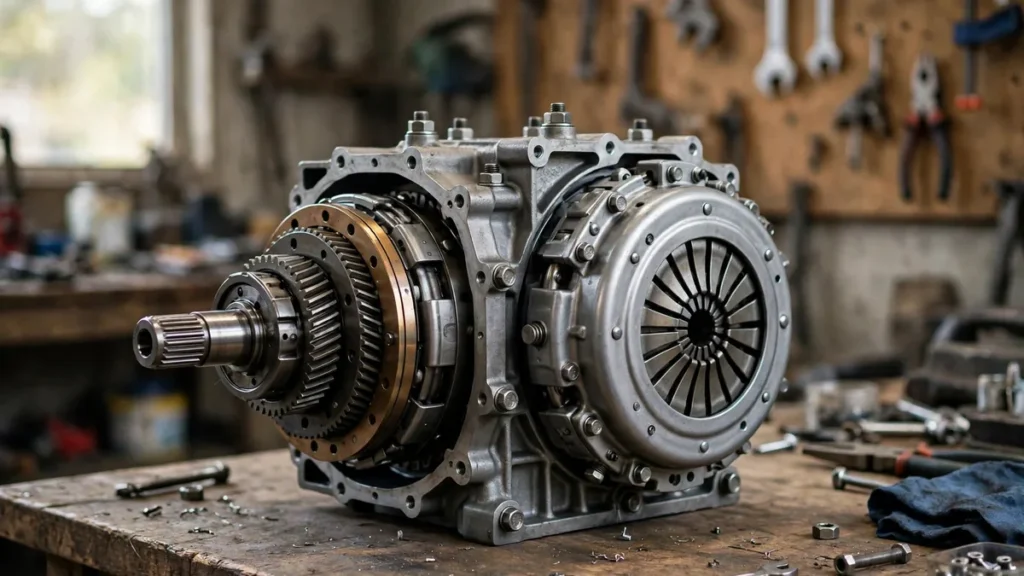
Stand beside a hypercar when its V12 wakes up and you feel it before you hear it. The starter whirs, the engine catches, and the whole car seems to shiver as twelve pistons settle into a fast, even idle. The sound climbs from a growl to a scream as the revs rise, and somewhere past eight thousand revolutions per minute it stops sounding like a machine at all and starts sounding like something alive.
That engine is the reason the car costs as much as a house. A V12 hypercar engine is not a mass-produced motor with a few fancy parts. It is a hand-built jewel of an engine, assembled by a small team of specialists, from materials and components that are made in tiny numbers at enormous cost. Every part inside it has been designed, machined, balanced, and tested as though the life of the driver depended on it — because it does.
Understanding why it costs so much means looking inside: at the metal, the hands, the testing, and the tiny production runs that make every single engine effectively a prototype. Here is what the price is made of.
Why It Costs So Much
1. It is built by hand, one engine at a time
A V12 hypercar engine does not roll down a production line. It is assembled on a single bench by one master technician, or a pair of them, who fit every bearing, piston, and valve by hand and sign their name on a plaque when the engine is done. The build takes days, sometimes weeks, and the technician’s skill is the product as much as the parts are. That labour alone costs more than an entire family car. The full assembly, from bare block to running engine, is described in how hypercar v12 engine is made, and it reads more like watchmaking than car manufacturing.
2. The parts are made in tiny numbers
A hypercar maker may build a few hundred cars a year, so every engine part is produced in a run of hundreds, not hundreds of thousands. A crankshaft, a set of pistons, or a cylinder head costs nearly as much to design and tool up for a hundred units as for a million, so each part carries a huge share of the development cost. Suppliers charge accordingly, and there is no economy of scale to hide behind. Every V12 is effectively a limited edition, and its parts are priced like one.
3. The materials are exotic and unforgiving
Inside a V12 that revs past 9,000 rpm, ordinary metals are not good enough. Pistons are forged from special aluminium alloys, connecting rods are machined from titanium, valves are made from exotic alloys that survive exhaust temperatures, and the crankshaft is carved from a single billet of high-strength steel. These materials are expensive to buy, hard to machine, and intolerant of error. A single flawed forging can scrap a component worth thousands of dollars, and the cost of that scrap lands on the engines that survive.
4. The machining tolerances are extreme
The clearances inside a high-revving V12 are measured in hundredths of a millimetre. A bearing gap too tight seizes the engine; too loose and the oil pressure collapses at high revs. Cylinder bores are honed to a mirror finish, crankshaft journals are ground and polished, and the whole rotating assembly is balanced to a fraction of a gram. Achieving that precision needs machines that cost millions, operators with decades of experience, and measurement equipment that can see what the eye cannot. Lamborghini’s modern V12 flagship shows the same philosophy at work, as explored in why lamborghini revuelto v12 is so expensive, where hand assembly and exotic materials set the price.
5. Every engine is tested to destruction’s edge
Before a V12 is fitted to a car, it is run on a dynamometer for hours, through heat cycles, full-throttle pulls, and cold starts, while engineers watch temperatures, pressures, and vibrations. Some engines are torn down again after testing and inspected part by part before being rebuilt. That testing consumes fuel, time, and specialist labour, and occasionally it destroys an engine outright. It is also why these engines almost never fail on the road: the failure happened on the test bench instead, and the customer pays for that certainty.
6. The sound and the soul are engineered in
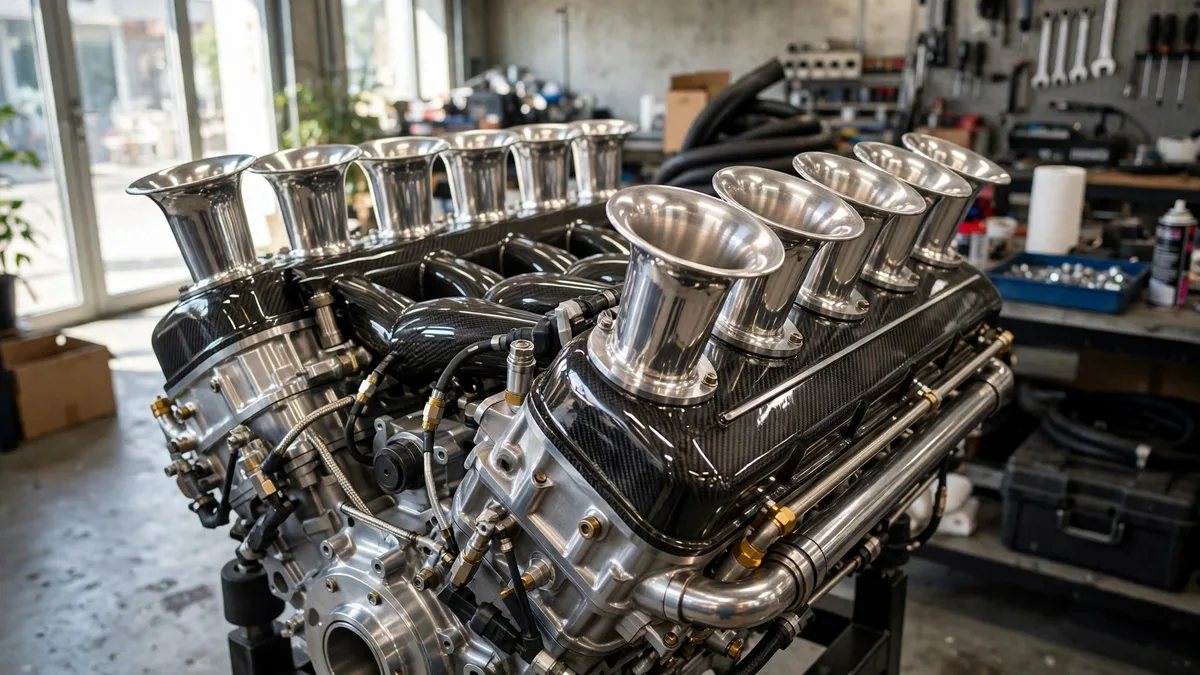
A V12’s voice is not an accident. Engineers tune the intake trumpets, the exhaust lengths, and the firing order so the engine sings at high revs, and that tuning costs development time and money. The engine must also meet emissions rules, survive warranty periods, and idle smoothly in traffic — all while producing more than 800 horsepower from an engine you could lift with two people. The sixteen-cylinder Bugatti W16 shows the same obsession taken even further, as explained in bugatti w16 engine specs explained, where four turbochargers and a massive block serve a single goal: power without compromise.

Hypercar V12 Engine Specs
| Specification | Typical range |
|---|---|
| Configuration | 60-degree V12, naturally aspirated in most modern hypercars |
| Displacement | About 6.0 to 6.5 litres for a modern hypercar V12 |
| Power | About 800 to 1,000 horsepower without turbocharging or hybrid help |
| Maximum revs | About 8,500 to 9,500 rpm, among the highest of any road engine |
| Engine weight | About 200 to 250 kilograms, including ancillaries |
| Block material | Aluminium alloy, often with cast-in iron or steel cylinder liners |
| Connecting rods | Titanium, machined and balanced to a fraction of a gram |
| Build time | Several days to two weeks of hand assembly per engine |
What Does a Hypercar V12 Engine Cost?
A V12 hypercar engine is one of the most expensive parts of any road car. A replacement or crate engine is estimated at roughly $150,000 to $400,000, depending on the maker and specification, and the engine accounts for a large share of a hypercar’s price. Individual components are estimated at roughly $5,000 to $20,000 for a set of titanium connecting rods, roughly $10,000 to $30,000 for a billet crankshaft, and thousands more for the hand assembly and dynamometer testing. All prices are estimates only and vary widely by maker, specification, and market, but the order of magnitude is clear: this engine costs more than most cars.
A Rare Fact
The V12’s greatest trick is balance. With twelve cylinders arranged in two banks of six, the engine’s primary and secondary forces cancel each other out almost perfectly, so a V12 can run smoother than any other piston engine ever built. That smoothness is why the V12 became the engine of luxury and speed alike, from 1930s grand tourers to today’s hypercars. It is also why engineers keep building them even as the world turns electric: no other layout sounds like a V12, feels like a V12, or revs like a V12, and that character cannot be copied with fewer cylinders.

A hypercar V12 is expensive because it is, in every sense, a handmade thing: a handful of people, working with rare metals and impossible tolerances, building a few hundred engines a year that must survive stresses no ordinary engine ever meets. The price is the cost of that craft — and the sound it makes at nine thousand revs is the receipt.