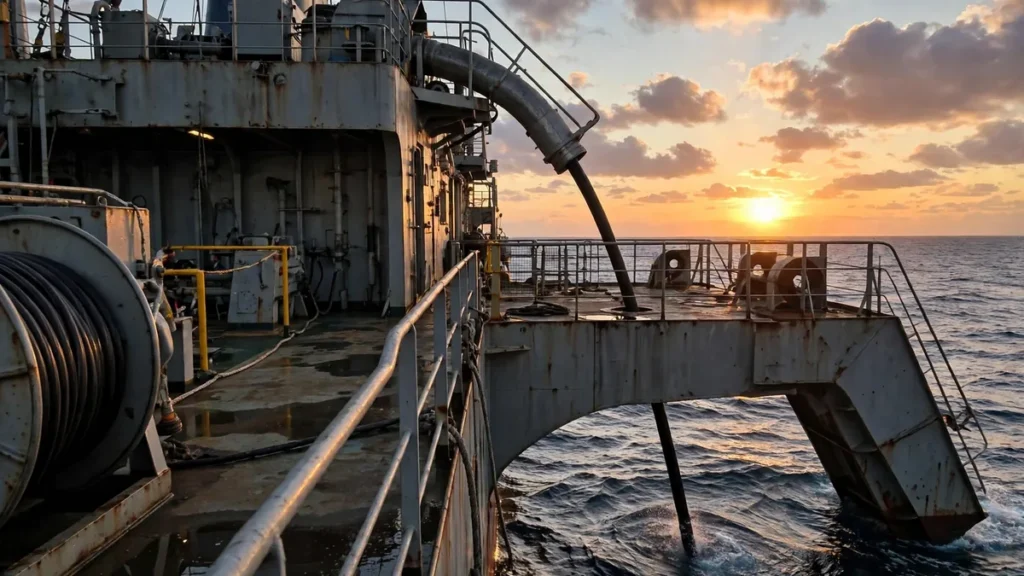
Every email, video call and bank transfer that crosses an ocean travels through a cable lying on the seabed, and every one of those cables was put there by a ship. Nobody on board can see the cable once it is gone. They can only trust the machines, the tension and the track.
This is how a luxury cable-laying ship works, from the dynamic positioning and the giant carousel to the tensioning machine, the stern chute and the plough, and how a ship that never goes fast does some of the most precise work at sea.
Step 1: Dynamic positioning holds the ship on its track
A cable-laying ship begins its work by standing still, and standing still in open sea is harder than it sounds. The ship is fitted with dynamic positioning, a system of satellite navigation, sensors and thrusters that holds it within a few metres of its planned track without an anchor. Computers read the wind, the current and the waves many times a second, and thrusters in the bow and the stern push against them, nudging the ship sideways or forwards by centimetres. The bridge crew watches the track on a screen, and the ship creeps along its route at walking pace, sometimes slower, while the cable pays out behind it. The guide to how a luxury cable-laying ship is made follows the ship from the yard, from the hull built to hold still to the carousel that stores the cable.
Step 2: The carousel feeds the cable out
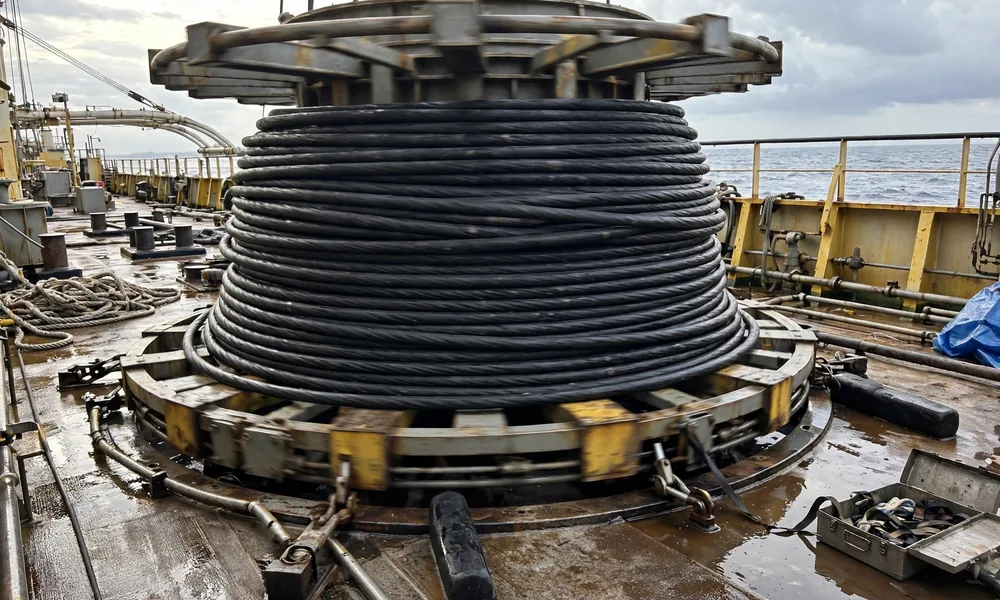
The heart of the ship is the cable carousel, a huge circular tank or drum that holds the cable in a single continuous coil. A modern carousel can hold several thousand kilometres of cable, wound in neat layers like thread on a spool, and it turns slowly as the cable is fed out through a series of rollers. Too much tension and the cable stretches or snaps; too little and it piles up in loops that will tangle. The crew watches the tension on a gauge all day, and the machine adjusts itself constantly, because the sea never stops moving the ship.
Step 3: The stern chute guides the cable into the sea
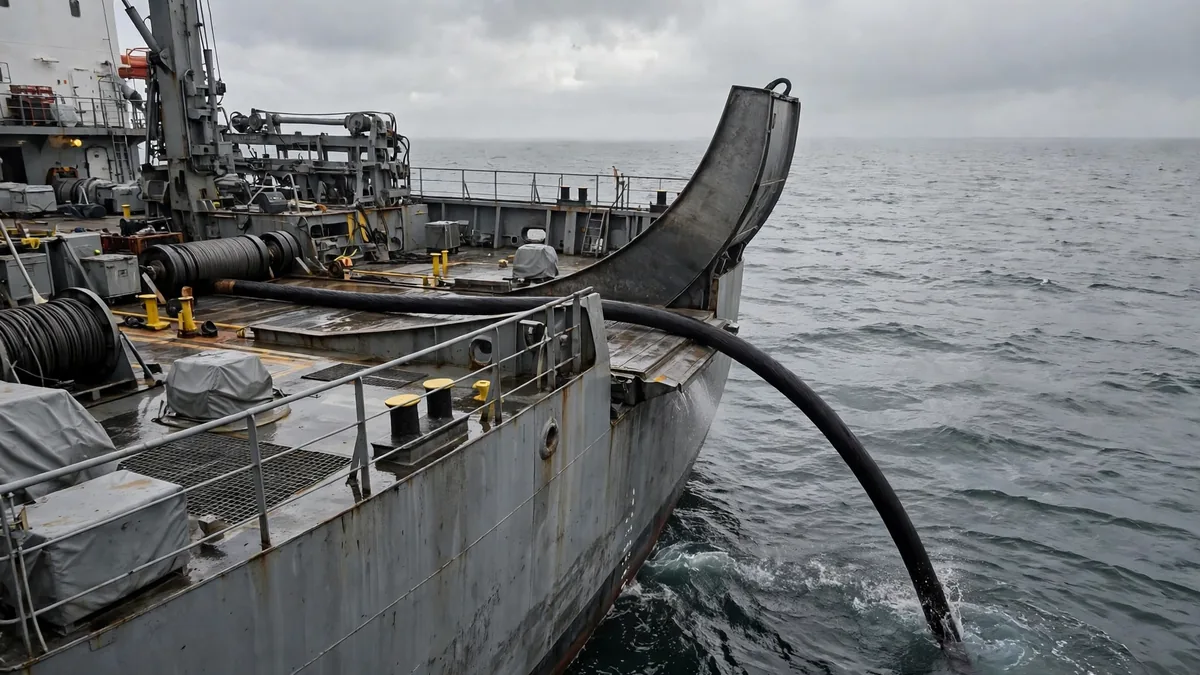
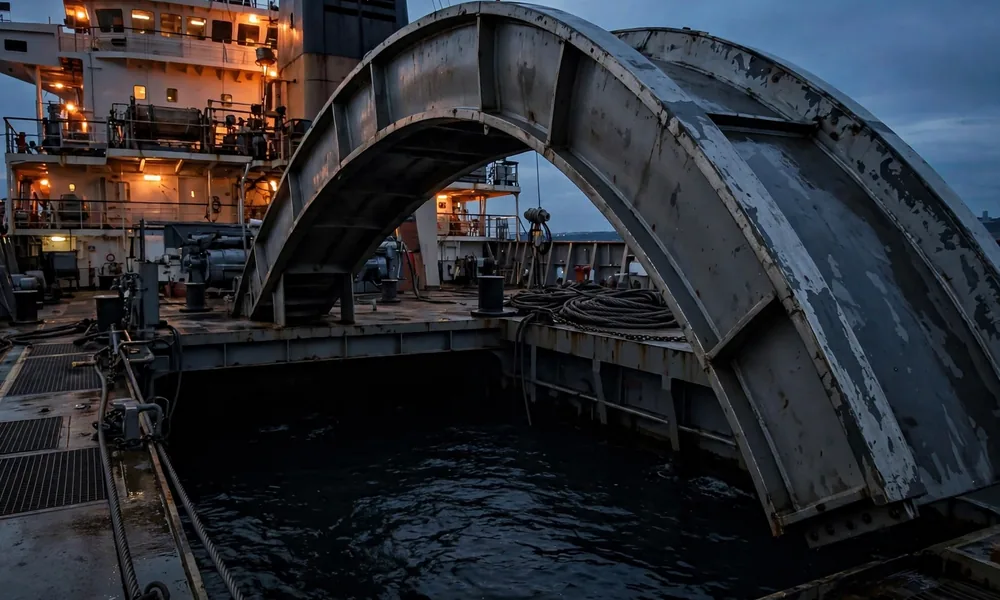
At the stern, the cable leaves the ship over a large curved chute, a smooth steel ramp that guides it from the deck down into the water without a sharp bend. The chute is polished and shaped so the cable never touches a sharp edge, because a single kink can ruin kilometres of cable, and it is checked by hand before every job. The ship’s speed and the tension are matched so the cable touches down gently, lying in a smooth line on the bottom rather than draping in loops. The support vessel works beside such ships in the offshore world, as the guide to how a luxury support vessel is made describes, carrying the equipment and the people the cable ship needs for a long job.
Step 4: The plough buries the cable in the seabed
Behind the ship, a plough or a jetting machine often follows the cable down, cutting a trench in the seabed and burying the cable under a metre of sand or mud, where fishing trawlers and anchors cannot reach it. The plough is a heavy steel frame towed on the seabed, and it is one of the most brutal-looking pieces of equipment on a civilised ship. It cuts through the bottom with a blade while water jets soften the ground ahead of it, and the cable drops into the trench behind it, covered as the plough passes.
Step 5: The engines, thrusters and power keep it all running
A cable ship needs far more power than a ship of its size would normally carry, because it runs the cable machinery, the dynamic positioning thrusters and the deck cranes all at once, for weeks on end. The crew works in shifts around the clock, and the ship carries its own workshops, spare parts and stores, because there is no port to call at in the middle of an ocean crossing. The same long-range, self-sufficient logic appears on other working ships, as the guide to how a luxury research vessel works shows, where a ship must carry its own world for weeks away from shore.
Step 6: Testing, handover and the cable comes alive
When the cable reaches the far shore, the work is not finished. If a fault is found, the ship can stop, haul the cable back up and repair it on deck, a slow and careful job that can take days. Once the tests pass, the cable is handed over to its owners, and the ship turns for home, its carousel empty and its deck quiet. Weeks later, when the first emails and video calls cross the ocean through that cable, nobody thinks of the ship at all, which is exactly how the crew likes it. The cable will lie on the seabed for twenty years or more, carrying the internet on its back, and the ship will already be loading its next coil.
The spec sheet at a glance
| Specification | Typical luxury figure | What it tells you |
|---|---|---|
| Carousel capacity | Several thousand kilometres of cable | How far the ship can lay without reloading |
| Position holding | Within a few metres, no anchor | How precisely the ship follows its planned track |
| Laying speed | Walking pace, sometimes slower | How gently the cable is paid out |
| Burial depth | Roughly one metre under the seabed | How well the cable is protected from trawlers |
| Power | Large diesel generators, electric thrusters | How the ship runs its machinery and holds position |
| Cable tension | Matched to ship speed, plus slack | How the cable lies flat instead of looping or stretching |
| Crew | Works in shifts, around the clock | How the ship keeps laying for weeks on end |
| Cable life | Twenty years or more on the seabed | How long the crossing keeps working |
| Working deck | Flat, with stern chute and cranes | How the cable is handled without a kink |
What good design looks like
A well-designed cable-laying ship gives itself away in small details. The carousel should turn smoothly without jerking, the tension gauge should barely move, and the ship should hold its track so steadily that the cable touches down in a straight line on the seabed.
What it costs
A luxury cable-laying ship typically costs an estimated $150 million to $300 million, depending on its size, its carousel, its dynamic positioning system and the cable machinery fitted aboard. The estimate covers the ship alone, not the cable, the crew or the cost of a laying campaign. Most of the price is in the carousel, the tensioning machine and the thrusters that let the ship hold its place in open sea, and in the power plant that runs them all for weeks on end.
A rare fact
One detail few people ever learn is that a cable-laying ship can lay a cable across an ocean without ever seeing it. Once the cable slides over the stern chute, it is invisible for the whole of its journey to the seabed, and the crew’s only link to it is the tension gauge, the ship’s position and the length of cable paid out. They lay thousands of kilometres by numbers alone, trusting instruments over eyes, which is why the tensioning machine, not the captain’s eyesight, is the most delicate instrument on the ship.