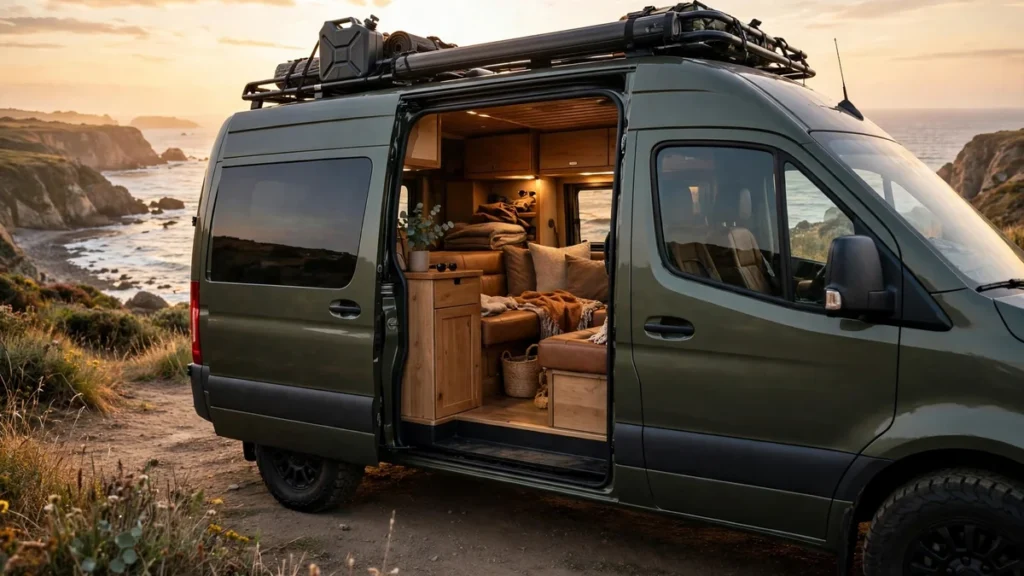
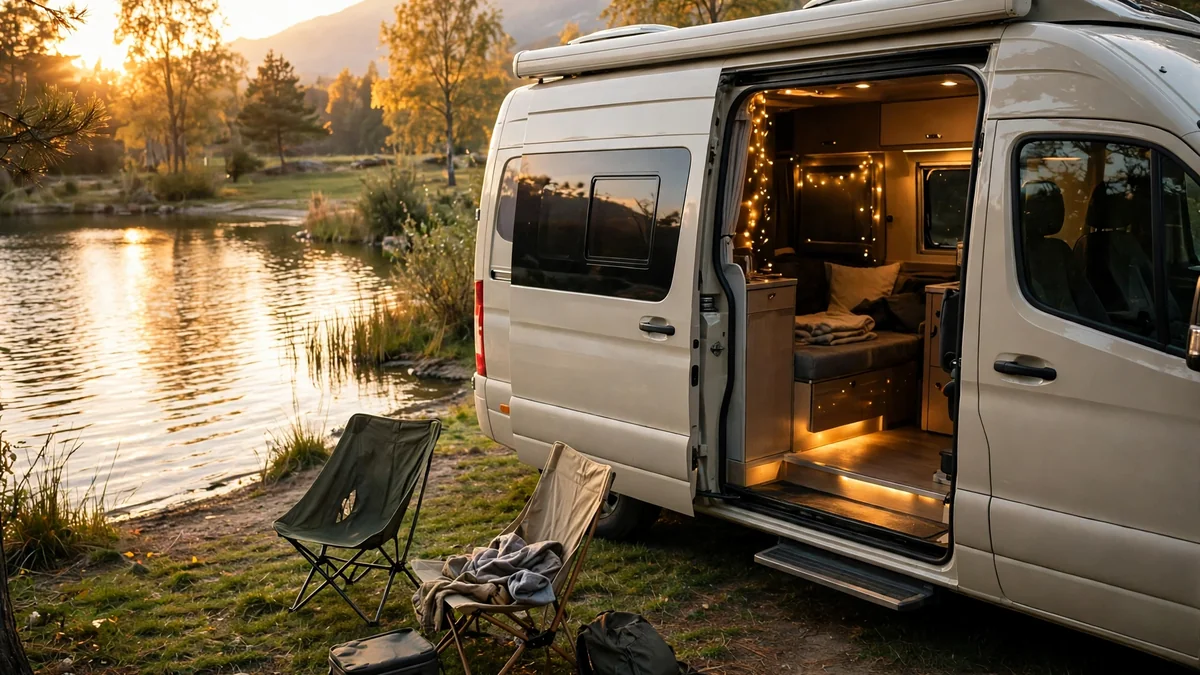
The van is parked by a lake at golden hour, its side door open, its awning out, its lights warm against the evening. Inside there is a proper kitchen, a bed made up with real linen, and a shower that works. A visitor asks the price, hears a number that would buy a small flat, and laughs, assuming it must be a joke. It is not a joke. A luxury camper van can cost more than a house deposit, and the reasons are not obvious until you step inside and start counting what it took to build.
A luxury camper van is three expensive things at once: a modern van, a hand-built home and an off-grid power station, all squeezed into a space smaller than a parking bay. Every part of it is made in small numbers, fitted by hand, and expected to survive years of roads, weather and daily use. This article follows the money through the seven costs that add up to the price tag, and explains why a cheaper conversion, for all its similarities, is a very different vehicle underneath.
1. The base van: a new vehicle underneath the home
Everything starts with the base van, and a luxury camper does not start with a cheap used van. It starts with a new, long-wheelbase panel van from a premium maker, with a strong diesel engine, an automatic gearbox and a full set of safety systems. That van alone costs as much as a good family car, before a single cabinet is fitted, and it has to be strong enough to carry a house without flexing, because flexing cracks joints, breaks seals and lets water in.
The base van is chosen for payload as much as for price. Water, batteries, a full fridge, two adults, clothes, cooking gear and a couple of bikes add up fast, and a van with too little payload is full before the holiday starts. The spec sheet behind the base vehicle is covered in luxury camper van specs explained, where payload, battery capacity and water storage are the numbers that decide whether a van is genuinely luxurious.
2. Hand-built interiors: a house, fitted by hand
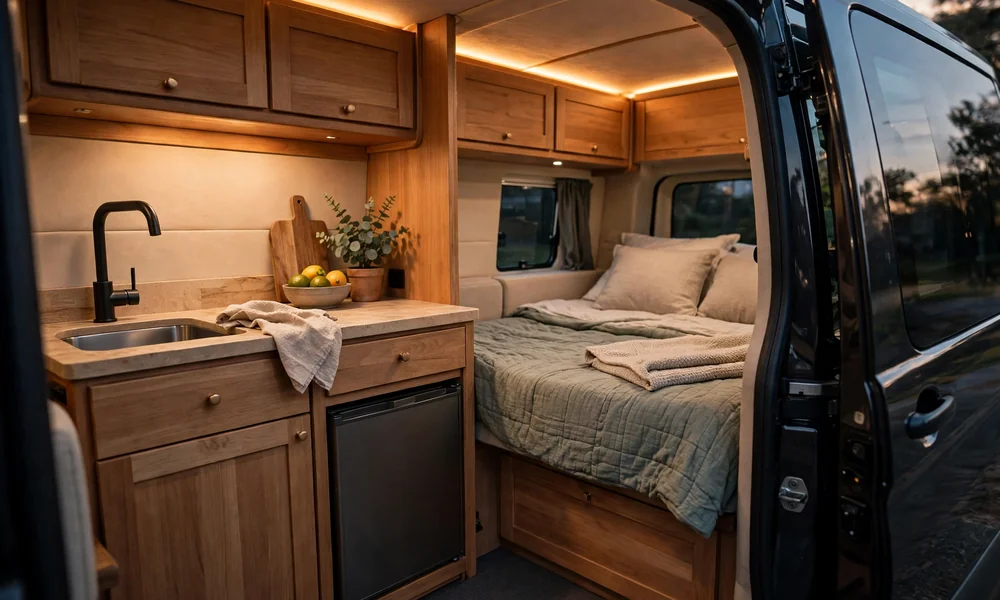
Inside, a luxury camper van is a joiner’s workshop on wheels. Solid wood cabinets, stone worktops, leather seating and a compact wet room are fitted by hand, one van at a time, by craftspeople who spend weeks on a single interior. There is no production line turning out identical kitchens; every cut, every hinge and every seal is made to fit that one van, and the result is a home that feels solid rather than flat-packed.
3. Power and water: living off the grid
The third cost is the off-grid system, and it is what separates a luxury camper from a van with a bed in the back. A lithium battery bank of 200 to 400 amp-hours, solar panels on the roof, an inverter that turns battery power into mains electricity, and a diesel heater together let the van run its fridge, lights, heating and cooking for days without a plug socket. Each part is expensive, and the wiring that ties them together must be safe, neat and accessible.
Water is just as costly. A fresh-water tank of 90 to 120 litres, a grey-water tank, a pump, a water heater and a shower with a proper drain all have to fit into the floor and the walls, and every joint must be watertight. A leak in a house is an annoyance; a leak in a camper van is a disaster, because the water soaks into the floor and the insulation. The bigger motorhome world faces the same maths, as why a luxury RV is so expensive shows, where a house on wheels needs the same systems at a larger scale.
4. Insulation and heating: four seasons in a metal box
A metal van is a terrible place to sleep in winter and a worse one in summer, unless it is insulated properly. A luxury conversion lines the walls, floor and ceiling with thermal insulation, fits double-glazed windows, and seals every gap against draughts and condensation. The diesel heater runs quietly through the night, keeping the van warm while the temperature outside falls below freezing, and the ventilation system keeps the air fresh without letting the heat escape.
5. The pop-top and the bed: space that appears
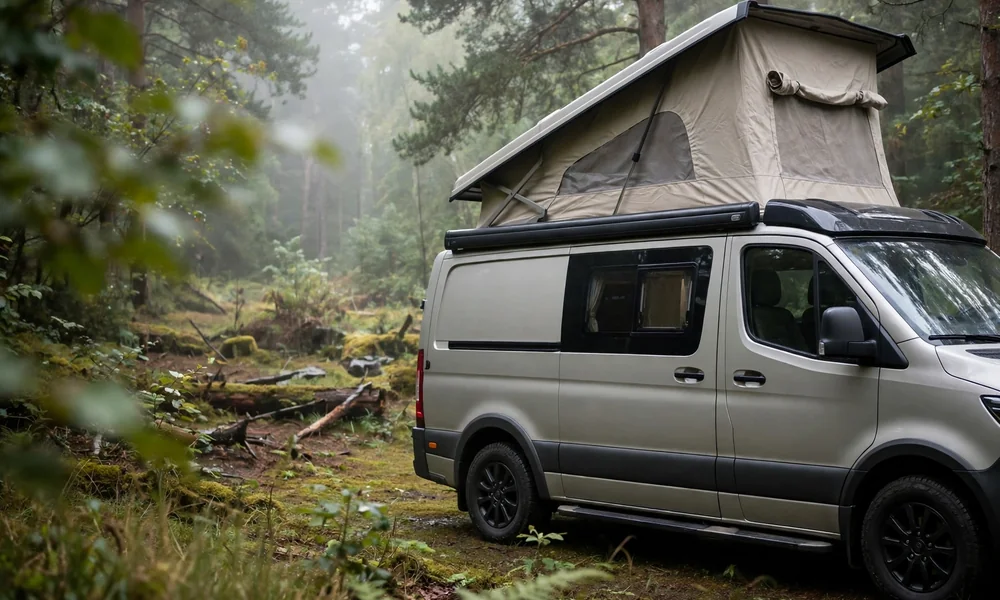
Space is the scarcest resource in a camper van, and the pop-top roof is the clever answer. It lifts to give standing room and a second bed upstairs, and it folds flat for driving, keeping the van low enough for car parks and ferries. The mechanism is a precision piece of engineering, with gas struts, waterproof fabric and a bed board that must hold two adults safely, and it is one of the most expensive single options on the van.
6. Small numbers and skilled hands
A luxury camper van is built in hundreds, not hundreds of thousands. There is no mass-production line, so the cost of designing the interior, the electrics and the plumbing is spread across a small number of buyers. Each van is converted by hand over several weeks, by a small team of joiners, electricians and plumbers, and their wages are the largest single cost after the base van itself.
That hand-built nature is part of the price and part of the appeal. The buyer can choose the wood, the fabric, the layout and the options, and the van is built to their order, not taken from a dealer’s stock. The maker keeps a parts and service network running for that whole life, and the cost of that support is built into the price. The motorhome makers do the same, as how a luxury motorhome is made shows, where a house is built on a chassis one vehicle at a time.
7. The options list: where the bill grows
The final cost is the options list, and it is long. A bigger battery, more solar panels, an awning, a bike rack, a reversing camera, a second screen, leather upholstery, a premium paint finish and a tow bar can add tens of thousands of dollars to the base price. Each option is fitted by hand, and each one is chosen for a specific kind of trip, from a weekend by the sea to a month crossing a continent.
Price and a rare fact
A luxury camper van typically costs an estimated 120,000 to 250,000 dollars, with the largest models and a full set of options going higher still. That is more than many small flats, and it is the single biggest purchase many owners will make after their house. Finance, trade-in value and the resale market all soften the blow, and a well-kept camper holds its value far better than most vehicles, because the demand for a good van rarely fades.
The rare fact is hidden under the floor: some luxury camper vans carry a second, hidden water tank and a filtration system that lets the owner fill up from a stream and drink it safely. The filter removes bacteria and sediment, and the tank gives the van days of extra independence in the wild. It is a small detail, listed as a tank capacity on the spec sheet, but for an owner parked far from a tap it can be the difference between staying another week and driving home early.