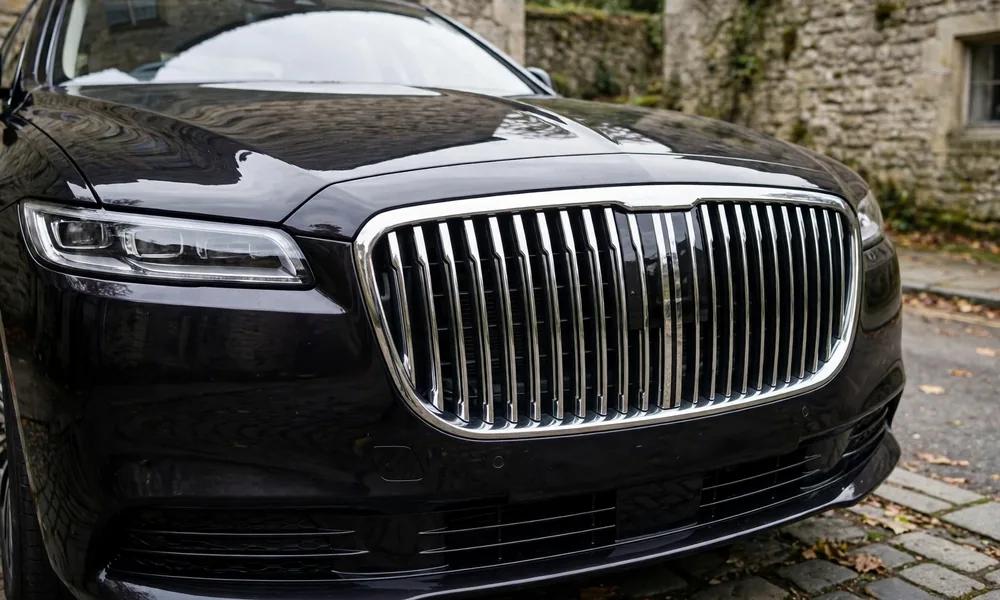
Every luxury car has a face, and the face is the grille. A grille for a large luxury sedan is estimated to cost between five thousand and twenty-five thousand dollars, and on the most exclusive models, with hand-polished chrome and illuminated surrounds, it can cost more than a small car.
That price is strange, because a grille does not move, has no engine, and in an electric car it does not even need to let much air through. It is a frame, a mesh, and a badge, and its job is partly to feed air to the radiators and partly to say something about the car. The reasons for the cost are hidden in the metalwork, the finish, and the fact that the grille is the maker’s signature, made to a standard no other part has to meet.

Chrome, Brass and the Polishers
The first cost driver is the finish. A luxury grille is usually chrome, and real chrome on a luxury car is not a thin spray. The slats are often made from brass or stainless steel, polished by hand until the surface is flawless, then plated in layers of copper, nickel, and chromium, each one polished again before the next goes on. A single grille can pass through a polisher’s hands a dozen times, and the work is done by people who have spent years learning to read a reflection.
The standard is brutal. A grille is viewed from close range, in daylight, by people who have paid a great deal for the car, and any flaw, a ripple, a dull patch, a scratch, is visible immediately. The finished grille is inspected under bright lights, and any part with a visible flaw is stripped and plated again. Parts that fail inspection are stripped and plated again, or thrown away, and the rejection rate is high. The same obsession with finish runs through the rest of the car, and why a luxury electric SUV costs so much shows how much of a luxury car’s price goes into details the owner touches and sees every day.
Sensors, Airflow and the Hidden Work
The second cost driver is what the grille hides. Behind the chrome of a modern luxury car sit radar sensors for the cruise control, cameras for the parking system, and shutters that open and close to control airflow to the radiators. The grille has to let radar through without distorting the signal, which means the badge in the centre is often not metal at all, but a special plastic, painted to look like chrome, with the radar unit mounted directly behind it. Designing a badge that looks like metal to the eye and is invisible to radar is a job of its own.
The airflow matters too. Even on an electric car, the radiators, the brakes, and the battery cooling need air, and the grille is the mouth that supplies it. The slats are shaped to guide air where it is needed and keep water and debris out, and the active shutters behind them close at speed to smooth the airflow and save fuel, then open in traffic when cooling matters most. The engineering that makes a car slippery and fast is a system, and the full specification of a luxury supercar shows how the front of the car is designed as one aerodynamic shape.
Styling, Identity and the Shape of a Brand
The third cost driver is the one buyers actually see: the styling. A grille is the most recognisable part of a maker’s identity, and the makers spend serious money keeping it distinctive. The tall vertical slats, the mesh patterns, the illuminated surrounds, and the size of the grille itself are all decided by design studios, modelled in clay, and then built in metal, and a shape that looks simple in a drawing can take months to make in production. A curved slat costs far more to make than a straight one, because it must be bent, polished, and plated without a single mark.
The size of modern grilles adds to the bill. The frame is often a single casting, machined and finished, and it must fit the bumper, the bonnet, and the headlights with even gaps all round, which is checked by hand on the line. The structure that holds the face of the car together has to be light and strong, and how a carbon fibre chassis is made explains why the frame behind the styling matters as much as the styling itself.

The Price, in Plain Terms
Put the pieces together and the numbers look like this. The metalwork, hand polishing, and multi-layer chrome plating are estimated at two thousand to ten thousand dollars. The radar-transparent badge, sensors, and active shutters behind the grille are estimated at one thousand to six thousand dollars. The design, tooling, and hand fitting of the grille and its frame are estimated at two thousand to nine thousand dollars. The total for a large luxury sedan grille lands, by most estimates, between five thousand and twenty-five thousand dollars, and on the most exclusive models it can go higher still.
Those are estimated figures, and they move with the car, the maker, and the finish, but the shape of the bill is stable. Roughly half goes into the metal and the mirror finish, roughly a quarter into the hidden sensors and shutters, and the rest into the design and the fitting that make the grille the face of the car. It is a lot of money for a frame and a mesh, but it is not a frame and a mesh. It is the maker’s signature, built to survive the road.
A Rare Fact About the Grille
Here is a detail that surprises even people who own these cars. On some luxury models, the grille is illuminated. Thin strips of light run around its edge or through its slats, so the face of the car glows at night, and the light is designed to fade in when the car is unlocked, like the car is waking up. The lighting is sealed against water, wired through the bumper, and tested to last the life of the car, and it adds hundreds of dollars to the part. The face of the car has become a piece of electronics, and the electronics are part of the price.
What the Price Means for You
For an owner, the price of the grille is paid back every time the car is seen. A grille that is built well means chrome that stays bright, slats that stay straight, and a face that still looks expensive after years of motorways and winters. A grille that is built cheaply means clouding, peeling, and a car that looks tired long before it should.
The next time a luxury car pulls up behind you, look at the grille in your mirror before anything else. It is the car’s signature, written in chrome, and it carries the maker’s identity, the car’s sensors, and the air its radiators need, all at once. It costs thousands, and now you know why.