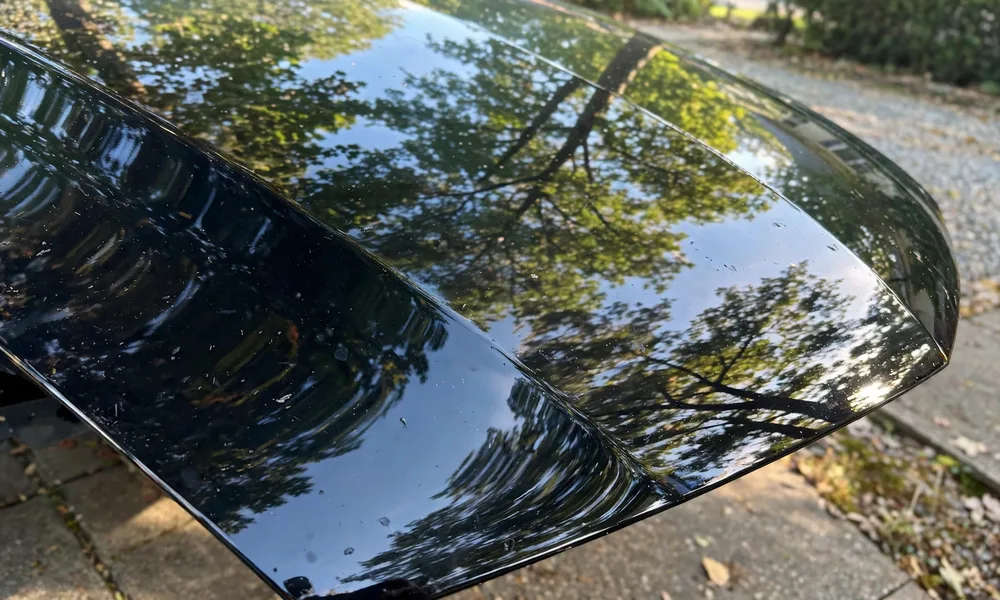
Stand beside a luxury car on a bright morning and the paint does something ordinary paint never does. It looks less like a coating and more like a pool of still water, deep enough to fall into, with the sky reflected so clearly that you can count the leaves in the bonnet. A luxury paint job can cost more than a whole family car, and the bill is not a single line for paint. It is a stack of costs for pigments, booths, hands, time and rework, each one large on its own.
Most buyers never see that stack. They see the colour they chose and the price beside it, and they wonder whether a few litres of paint can really be worth thousands. The answer is that the paint itself is the cheapest part.
This article breaks down where the money goes when a luxury car is painted, and why the same colour costs so much more on a luxury car than it does on an ordinary one.

Where the Money Goes: The Cost of a Luxury Paint Job
| Cost Driver | Ordinary Car | Luxury Car | Why It Costs More |
|---|---|---|---|
| Pigments per car | Standard colours | Pearl, mica, special effect | Rare minerals, small batches |
| Coats applied | 3 to 4 layers | 7 to 12 layers | Depth needs many thin coats |
| Hand polishing | Machine only | 6 to 12 hours by hand | Skilled labour, panel by panel |
| Inspection time | Minutes | Hours, light tunnel | Every defect is caught |
| Rework rate | Rarely resprayed | Often 2 to 3 passes | Perfection is the standard |
| Booth cost share | Shared, high volume | Low volume, slow line | Few cars split the bill |
The Pigments: Colour That Costs More Than Paint
The first cost is the colour itself. An ordinary car is painted in standard colours made from common pigments, mixed in huge batches and bought by the tonne. A luxury car offers pearl paints that use mica crystals, metallic paints that use aluminium flakes, and special effect colours that shift shade as you walk around the car. Those pigments are rare, they are made in small batches, and some of them cost more per kilo than the steel underneath them.
The mixing is part of the cost too. A luxury colour is matched to a sample the maker approved months earlier, and each batch is checked in daylight before it is allowed near a car. If the batch is even slightly off, it is thrown away, because a luxury buyer who ordered a particular shade will notice a difference the moment the car arrives. The way luxury car paint is made shows the layers that carry those pigments, and every extra layer is another pass through the booth, another bake and another chance for something to go wrong.
The Booth and the Hands: Time Is the Real Bill
The second cost is time, and it is the largest line on the bill. A luxury paint booth is a room cleaner than most hospital wards, where the air is filtered, the workers wear full suits, and the lighting copies daylight exactly so the colour the sprayers see is the colour the owner will see on the road. Building and running that room costs a fortune, and on a luxury line only a few cars a day pass through it. The filters are changed on a strict schedule, and the booth is cleaned between cars, so no colour ever contaminates the next.
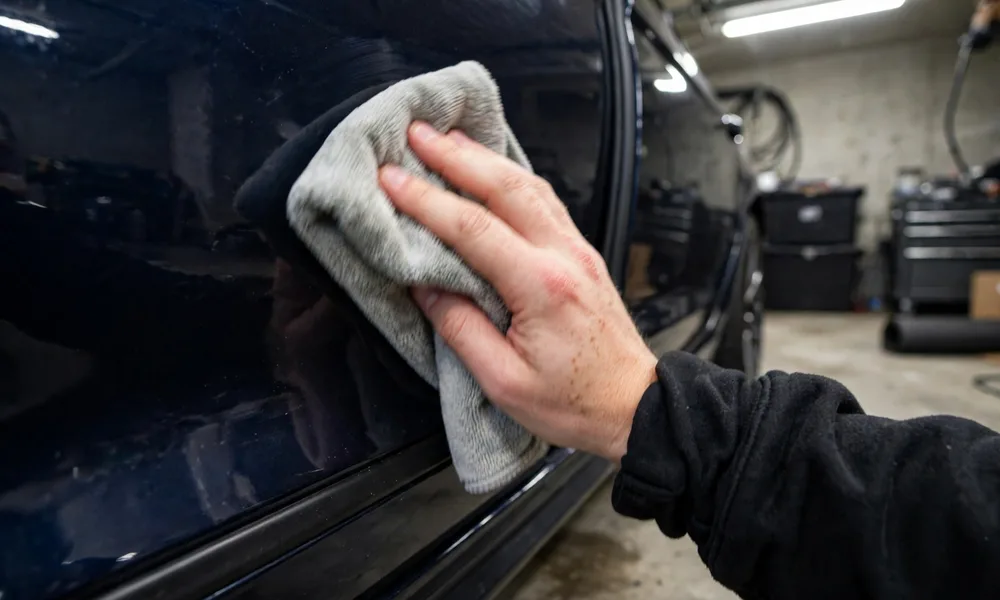
Then come the hands. After the robots spray the colour, people sand the primer by hand, polish the clear coat by hand, and walk the body with rags and lights, feeling for rough spots the machines cannot see. A luxury car can spend six to twelve hours in hand polishing alone, panel by panel under strip lights, watching the reflection of the tubes slide across the paint. Those polishers are among the most skilled workers in the factory, and their hours are billed at skilled rates.
Rework: Paying Twice for Perfection
The third cost is rework, and it is the one buyers never see. On a luxury line, a finished body passes through a light tunnel where inspectors look for the tiniest defects: a dust nib, a sag in the clear coat, an orange peel texture where the paint did not flow out flat. Any defect is marked, and the panel goes back for local repair. A speck is sanded out with paper finer than anything in a hardware shop, then the spot is resprayed and polished until it matches the panels around it.
Each return costs paint, booth time and labour, and the maker absorbs it rather than passing a flawed car to a buyer. The reasons a luxury grille costs so much show the same logic on a smaller part, where rejection rates and hand finishing drive the price, and the paint shop works the same way at a much larger scale.
Colour Matching and the Warranty: Costs After the Sale
The fourth cost arrives after the car leaves the factory. A luxury maker guarantees that a repaired panel will match the rest of the car, and keeping that promise is expensive. Every colour has a recipe, and every recipe has variants for how the paint ages in sun and weather. The maker keeps paint stocks for years, trains repairers in its own methods, and sometimes flies a specialist to a dealer for a difficult repair.
The warranty is the other half of it. A luxury paint warranty runs for years and covers defects an ordinary warranty would call wear and tear. The maker can offer that warranty only because the paint was applied so carefully in the first place, with many layers, long curing and repeated inspection. The reasons a luxury bumper costs so much follow the same pattern, where a part that looks simple carries a long guarantee behind it, and the paint is the most visible part of that promise.
A Rare Fact About Luxury Paint
Here is a detail that surprises people who think paint is just colour in a tin. Some luxury makers offer colours that take weeks to produce, because the pigment has to be ground, mixed, aged and tested before it is ever sprayed. One famous deep red uses a pigment that is laid down in so many thin coats that the paint alone adds measurable weight to the car, and the maker lists the number of coats in its brochure like a badge of honour.
Is the Price Worth It
Whether luxury paint is worth the money depends on what you value. If you want a car that looks the same in ten years as it did on the day you bought it, the thick clear coat, the careful curing and the long warranty earn their price. The depth in the paint is real, and it comes from layers and hours that cannot be faked.
If you do not care about those things, an ordinary paint job will serve you perfectly well, and the money is better spent elsewhere. It is the cost of a clean room, skilled hands, repeated inspection and a promise that lasts for years, and the numbers on the bill are the only honest record of that you will ever see.