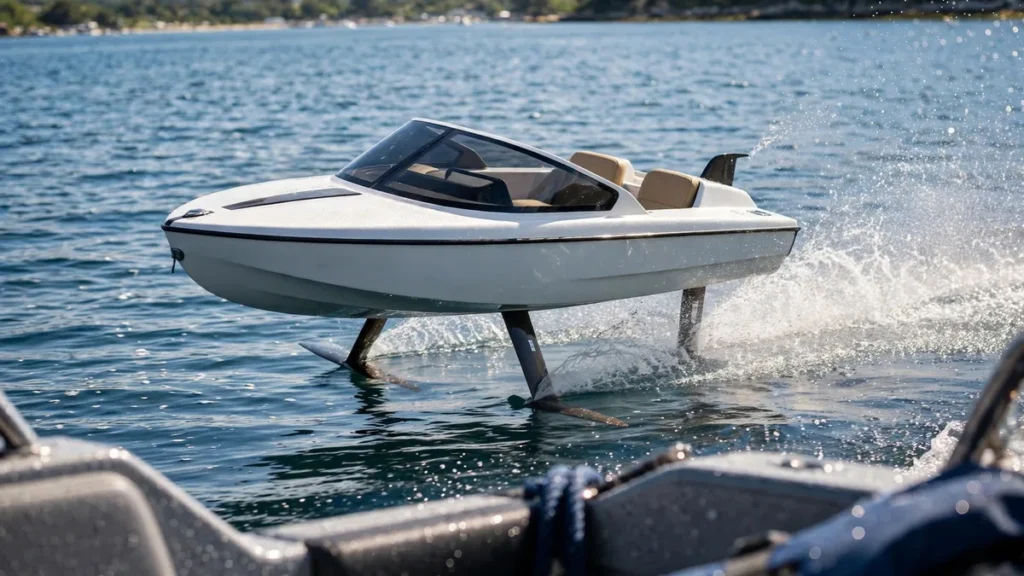
The yard manager pointed at the black hull and said the number quietly, the way people say a number they expect you not to believe. It was a yacht hull, not a finished yacht, no engines, no cabins, no teak decks, just a shell sitting in a shed. The figure he named would have bought a street of houses where the visitor came from, and yet the hull was the cheap part of the boat. That is the scale of a carbon fibre yacht hull, and the reason it costs what it does.
A luxury carbon fibre yacht hull can cost millions before a single cabin is fitted, because it is one of the largest carbon structures ever built by hand. It needs tonnes of expensive fibre, a mould the size of a building, a team of specialists working for months, and testing that leaves nothing to chance. A hull is also the part of the yacht that must never fail, far from shore, in rough seas. This is where that money goes.

Why a Luxury Carbon Fibre Yacht Hull Costs So Much
Step 1: The sheer amount of carbon fibre
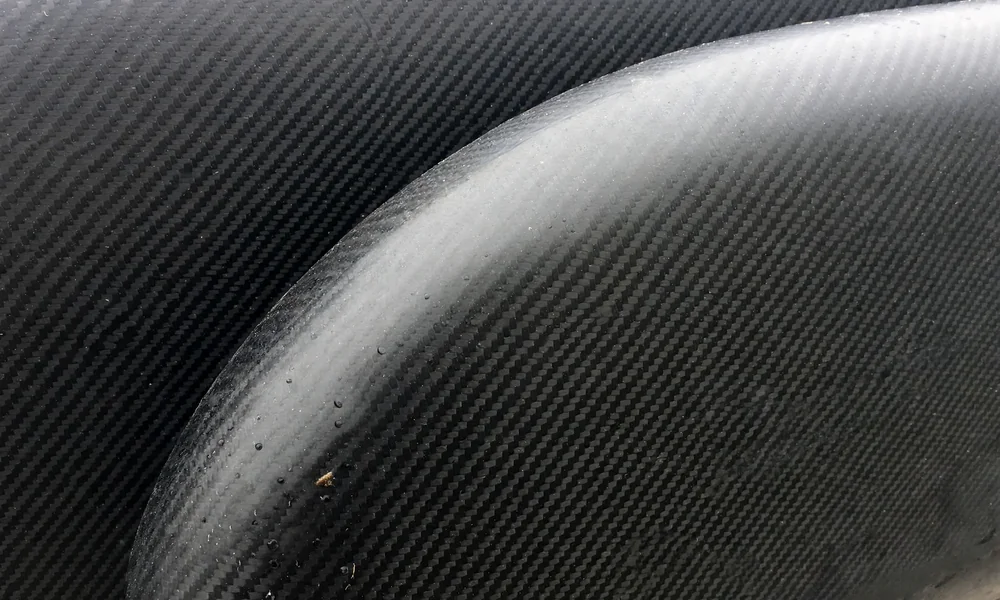
A superyacht hull needs tonnes of carbon fibre, not kilograms, and the best marine grades cost a small fortune per kilogram. The hull is built from many layers of cloth and core material, laid up to a thickness that can reach several centimetres in the most stressed areas. The material bill alone runs into hundreds of thousands of dollars, before any labour is counted. A hull that size is a warehouse of carbon, and the warehouse has to be paid for. The steel alternative is explained in our guide to how a superyacht steel hull works, and the contrast in weight and cost is stark.
Step 2: A mould the size of a building
Every hull needs a mould, and a mould for a 40-metre yacht is itself a major engineering project, built from steel and timber, faired to a mirror finish, and kept in a climate-controlled shed. The mould may cost a million dollars or more to build, and it is used for a single hull or a handful of sister hulls, so the cost is barely spread at all. The mould is the hidden first million in the price of the hull.
Step 3: Months of skilled hand work
Carbon fibre at this scale cannot be laid by machine. Teams of laminators work in shifts for months, placing cloth, wetting it with resin, and rolling out air bubbles by hand, in a shed kept at a steady temperature and humidity. A single missed bubble or a dry patch can weaken a section that must hold the sea out for decades. Hand work at this scale is slow, and slow is expensive.
Step 4: Curing a hull you cannot fit in an oven
A car chassis goes into an autoclave, but a yacht hull is far too big, so it is cured in place with heated blankets, controlled rooms and careful monitoring. The resin must cure evenly across tens of metres, with no cold spots and no overheating, and the process can take days. Sensors watch the temperature throughout, and the cure record becomes part of the hull’s history. Getting this wrong means cutting out a section and starting again, at vast cost. The finishing of a hull after curing is covered in our guide to yacht hull fairing specs explained, where the surface is made fair to the millimetre.
Step 5: The weight saving changes the whole yacht
A carbon hull can be 30 to 40 percent lighter than the same hull in steel, and that saving changes everything else on the yacht. A lighter hull needs smaller engines, carries less fuel, and can be faster with the same power, which saves money over the life of the boat. The hull also sits higher in the water, which improves stability and comfort. Owners pay for the hull once, but they enjoy the saving every day the yacht is at sea, in fuel, in speed and in the size of the engines they do not need.
Step 6: Testing, class rules and the paper trail
A yacht hull must satisfy a classification society, an independent body that checks the design, the materials and the build, and issues the certificate that lets the yacht be insured and sailed. The testing includes ultrasound, coupon tests on sample panels, and inspections at every stage, all documented in a file that follows the hull for its life. No owner wants to discover a flaw in the middle of an ocean.
Step 7: The superstructure and the systems it carries
The hull does not stand alone. The superstructure above it, the decks, the bulkheads and the engine beds, must be built to match, often in carbon as well, so the whole yacht works as one structure. The structure that sits on top of the hull is explained in our guide to how a superyacht aluminium superstructure works, and the join between hull and superstructure is one of the most critical details in the build. A hull is only as good as the structure it carries, and the two are designed together from the first drawing.
Luxury Carbon Fibre Yacht Hull Specs at a Glance
| Specification | Typical luxury figure | What it means |
|---|---|---|
| Hull length | 30 to 60 metres | One of the largest carbon structures made |
| Weight saving | 30 to 40 percent vs steel | Smaller engines, less fuel, more speed |
| Carbon fibre used | Several tonnes | Material bill alone is vast |
| Build time | 12 to 24 months for the hull | Months of hand layup in shifts |
| Hull thickness | Up to several centimetres | Many layers where the loads are highest |
| Top speed gain | Several knots vs steel | Lighter hull, same power, more speed |
What a Luxury Carbon Fibre Yacht Hull Costs
A carbon fibre hull for a luxury yacht typically costs an estimated $3 million to $10 million to build, depending on length and complexity, and a complete carbon superyacht can cost an estimated $20 million to $100 million or more. The mould alone can cost an estimated $1 million or more, and a major repair to a damaged carbon hull can cost an estimated $500,000 or more. These are estimates, not quoted prices, and they vary widely with the yard and the design.

A Rare Fact About Carbon Fibre Yacht Hulls
The first carbon fibre racing yachts were so light and so stiff that they changed the sport overnight, and rival crews accused them of being unfair. In one famous race, a carbon yacht finished so far ahead that the rules were rewritten to limit the material, because wooden and steel boats simply could not compete. The technology moved from racing to cruising slowly, because a racing hull only has to survive a season, while a luxury hull must survive decades. Today the same material that once scared the racing world carries families across oceans in comfort.
The best way to judge a carbon fibre yacht hull is to ask about the mould, the cure record and the class certificate, in that order. If the mould was built for the hull, the cure was monitored throughout, and the classification society signed off every stage, the price starts to make sense. A hull is a promise that the sea will stay outside, and carbon fibre keeps that promise with less weight than anything else. A yacht is only as good as its hull, and the numbers will tell you that before you ever leave the harbour.