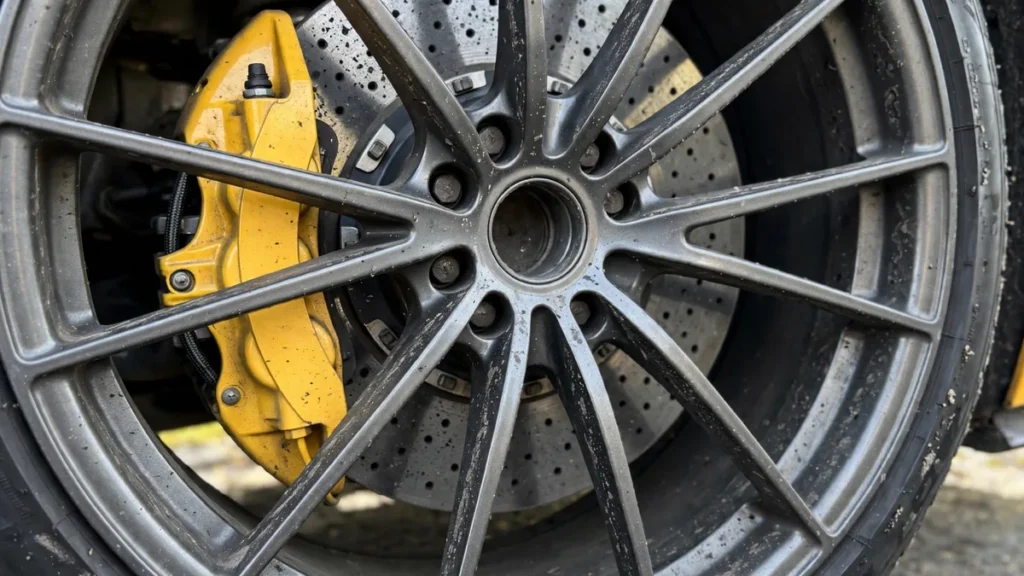
Drive a fast car hard for ten minutes, brake late into every corner, and an ordinary brake disc will start to complain. The pedal grows soft, the stopping distances stretch, and the smell of hot metal fills the cabin. That is brake fade, and it happens because ordinary iron discs cannot shed heat fast enough. A ceramic brake disc does not have this problem. It can run at temperatures that would warp an iron disc, stop the car just as firmly on the twentieth lap as on the first, and barely wear at all while doing it. The only problem is the price, because a single ceramic disc can cost more than a used car.
Ceramic brake discs are not made from the pottery in your kitchen. They are carbon-ceramic composites, built from carbon fibres woven into a disc, soaked in resin, baked for days at extreme heat, and then infused with silicon until the material turns into a hard, heat-proof ceramic. The process takes weeks, the failure rate is high, and the machines that make them cost millions. This article breaks down where the money goes, why the discs last so long, and what that price actually buys you on the road and the track.
Where the Money Goes
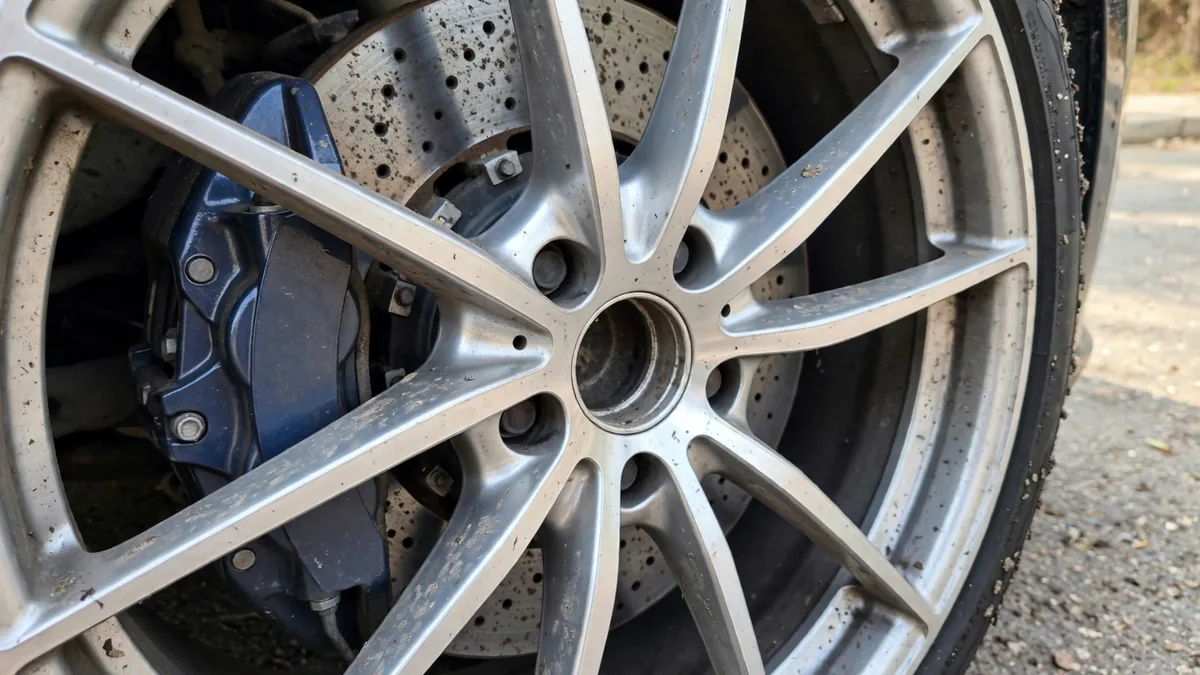
The figures below are estimates for a typical luxury carbon-ceramic brake disc, based on the usual costs of materials, manufacturing, callipers and fitting. Individual cars vary widely by maker and model.
| Cost area | Estimated share | Why it costs so much |
|---|---|---|
| Carbon fibre and silicon | 20 to 30 percent | Specialist fibres and silicon, used in large amounts per disc |
| Baking and siliconising | 25 to 35 percent | Weeks in high-temperature furnaces, with many discs rejected |
| Machining and drilling | 10 to 15 percent | Diamond tools are needed to cut a material harder than steel |
| Callipers and pads | 15 to 20 percent | Large multi-piston callipers and specialist pads to match |
| Testing and fitting | 5 to 10 percent | Every disc is inspected, balanced and bedded in before delivery |
| Development and tooling | 5 to 10 percent | The furnaces and moulds cost millions and serve few cars |
Why Ceramic Beats Iron on Heat
It barely wears, lap after lap
An iron brake disc wears every time it is used, shedding metal as dust and slowly growing thinner until it must be replaced. A carbon-ceramic disc wears so slowly that it can last the life of the car under normal road use, often quoted at 150,000 miles or more, because the ceramic surface is far harder than the pads pressing against it. The pads wear instead, and they are cheap by comparison. Over a long ownership the ceramic disc can actually work out cheaper than replacing iron discs several times, even though the first bill is shocking.
It stays strong when it is glowing hot
Iron discs lose friction as they heat up, which is why the pedal goes soft on a mountain descent or a track day. Carbon-ceramic discs keep their friction at temperatures above 800 degrees Celsius, and some can cope with far more, so the twentieth hard stop feels like the first. The disc does not just survive the heat, it needs it: ceramic brakes work best when they are warm, and they can feel wooden and unresponsive when stone cold, which is the one honest drawback of the technology.
It is lighter where weight matters most
A ceramic disc typically weighs about half as much as an iron disc of the same size, saving several kilograms per corner. That weight is unsprung, meaning it is not carried by the suspension, so every kilogram saved improves how the wheel follows the road, how the suspension reacts and how the car steers. Engineers chase unsprung weight harder than any other kind, because it pays off in every direction at once. The lightness of a ceramic disc is not a bonus. It is one of the main reasons the car feels so sharp.
The Price, in Plain Numbers
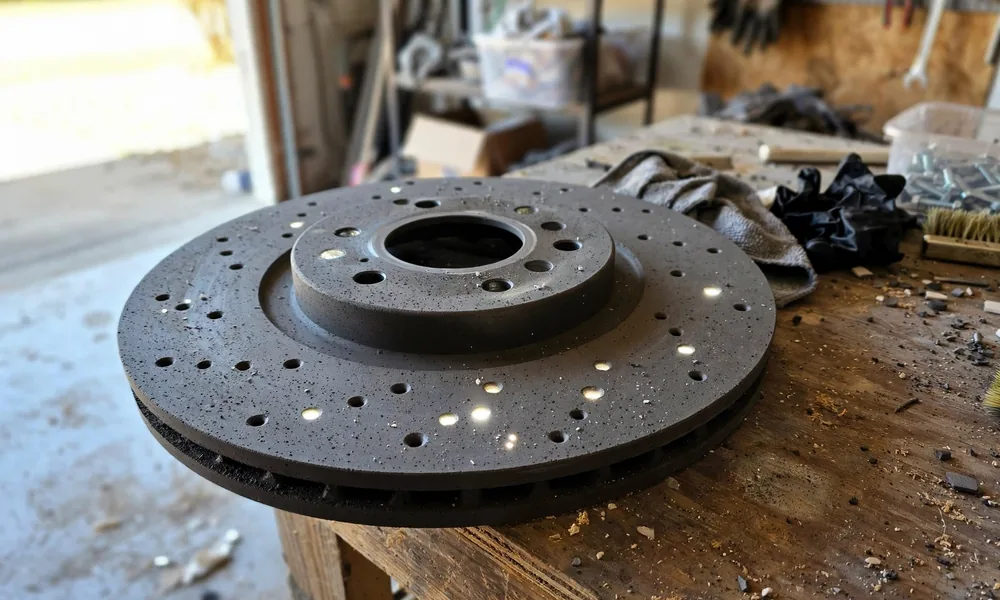
A set of carbon-ceramic brakes on a luxury car typically costs an estimated 8,000 to 15,000 dollars as a factory option, and a single replacement disc can cost an estimated 3,000 to 5,000 dollars. That is roughly ten times the price of an iron disc, and it is the number that stops most buyers in their tracks. But the comparison is not quite fair, because the ceramic disc will not need replacing for years, it will not fade on a hot lap, and it will save weight that no iron disc can match. For a car that is driven gently on the road, iron brakes are the sensible choice. For a car that is driven hard, on track days and mountain roads, the ceramic disc earns its price every time the pedal stays firm when an iron disc would have gone soft.
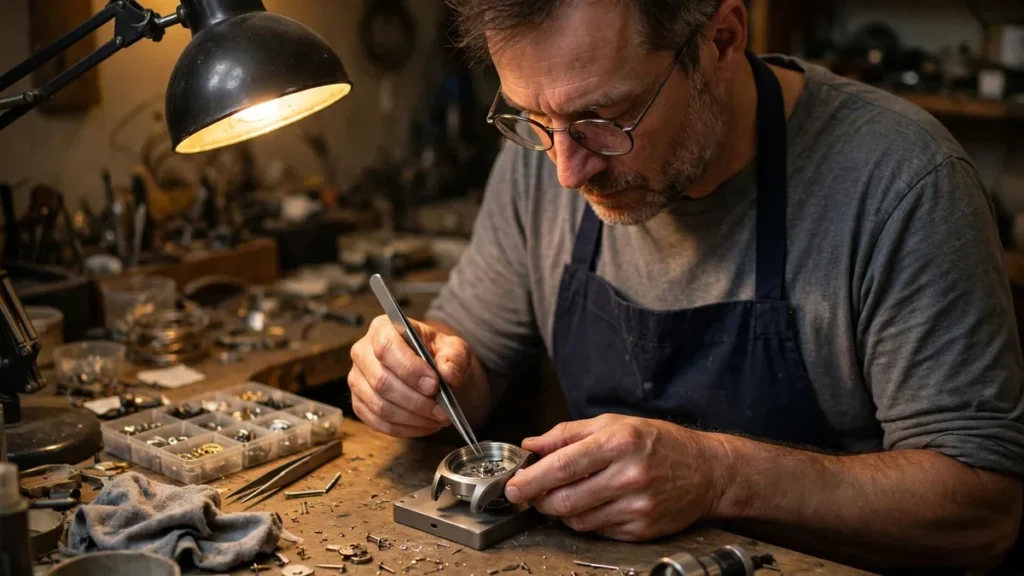
The making of the disc explains the rest of the bill. Carbon fibres are woven into the shape of a disc, soaked in resin and baked for days, then heated again with silicon until the carbon turns to silicon carbide, a ceramic almost as hard as diamond. Any crack, bubble or uneven patch means the disc is scrapped, and the rejection rate is far higher than for an iron casting. The finished disc is then drilled, balanced and coated, each step with diamond tooling that wears quickly. It is a slow, wasteful, expensive process, and the price is simply the cost of doing something the easy way cannot do.
For the figures behind the stopping power, luxury ceramic brake disc specs explained decodes the sizes, temperatures and weights, and how a luxury carbon-ceramic brake works follows the heat from pedal to disc. For the car that needs all of this most, how a luxury supercar works shows why its brakes matter as much as its engine.
A Rare Fact
Here is something the price list never mentions: carbon-ceramic brakes were first developed for racing and for aircraft, where a brake that fades is not an inconvenience but a danger, and they reached road cars only after decades of work to make them usable when cold. Early ceramic discs were so grabby and noisy at low speed that drivers hated them in traffic, and engineers spent years softening the pads and tuning the callipers before the technology felt civilised. The discs on a modern luxury car are the great-grandchildren of racing brakes, tamed just enough for the school run, and the price still carries a little of that racing heritage. You are not just buying a brake disc. You are buying a piece of technology that once belonged only to the fastest machines on earth.
A ceramic brake disc is expensive because it is made slowly, in furnaces, from materials that fight back, and because it does a job that iron simply cannot do at the limit. The price is the cost of brakes that do not fade, do not wear and do not weigh the car down, and for the drivers who need those things, that is not a luxury at all. It is the difference between stopping on the twentieth lap and hoping.