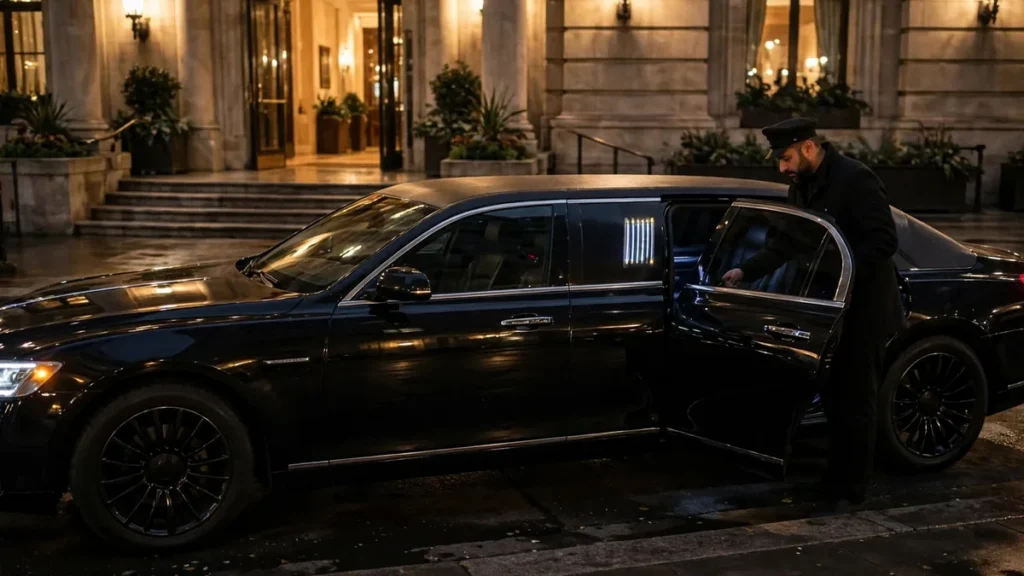
The dark minivan sat in the driveway with its sliding door open, and a neighbour stopped to ask the question that minivans never used to invite: how much did it cost? The owner named the figure, and the neighbour laughed, because minivans were supposed to be the sensible car, the one you bought when the sports car years were over. This one cost as much as a sports car, and it carried seven people, a dog, and a week of luggage. The neighbour stopped laughing when the door slid shut by itself, silently, and the cabin lights came on like a lounge.
A luxury electric minivan is a car built around a contradiction of its own. It has to be practical enough for school runs and airport trips, yet luxurious enough to justify a price that would buy a grand tourer. It has to carry a huge battery, yet keep the floor low enough for children and grandparents to climb in. And it has to do all of that in a shape that nobody buys to show off. This is why the price is so high, and where the money actually goes.
The battery: a house on wheels
The single biggest cost in an electric minivan is the battery, and the minivan needs one of the biggest batteries on the road. A luxury electric minivan carries a pack of around 100 to 120 kilowatt-hours, which costs an estimated 15,000 to 25,000 dollars on its own, because the car must move seven people and their luggage without stopping every two hours. A family car cannot ask its passengers to wait at a charger, so the battery has to be large, and large batteries are expensive. The guide to luxury electric minivan specs explained shows how that battery size sets the range, the charging time and the weight of the whole car.
The cabin: a lounge, not a bench
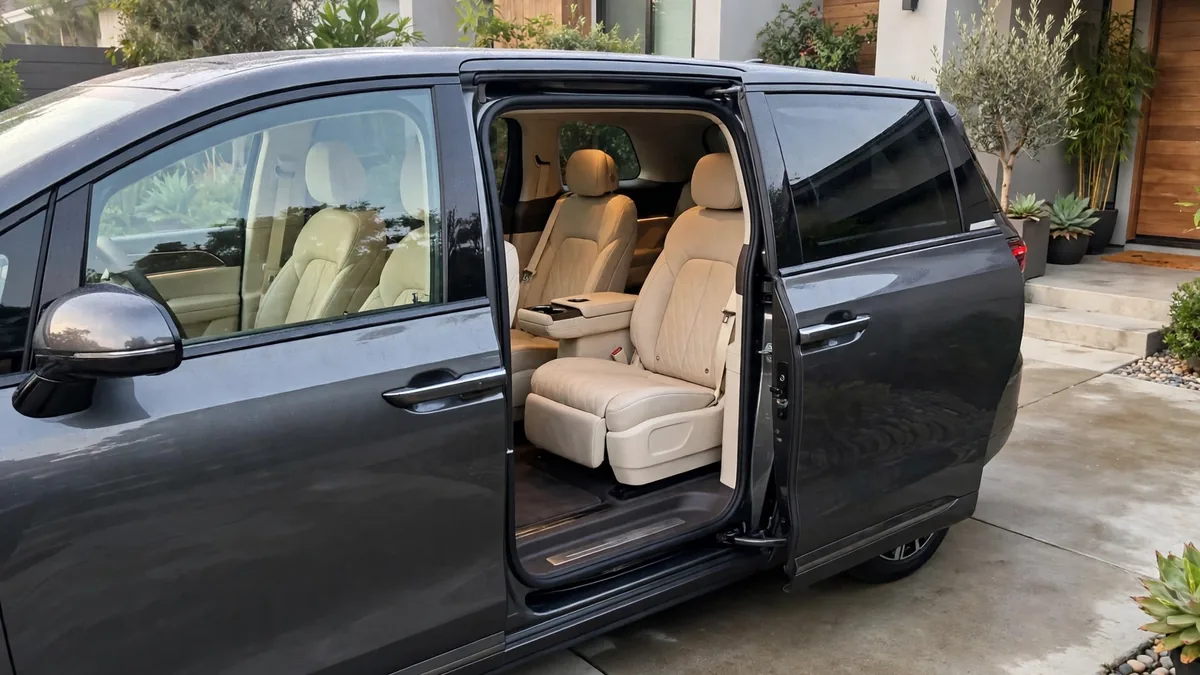
The second reason is the cabin, which in a luxury minivan is closer to a private lounge than a row of seats. The second row is usually two captain chairs, wide and soft, with their own armrests, heating, and leg rests, and the third row is a proper seat rather than a punishment for the smallest passenger. The materials are leather, soft-touch plastic and real wood, not the hard surfaces of a family workhorse, and every surface a hand touches has been chosen to feel expensive. Fitting that level of finish into a car that must also survive muddy shoes, spilled drinks and car seats is a design problem that costs real money to solve.
Silence and ride: the invisible luxury
Much of the price of a luxury electric minivan is spent on things a passenger never sees. The body is lined with extra soundproofing so the cabin stays quiet at motorway speed, the glass is thicker and layered to block wind noise, and the suspension is air-based, adjusting itself to the load so the ride stays smooth whether the car carries one person or seven. An electric motor is already silent, but silence makes every other noise louder, so engineers chase rattles, tyre roar and wind whistle with the patience of people tuning an instrument. That invisible work is one of the most expensive parts of the car.

Safety: seven seats, one promise
A minivan carries the most precious cargo a car can carry, and a luxury one is expected to protect it better than any other car on the road. The body is built with extra crash structure around all three rows, the battery is armoured underneath, and the car carries a full set of driver aids: automatic braking, blind-spot warnings, cameras that watch every corner, and systems that keep the car in its lane on a long drive. Each system needs sensors, computers and testing, and the testing is done with the car fully loaded, because a safety rating earned with an empty car means nothing to a family. Safety is not a feature on a minivan. It is the promise the whole car is built on, and it is priced accordingly.
Low volume: the family car nobody mass-produces
A luxury electric minivan is built in far smaller numbers than an ordinary family car, and low volume makes everything more expensive. The development cost — the design, the crash testing, the certification — is spread across a few tens of thousands of cars rather than hundreds of thousands, so each car carries a larger share. The sliding doors alone are an expensive mechanism, with motors, sensors and safety systems that must never trap a small hand, and they are built in numbers too low for cheap mass production. The guide to why a luxury electric grand tourer is so expensive shows the same low-volume maths in a very different car, where rarity is the point. In a minivan, rarity is an accident of the market, but the buyer pays for it just the same.
Where the money goes
| What you pay for | Estimated share of the price | Why it costs so much |
|---|---|---|
| Battery pack | About a quarter | Huge pack to move seven people far |
| Cabin and seats | About a fifth | Captain chairs, leather, lounge finish |
| Silence and ride | About a tenth | Soundproofing, layered glass, air suspension |
| Safety systems | About a fifth | Sensors, cameras and crash structure |
| Development and testing | About a fifth | Few cars share the cost |
What a luxury electric minivan costs
A luxury electric minivan costs an estimated 80,000 to 130,000 dollars, with the most exclusive versions, fitted with reclining rear seats and entertainment screens, reaching an estimated 160,000 dollars or more. That is the price of a sports car for a vehicle shaped like a box, and it surprises everyone who has not sat inside one. The running costs are lower than a petrol minivan, because electricity is cheaper than fuel and the car has fewer parts to service, but nobody buys one to save money. The guide to how a luxury electric convertible is made shows how a very different kind of luxury car is also built in small numbers by hand. Buyers pay for a family car that never feels like a compromise, and the price is the cost of removing the compromise.
A rare fact
Some luxury electric minivans can turn their rear seats into a bed. The captain chairs fold flat and join with the third row to make a sleeping platform long enough for two adults, and the car can run its heating and air conditioning all night from the battery without starting an engine. Families on long road trips have used it as a hotel room on wheels, and a few owners have camped in their driveway with their children just for the novelty. It is a strange second life for a school-run car, and it comes free with the battery the car already carries.
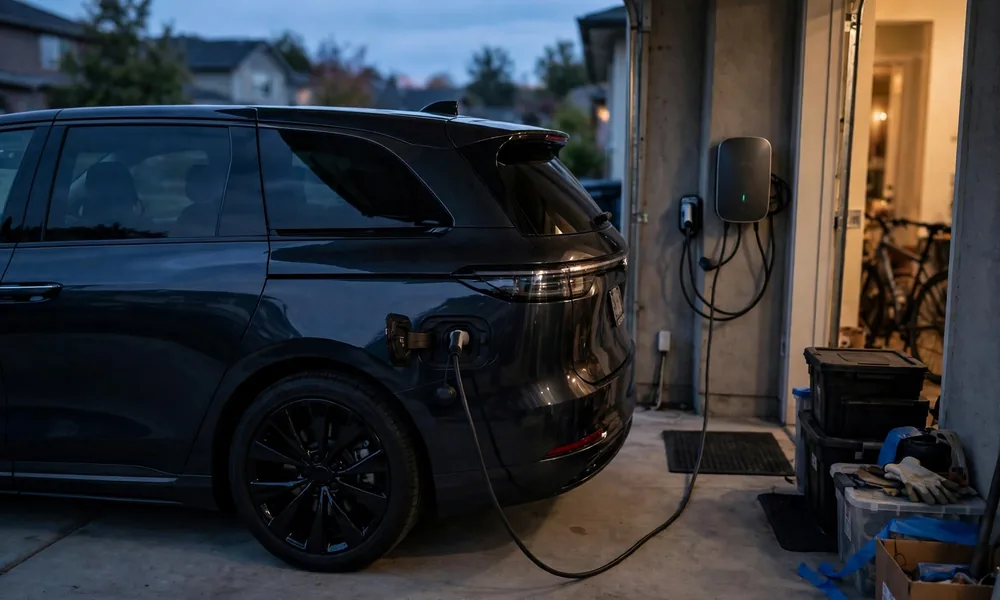
The neighbour in the driveway eventually stopped asking about the price and asked for a ride instead. The door slid open by itself, the cabin lights came on, and seven seats waited in silence. A minivan was never supposed to be a luxury car, and that is exactly why this one costs so much: it took the most practical shape on the road and refused to let it feel practical. For the families who buy one, the price is simply the cost of never having to choose between space and comfort again.