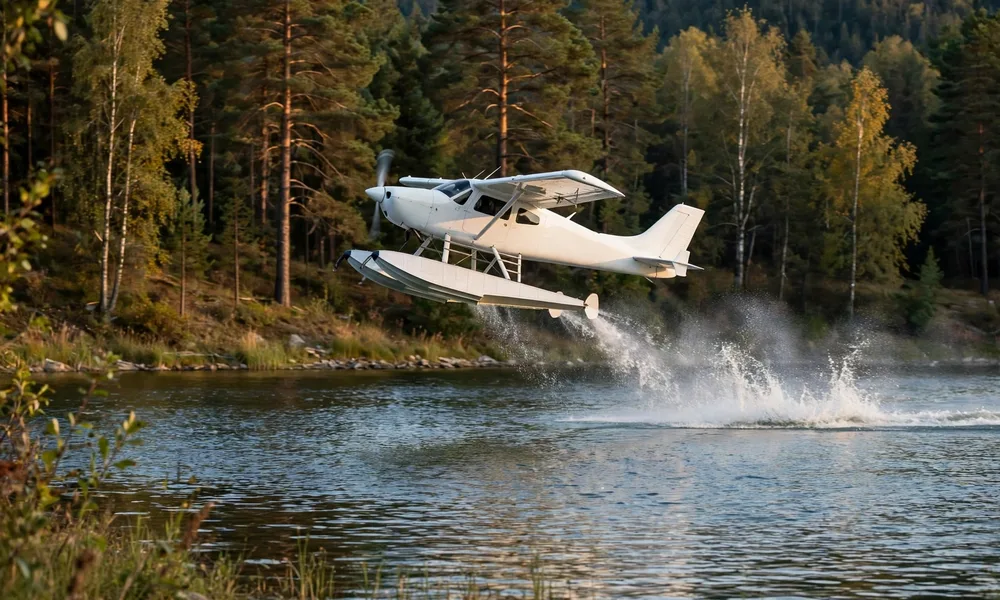
An electric seaplane is a seaplane that flies on battery power instead of burning aviation fuel. It looks much like any other small floatplane: a high wing, a propeller at the front, and floats underneath instead of wheels. The difference is under the cowling, where an electric motor and a battery pack replace the piston or turbine engine, and in the way it is operated, with charging on the dock instead of refuelling from a bowser. For short hops between lakes, harbours and coastal towns, it is one of the most practical early uses of electric flight, because the routes are short, the water is a free runway, and the aeroplane comes back to the same dock every time.

How the electric powertrain works
At the heart of an electric seaplane is a battery pack, usually made of lithium-ion cells, mounted low in the fuselage or in the floats where its weight helps stability. The battery feeds an electric motor, which turns the propeller directly or through a small gearbox. There is no fuel system, no exhaust and no oil, and the motor has far fewer moving parts than a piston engine. That means less vibration, less noise and, in principle, less maintenance, although the battery itself needs careful monitoring for temperature, charge state and cell health.
The motor is controlled by an inverter, which turns the battery’s direct current into the alternating current the motor needs and varies the power smoothly as the pilot moves the throttle. Take-off uses the most power by far: the motor runs at full output for a minute or two while the aeroplane accelerates across the water and climbs away. Once it is cruising, power demand falls sharply, and the pilot can throttle back to a level the battery can sustain for the rest of the flight. Landing is the easy part for the powertrain, because the motor can be shut down or run at idle while the floats settle onto the water.
Floats, hulls and getting off the water
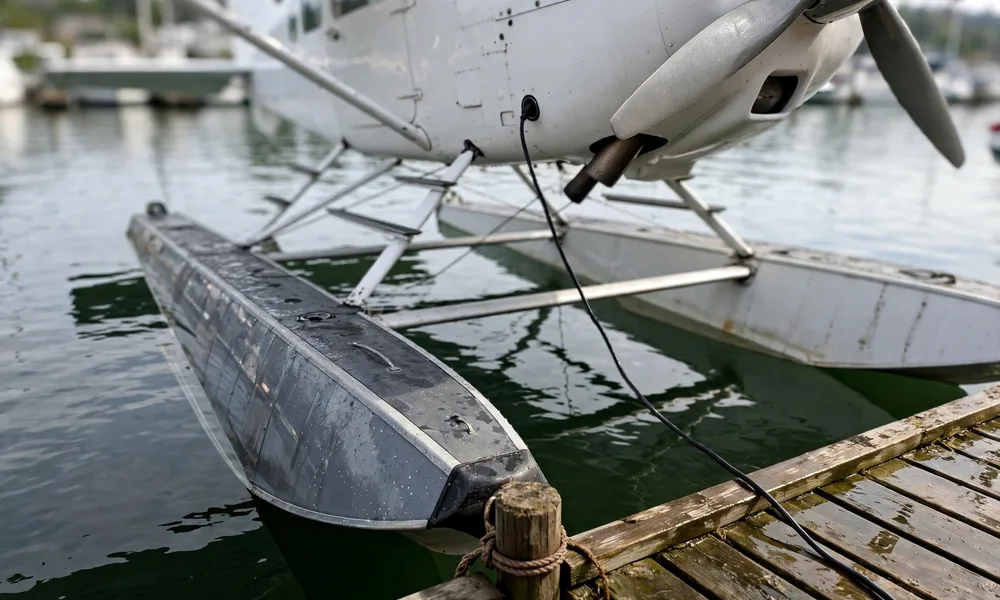
Most electric seaplanes are floatplanes, with two floats mounted on struts beneath the fuselage. Each float is a long, narrow hull with a stepped underside: a sharp break in the hull about halfway along that lets the float break free of the water’s suction as speed builds. Getting onto the step is the key skill of water flying. Too slow and the floats drag; too fast with the nose held down and they can dig in. Once the aeroplane is on the step, drag falls away and it accelerates quickly to flying speed, then lifts off with a gentle pull on the controls.
Some designs are flying boats instead, with the fuselage itself shaped like a hull and small stabilising floats under the wings. The principle is the same, but the hull carries the weight and the shape of the bottom does the work of the step. Flying boats tend to be larger and heavier, which is a problem for battery weight, so most electric seaplanes built so far are floatplanes converted from existing light aircraft. Converting a proven airframe is cheaper and faster than designing a new one, and it lets engineers focus on the battery and motor rather than the aerodynamics. The luxury seaplane’s specifications show how much of a seaplane’s character comes from its floats and hull shape, and the electric versions inherit those same trade-offs.
Range, weight and the battery problem
The hard limit on an electric seaplane is the battery. Aviation fuel packs far more energy per kilogram than even the best lithium-ion cells, so an electric aeroplane carries a heavy battery for a modest amount of flying. A typical converted floatplane might manage 30 to 45 minutes of useful flying, plus the reserve a pilot must keep for a diversion, which means practical routes of roughly 50 to 100 kilometres. Those numbers are estimates, and they vary with payload, weather and how much reserve the operator insists on, but they set the shape of the business: short, frequent hops, not long crossings.
Weight is the other half of the problem. Batteries are heavy, and a seaplane already carries the weight of its floats, which a landplane does not. Every kilogram of battery is a kilogram that cannot be a passenger or luggage, so early electric seaplanes typically carry fewer people than the same airframe with a piston engine — often four to six passengers instead of eight or nine. Operators accept that trade, because the routes are short and the demand is for a quick crossing rather than a long haul. As battery energy density improves, the payload will grow, but for now the electric seaplane is a small aeroplane doing short work.
Charging is the operational answer to short range. Because the aeroplane returns to the same dock, a charger can be installed at the mooring and the battery topped up between flights, often in well under an hour for a partial charge. Some operators plan battery swapping, where a spent pack is exchanged for a charged one, though that adds weight and complexity to the airframe. Either way, the rhythm is different from a fuel stop: the aeroplane charges while passengers board and luggage is loaded, and the turnaround is built around the charger rather than the fuel bowser. The electric hydrofoil board faces a similar bargain, trading range for silence and simplicity on short water crossings, and its riders accept the same short-hop logic.
Where electric seaplanes make sense
The natural home of the electric seaplane is the short commuter hop: a harbour city to an island, a lake town to a city centre, a coastal resort to an airport. These are routes where the alternative is a long drive around a bay or a slow ferry, and where saving 45 minutes matters enough to pay for a seat in a small aeroplane. They are also routes where the aeroplane flies the same short leg all day, so charging and scheduling are predictable. Tourism is another market: scenic flights over a lake or coastline, where a quiet aeroplane is part of the experience rather than a compromise.
There are places the electric seaplane does not yet reach. Long over-water crossings, heavy cargo work and remote operations with no charging infrastructure are still jobs for fuel-burning aircraft. Cold weather is a further challenge, because batteries lose capacity in the cold and the aeroplane needs energy for heating and for de-icing. Those limits will shrink as batteries improve, but they define the current map: short routes, mild climates, and docks with power. The luxury hydrofoil and how it works shows the same pattern in another form — a new electric craft that wins first on short, sheltered routes before it tries anything longer.
What comes next
For now, the electric seaplane is best understood as a specialist, not a replacement for the whole seaplane fleet. It does one job well: short, quiet, clean hops across water, from a dock to a dock, with no runway needed at either end. If your journey fits that shape, it is already a practical way to travel. If it does not, the fuel-burning floatplane will be flying it for a while yet — but the electric one is coming up fast behind it, one short hop at a time.