The farmer stood in the yard and looked at the price, then at the tractor, then at the price again. The machine in front of him was quiet, clean, and beautiful, with a cab like a small office and tyres taller than a man, and it cost more than his house had cost twenty years ago. His diesel tractor, parked beside it, had cost half as much and had worked for a decade. He asked the obvious question, the one every farmer asks, and the one every maker of a luxury electric tractor has to answer. Why does this tractor cost so much, when it has no engine at all?
The answer is not a single expensive part. It is a stack of them, each one costly on its own, and each one made in small numbers for a market that is still tiny. A luxury electric tractor is a new kind of machine, built by hand in small batches, with a battery the size of a small house, a cab like a luxury car, and software that thinks about the field as well as the machine. The six reasons below explain where the money goes, and why the price, once you see the whole picture, is not quite as strange as it first looks.

1. The Battery: A Small House Worth of Power
The battery is the largest single cost, and it is not close. A luxury electric tractor carries 150 to 300 kilowatt-hours, which is three to four times the battery of a large electric car, and that battery alone can cost 50,000 to 90,000 dollars. The cells are sealed, cooled, and armoured, and they are guaranteed for thousands of charge cycles. A diesel tractor hides its fuel in a cheap steel tank. An electric tractor carries its fuel in a machine that costs as much as a small car, and that is the first reason for the price.
2. The Cab: Twelve Hours in a Quiet Room
The second cost is the cab, and it is a luxury car in disguise. The cab is also quieter than a farmhouse kitchen, below 65 decibels at working speed, which means extra insulation, laminated glass, and a body built to keep vibration out. A farmer sits in that cab for twelve hours a day, and the maker knows that a tired driver makes mistakes. The cab is not decoration. It is a working tool, and it is priced like one. The numbers behind the cab are explained in the luxury electric tractor specifications explained, which covers the power, the battery, and the quiet room the driver sits in.
3. Small Numbers, Big Development Bills
The third reason is volume, or rather the lack of it. A car maker spreads the cost of developing a new model across hundreds of thousands of vehicles. A tractor maker spreads the same kind of development cost across a few hundred, or a few thousand, machines a year. Every machine sold has to carry a large share of that development bill, and that share alone can add tens of thousands of dollars to the price. The tractor is expensive partly because so few people have bought one yet.
4. The Motors and the Power Take-Off
The fourth cost is the drivetrain, which is two machines in one. The power take-off has to deliver its full speed from the moment it is switched on and hold that speed exactly, whatever the tractor is doing, which needs precise electronics and a motor that never wavers. A diesel tractor does this with gears and a clutch. An electric tractor does it with a second motor and a computer, and the computer and the motor together cost far more than the gears they replace. The way the whole system works is explained in how a luxury electric tractor works, which covers the motors, the battery, and the way the machine manages its power.

5. Safety, Certification, and the Duty of Care
The fifth reason is safety and certification, and it is a cost that never shows up in a photograph. A tractor is a dangerous machine, and an electric tractor is a dangerous machine with a high-voltage battery on board, so it has to pass tests a car never faces. The testing, the paperwork, and the insurance behind that certification cost a fortune, and every machine sold has to carry its share. A maker that skips this step is not cheaper. It is dangerous.
6. Charging, Support, and the Whole Service
The sixth reason is everything that comes after the sale. A luxury electric tractor is not sold like a diesel tractor, with a dealer down the road and a mechanic who knows the engine by heart. The buyer is not just buying a tractor. He is buying a promise that the machine will work when the harvest cannot wait, and that promise is expensive to keep. The same service thinking applies to other large electric vehicles, and why a luxury electric minibus is so expensive shows how the same costs appear in a very different machine.
The Cost Breakdown
| Cost driver | Share of the price |
|---|---|
| Battery | The largest single cost |
| Cab and comfort | A luxury car in disguise |
| Development, spread over few machines | Tens of thousands per tractor |
| Motors and power take-off | Two sealed motors and electronics |
| Safety and certification | Testing, paperwork, insurance |
| Charging and after-sales support | Charger, service, long warranty |
The breakdown makes the price easier to understand, but it also shows why the price will fall. The battery is the cost that will drop fastest, as battery factories scale up and the price of cells falls year by year. The development bill will shrink as more tractors are sold, and the service network will get cheaper as more dealers learn the machines. A tractor bought today pays for being early. A tractor bought in five years will cost less, and it will be bought by a farmer who did not have to pay for the first generation’s lessons.
Price, and What the Money Buys
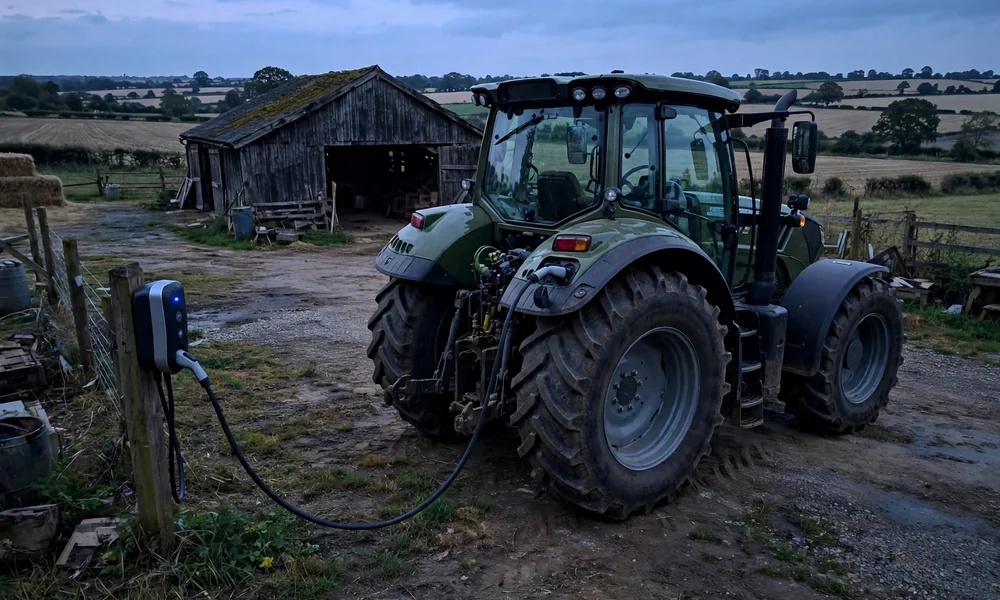
A luxury electric tractor costs around 180,000 to 350,000 dollars, and that is an estimate, not a list price, because every machine is built to order with different tyres, implements, and cab options. That is more than a comparable diesel tractor, and the difference is almost entirely the battery and the small production numbers. But the running costs tell a different story. Electricity costs a fraction of diesel, the electric motors have far fewer moving parts to wear out, and there is no engine oil, no exhaust system, and no gearbox to service. Over ten years, the electric tractor can cost less in total than the diesel machine it replaces, especially on a farm with its own solar panels.
A Rare Fact Worth Knowing
Here is the detail that surprises almost everyone who has driven a diesel tractor for years. An electric tractor can brake with its motors, feeding energy back into the battery every time it slows down, and on a hilly farm that recovered energy is not trivial. A tractor working a steep field can recover a noticeable share of the energy it used climbing the hill when it comes back down, something a diesel tractor throws away as heat in its brakes. The tractor is, in effect, harvesting the hill as well as the field, and the driver never has to think about it. It simply happens, quietly, every time the machine slows down.