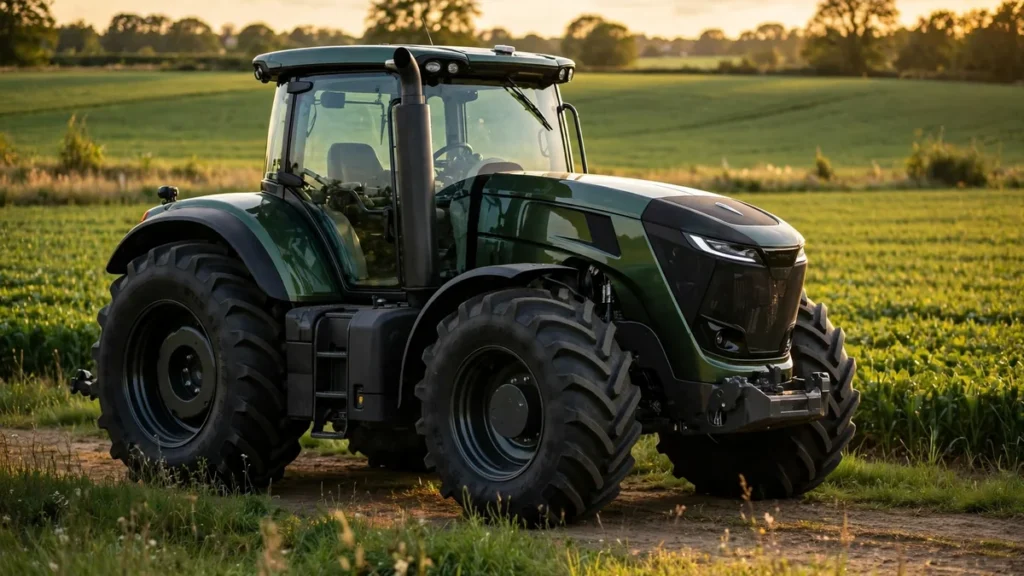
The tractor sat at the edge of the field at dawn, and the first thing anyone noticed was the silence. There was no diesel rumble rolling across the valley, no cloud of exhaust hanging in the cold air, and no vibration shaking the farmhouse windows. When the driver climbed in and touched the screen, the machine simply woke up, lifted its implement, and rolled forward as quietly as a large car. The field had been worked by tractors for a hundred years, and this was the first one that did not announce itself to the whole parish. That quiet is the luxury electric tractor’s calling card, and it is only the beginning of what makes it different.
A tractor is not a car, and its specification sheet should not be read like one. A car is judged on speed and acceleration. A tractor is judged on how hard it can pull, how long it can work, and how gently it treats the soil and the person sitting in it for twelve hours a day. The electric tractor changes every one of those answers. Its motors deliver their full pulling force from the moment they start turning, its cab is quieter than a farmhouse kitchen, and its running costs are a fraction of a diesel machine’s. The numbers below explain how, and which ones matter when the work is real.

Power and Torque: Pulling From the First Turn
A luxury electric tractor typically produces 100 to 200 kilowatts, which is roughly 135 to 270 horsepower, but the headline figure is not the power. It is the torque, often 800 to 1,200 newton-metres, available from standstill. A diesel tractor has to build its revs before it can pull hard, and it loses force every time it changes gear. An electric tractor pulls at full strength from the first centimetre, and it never changes gear, because it does not need one. That is why it can drag a heavy plough through wet ground without the wheelspin and the lurching that a diesel machine fights all day.
Most electric tractors use one large motor for the wheels and a second, smaller motor for the power take-off, which drives the implements behind the tractor. Splitting the work this way means the plough keeps spinning at exactly the right speed even when the tractor slows down, which a diesel machine cannot do without complicated gearing. Four-wheel drive is standard, with the motors split between the axles, and the electronic control of each wheel means the tractor can put its power exactly where the grip is, rather than spinning the wheel that has already lost traction. The running gear shares its thinking with other large electric vehicles, and how a luxury electric tractor works explains the motors, the battery, and the way the machine manages its power.
Battery, Working Hours, and the Charging Question
The battery is the heart of the specification sheet, and it is also the number that causes the most argument. A luxury electric tractor usually carries 150 to 300 kilowatt-hours, which is three to four times the battery of a large electric car, and it needs every bit of it. A tractor works far harder than a car, pulling heavy loads all day, and the honest working figure is six to ten hours of field work on a charge, depending on how heavy the implement is. Light work, such as mowing or spraying, stretches the battery much further than heavy ploughing, and a good buyer plans for the hardest day, not the easiest one.
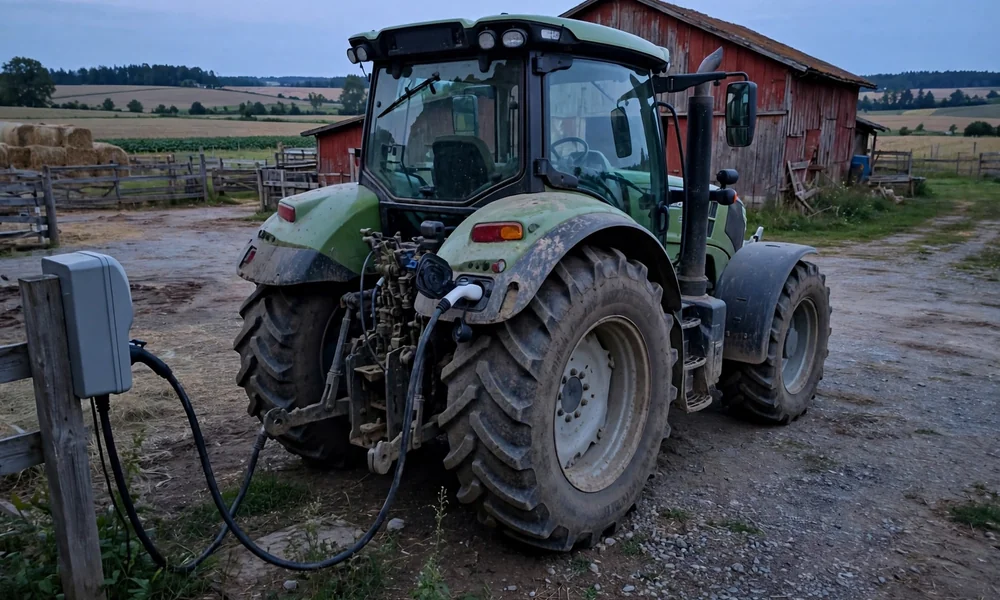
Charging is a farmyard question, not a motorway one. Most electric tractors charge overnight at the barn on a three-phase supply, taking eight to ten hours from empty, and a DC fast charger of 100 kilowatts or more can add a useful charge over a lunch break. The clever part is that the tractor can also give power back. Its battery can run the barn, power tools in the field, or keep the farmhouse lights on during a power cut, which turns the tractor into a mobile power station. The battery thinking is the same as in other large electric vehicles, and the luxury electric minivan specifications explained shows how the same battery chemistry behaves in a lighter, faster machine.

The Cab: Twelve Hours in a Quiet Room
The seat is a suspension seat with heating and cooling, the steering wheel adjusts in every direction, and the controls have moved from a forest of levers to a single touchscreen and a small joystick. The cab has panoramic glass, air conditioning that actually works at full power, and a sound system that can be heard properly for the first time in a tractor’s history. Look for a cab with a flat floor, good visibility to the implement behind, and a screen that shows the field map, the battery, and the implement settings in one place. The small electric runabouts that share the farm’s charging point are a different world, and how a luxury electric bike works shows the same electric thinking at the smallest possible scale.
The Numbers That Matter
| Specification | Typical luxury electric tractor |
|---|---|
| Power | 100 to 200 kW, roughly 135 to 270 hp |
| Torque | 800 to 1,200 Nm from standstill |
| Battery | 150 to 300 kWh |
| Working time | 6 to 10 hours of field work |
| Charging | Overnight AC; DC fast charge 100 kW or more |
| Top speed | 40 to 50 km/h on the road |
| Cab noise | Below 65 dB at working speed |
| Power take-off | Electric, independent of road speed |
The power take-off deserves a careful read, because it is the number that decides which implements the tractor can run. An electric power take-off delivers its full speed from the moment it is switched on, and it holds that speed exactly, whatever the tractor is doing. That precision matters for a seed drill, which must drop its seeds at exactly the right spacing, and for a sprayer, which must deliver exactly the right dose. A tractor whose power take-off wavers with the engine speed is a tractor that wastes seed and chemical, and the electric machine’s steadiness is one of its quietest advantages.
Price, and What You Are Really Paying For
A luxury electric tractor costs around 180,000 to 350,000 dollars, and that is an estimate, not a list price, because every machine is built to order with different tyres, implements, and cab options. That is more than a comparable diesel tractor, and the difference is almost entirely the battery. But the running costs tell a different story. Electricity costs a fraction of diesel, the electric motors have far fewer moving parts to wear out, and there is no engine oil, no exhaust system, and no gearbox to service. Over ten years, the electric tractor can cost less in total than the diesel machine it replaces, especially on a farm with its own solar panels.
A Rare Fact Worth Knowing
Here is the detail that surprises almost everyone who has driven a diesel tractor for years. An electric tractor can brake with its motors, feeding energy back into the battery every time it slows down, and on a hilly farm that recovered energy is not trivial. A tractor working a steep field can recover a noticeable share of the energy it used climbing the hill when it comes back down, something a diesel tractor throws away as heat in its brakes. The tractor is, in effect, harvesting the hill as well as the field, and the driver never has to think about it. It simply happens, quietly, every time the machine slows down.