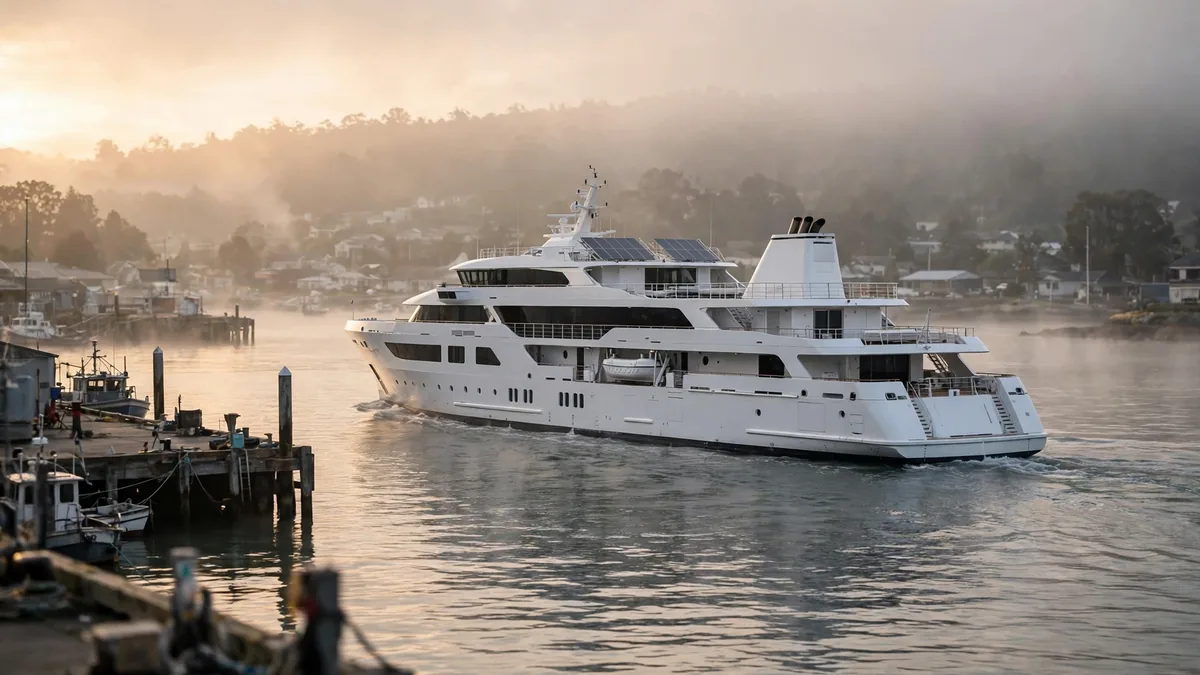
The harbour was still half asleep when the ship slipped away from the quay, and the people on the promenade turned to watch, because something was missing. There was no smoke from the funnel, no shudder through the water, no diesel thump rolling across the bay, only the soft wash of the bow and the quiet hum of the motors somewhere deep below the deck. The ship moved like a large, calm animal, and the gulls barely bothered to move as it passed, as if the water itself had not noticed it leaving.
That ship is a luxury electric ship, and its spec sheet is a list of numbers that decide how far it can sail, how fast it can go, how many people it can carry, and how quietly it can do it all. This guide explains those numbers in plain English, one system at a time, so the sheet reads like a description of a machine instead of a puzzle.
Battery and range: the ship’s fuel tank in kilowatt-hours
The first numbers describe the battery, usually measured in megawatt-hours rather than kilowatt-hours, often between two and ten megawatt-hours, and the range it gives, often around a hundred to two hundred nautical miles on a full charge. A ship battery is enormous because a ship is heavy and water resists it constantly, and the sheet lists the range at cruising speed, because a ship that sails faster drains its battery far more quickly. The guide to why a luxury electric ship is so expensive explains why an electric ship costs so much to build, and the battery is the first reason: it is the largest single cost on the whole vessel, and it decides almost everything else on the sheet.
Motors and propulsion: silent power under the hull
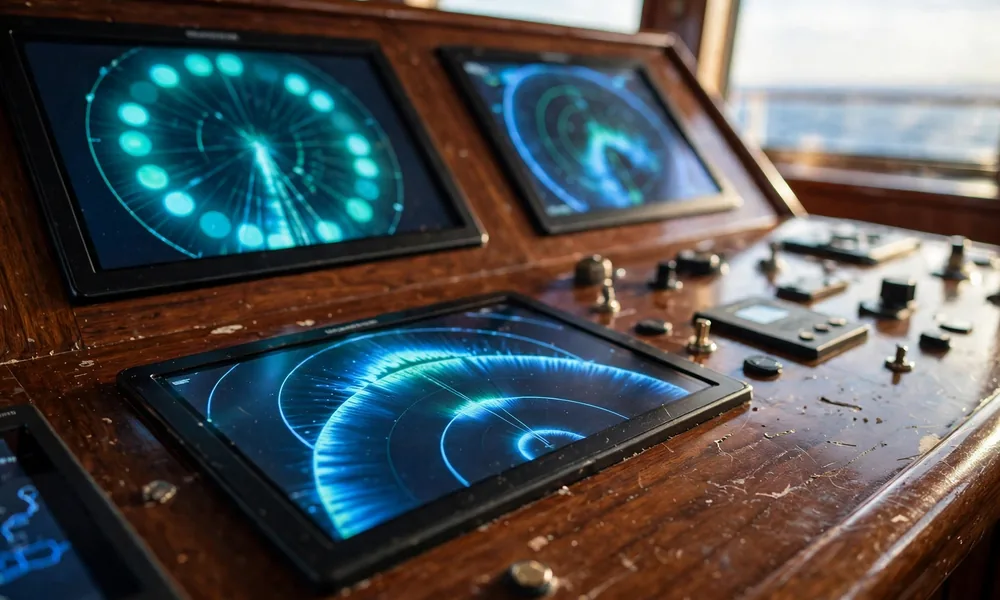
The next numbers describe the motors, usually two electric motors driving propellers or podded thrusters, producing several megawatts of power between them. An electric motor gives its full turning force at once, with no gears and no vibration, so the ship accelerates smoothly and the cabins stay quiet, even at full speed. The sheet lists the power in kilowatts and the propeller speed, because the propellers are what turn that power into movement through the water, and a well-matched propeller can add several nautical miles to the range without a bigger battery.
Speed and cruising: how fast, and how far, at once
The next numbers are the speed and the cruising range, and they belong together, because a ship cannot have both at once. The sheet lists the top speed, often around fifteen to twenty knots, and the cruising speed, usually around ten to twelve knots, where the battery lasts longest. At cruising speed the ship can sail for a full day on a charge, but at top speed the range can fall by half, which is why the captain plans every voyage around the cruising figure rather than the headline speed.
Charging: refuelling a ship at the quay
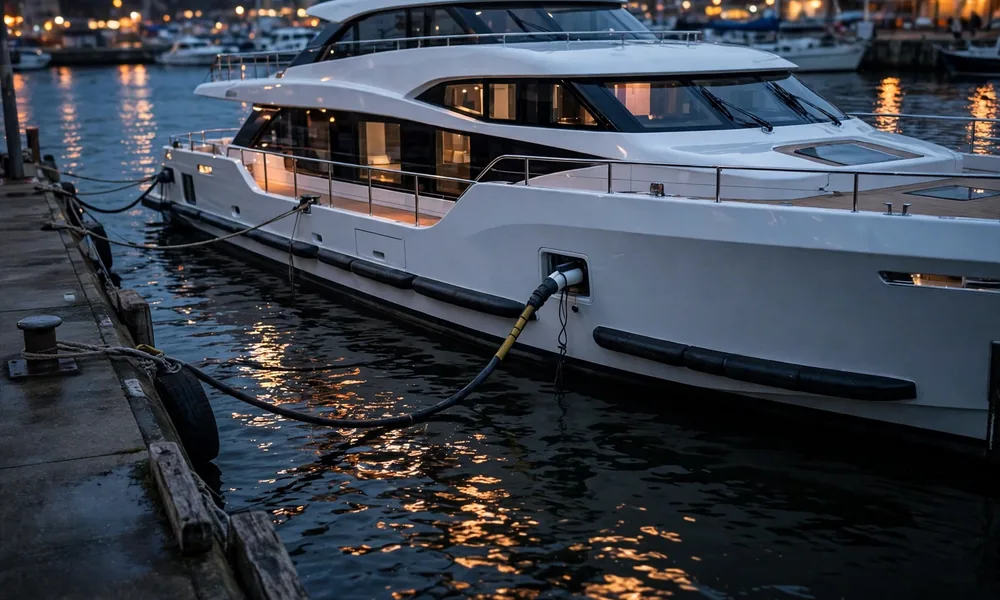
The next numbers describe the charging, and they are the ones that decide how the ship is used. The sheet lists the charging power, often several megawatts, and the time to recharge, usually a few hours at a shore connection while passengers board and cargo is loaded. A ship charges from a dedicated quay supply, not a car charger, and the sheet lists the voltage and the connector type, because a harbour must be built for the ship before the ship can be built for the harbour. The guide to luxury icebreaker specs, explained sets out how a different kind of large vessel lists its power figures, and the electric ship borrows the same idea: the numbers only make sense when the shore side is ready too.
Hull, passengers and comfort: the luxury part of the sheet
The next numbers describe the hull, the passengers and the comfort, and they are what make the ship a luxury vessel rather than a plain ferry. The sheet lists the length, often around fifty to eighty metres, the passenger capacity, usually a few hundred, and the cabins, lounges and observation decks, built with quiet insulation and wide windows.
Safety, backup and the environment: the numbers that protect everyone
The last numbers describe the safety systems, the backup power and the environmental figures, and they are the ones a harbour master reads first. The sheet lists the backup generator, usually a small diesel unit kept for emergencies, the fire protection for the battery rooms, and the emissions saved, because an electric ship produces no exhaust at all while sailing, only the clean wake behind it. The guide to how a luxury electric ferry is made follows how a smaller electric vessel is put together, and the ship uses the same ideas on a far larger scale: sealed battery rooms, redundant motors, and a hull built to keep the passengers safe even if one system fails.
The spec sheet at a glance
| Specification | Typical luxury figure | What it tells you |
|---|---|---|
| Battery | Around 2 to 10 megawatt-hours | How much energy the ship stores |
| Range | Around 100 to 200 nautical miles at cruising speed | How far the ship sails on a charge |
| Motor power | Several megawatts across two motors | How strongly the ship pushes through water |
| Top speed | Around 15 to 20 knots | How fast the ship can go at full power |
| Cruising speed | Around 10 to 12 knots | How fast the ship sails most efficiently |
| Charging power | Several megawatts at a shore connection | How fast the ship refuels at the quay |
| Recharge time | A few hours while passengers board | How long the ship waits between voyages |
| Length | Around 50 to 80 metres | How large the vessel is |
| Passengers | Usually a few hundred | How many people the ship carries |
| Backup power | Small diesel generator for emergencies | What keeps the ship safe if the battery fails |
What it costs
A luxury electric ship typically costs an estimated $20,000,000 to $80,000,000, depending on the size, the battery and the finish. The estimate covers the ship alone, not the shore charging, the crew or the yearly servicing, which are a real part of owning an electric ship, and which the owner pays over the decades the ship stays in service.
A rare fact
One detail few passengers ever learn is that an electric ship can feed power back into the harbour while it is moored, turning its enormous battery into a floating power station for the quay, the lights and even nearby buildings. The ship that sails silently by day can keep a harbour lit by night, and the spec sheet lists that shore-power output in megawatts, a quiet number that turns a vessel into part of the town it visits.
Read the sheet in that order, battery first, then motors, speed, charging, hull and safety, and the numbers stop looking like a code and start looking like a description of a machine. The best electric ships are not the ones with the biggest single number, but the ones whose numbers agree with each other, a battery the harbour can charge, a hull the motors can push, and a speed the passengers can enjoy in silence.