It is three in the morning, the sea is black and confused, and a small contact on the radar is not answering the radio. The boat that goes out to meet it is not a warship and not a yacht. It is a patrol boat, and it has to do two contradictory things at once: arrive fast enough to matter, and stay out there long enough to be useful. It will run at speeds that would tear a normal boat apart, in weather that keeps everything else in harbour, ready for anything from a rescue to an arrest. That is a hard brief, and it is an expensive one.
Most people picture a patrol boat as a simple thing: a hull, an engine, and a flashing light. The reality is closer to a small warship that has been told to behave like a police car. It needs military-grade sensors, a hull that can take punishment, engines that can run flat out for hours, and a deck that can launch a small boat while under way. It also needs to be comfortable enough for a crew to live aboard for days, because patrol work is mostly waiting, punctuated by moments when everything happens at once.
The price follows from that brief. A top-specification luxury patrol boat, the kind built for a coast guard, a private security fleet, or a head of state, can cost many times more than a yacht of the same length. The money goes into the hull, the engines, the electronics, and the years of testing that prove the boat will do its job when the weather turns and the radio goes quiet. This is where it all goes.

How a luxury patrol boat is built
The build is driven by one requirement above all: the boat must survive being driven hard, in bad weather, by a crew in a hurry. Every stage serves that.
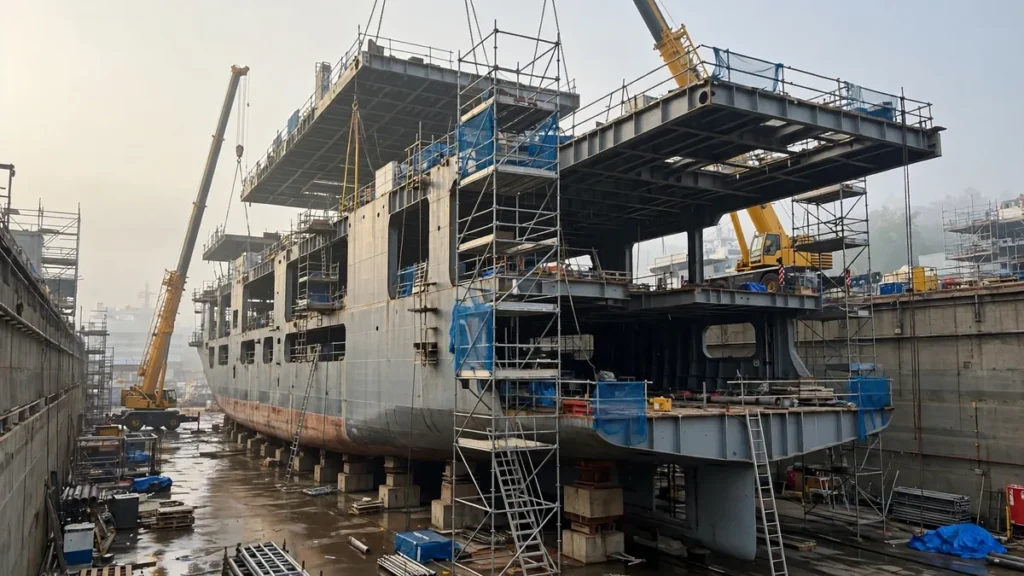
- A hull built to take punishment. The hull is the most expensive single structure on the boat. It is laid up in marine-grade aluminium or advanced composites, with frames and stringers far closer together than on a yacht, so the hull can slam into waves at forty knots without flexing or cracking. The hull form is tank-tested for months, because a patrol boat that pounds its crew to exhaustion is useless, however fast it is.
- Engines with no quiet mode. Patrol boats use multiple high-output diesels, or diesel and waterjet combinations, tuned for instant response rather than economy. The engines must go from idle to full power in seconds and hold it for hours, day after day, without complaint. That demands oversized cooling, heavy-duty gearboxes, and a maintenance regime closer to aviation than to yachting, and it shows in the price.
- Sensors that see in the dark. The mast carries radar, thermal cameras, and long-range optics that can pick out a small boat miles away, at night, in rain. Below, the electronics suite ties radar, charts, radio, and satellite links into one picture the crew can read at a glance. This is the same class of equipment fitted to naval vessels, and it is priced accordingly, because it must work the first time, every time.
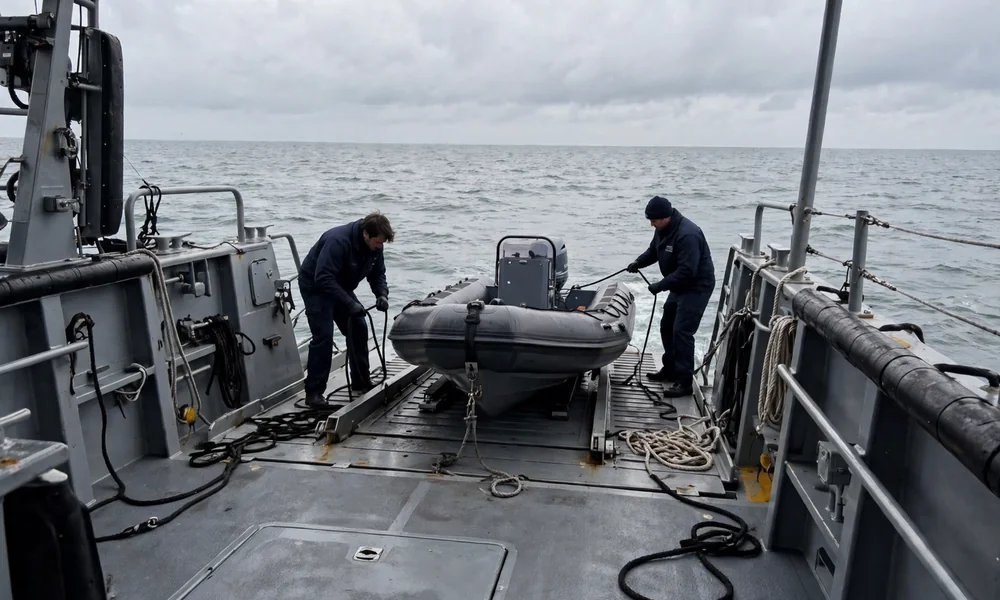
- A deck that works while moving. The stern is built around a launch and recovery system for a small rigid inflatable boat, so the crew can put a boarding team in the water while the patrol boat is still under way. The deck fittings, the crane, and the transom door are engineered to naval standards, because a boarding operation in a swell is no place for equipment that was designed for a marina.
- Armour and protection, quietly fitted. On the highest-specification boats, the bridge and engine spaces carry ballistic protection, the fuel tanks are self-sealing, and the windows are rated against impact. None of it is visible from the outside, which is the point. The protection is built into the structure during construction, because it cannot be bolted on afterwards without ruining the boat’s balance and speed.
- Trials that try to break it. Before delivery, the boat is run through sea trials that are deliberately brutal: full-speed turns, crash stops, heavy-weather runs, and simulated failures of engines and steering. The crew trains aboard during the trials, and anything that fails is rebuilt. A patrol boat is not accepted because it looks finished. It is accepted because it refused to break.

The specifications behind the price
These figures are typical of a large, high-specification patrol boat. They describe a vessel built for speed, endurance, and rough water, not for comfort alone.
| Specification | Figure |
|---|---|
| Length overall | About 40 metres |
| Beam (width) | About 8 metres |
| Top speed | About 40 knots |
| Range at patrol speed | About 1,500 nautical miles |
| Engines | Three high-output diesels |
| Total power | About 7,500 horsepower |
| Construction | Marine-grade aluminium |
| Crew | About 12 people |
| Endurance | About 7 days at sea |
| Onboard boat | 7-metre rigid inflatable, stern launched |
The telling figure is the power. Seven thousand five hundred horsepower in a forty-metre hull is an extraordinary amount of muscle, roughly ten times the power of a fast sports car, and it exists for one reason: a patrol boat that cannot catch what it is chasing is a very expensive way to watch it leave. The fuel bill is enormous, which is why patrol boats cruise economically and only open the throttles when it matters. The engines, the fuel system, and the hull are all built around that short, violent burst of speed.
What a luxury patrol boat actually costs
A large, high-specification luxury patrol boat costs an estimated $15 million to $30 million to build, and that figure is an estimate that varies with size, sensors, and the level of protection fitted. The electronics alone can run into the millions, and the engines are priced like small aircraft powerplants. Then comes the running cost: fuel, a trained crew of a dozen, and maintenance by specialists, all year round, whether the boat is at sea or alongside. Buyers accept this because the alternative is worse. A cheap, slow patrol boat is no bargain when the call comes at three in the morning. To see the build in full, how a luxury patrol boat is made follows the vessel from hull to handover, and the luxury patrol boat specs explained lays out the speed, range, and power in detail.
A rare fact worth knowing
Here is a detail that few people outside the profession know: some patrol boats are designed to be deliberately uncomfortable at rest. A hull shaped for forty knots in rough water rolls awkwardly at anchor, and crews learn to live with a motion that would make most sailors seasick. Designers accept the trade: the boat’s job is to get somewhere fast, in weather that grounds everything else, and a hull that is gentle at anchor is usually slow when it counts.
So a luxury patrol boat is expensive because it is, in effect, three vessels in one: a high-speed interceptor, a floating sensor station, and a small ship that must keep a crew fed, rested, and ready for a week at sea. It is built to be driven hard, to see in the dark, and to refuse to break. The price is the cost of being certain. For a look at another working boat where the specification is everything, the luxury fireboat specs explained shows what happens when the same thinking is turned to fighting fires at sea.