On a Saturday morning, a family leaves the house with the floors still sticky from breakfast, and when they come home the tiles shine. Nobody mopped. It feels like a small miracle, until the owner looks at the receipt and wonders why a mop costs as much as a good laptop.
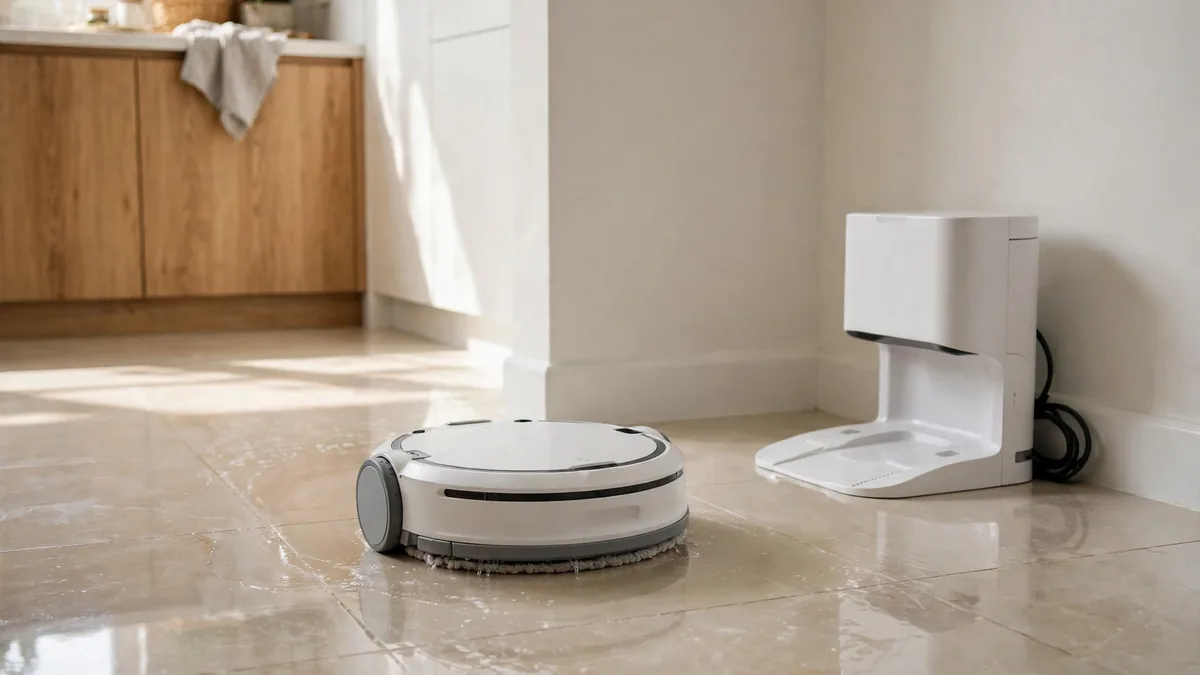
A luxury robot mop is a self-driving floor washer that vacuums dust, scrubs with spinning or vibrating pads, and returns to a tall docking station that empties, washes, and dries it. The price is not for the mop alone; it pays for the sensors that map a home, the motors that press the pads down, the station that does the dirty work, and the software that keeps the machine from soaking a rug.
How a Luxury Robot Mop Works
Step 1: Lasers and cameras map the whole home
The first thing a luxury robot mop does is learn the house, and it does it with a spinning laser on its top that sweeps the rooms thousands of times a minute, measuring the distance to every wall and chair leg. That laser map is joined by a camera and a set of cliff sensors, so the machine knows where the stairs are and where the rug begins, and it stores the map in its memory for every clean that follows. Cheaper robots bump their way around and clean the same patch three times while missing another entirely, but a mapped robot cleans in neat rows, like mowing a lawn.
Step 2: Spinning pads scrub instead of dragging
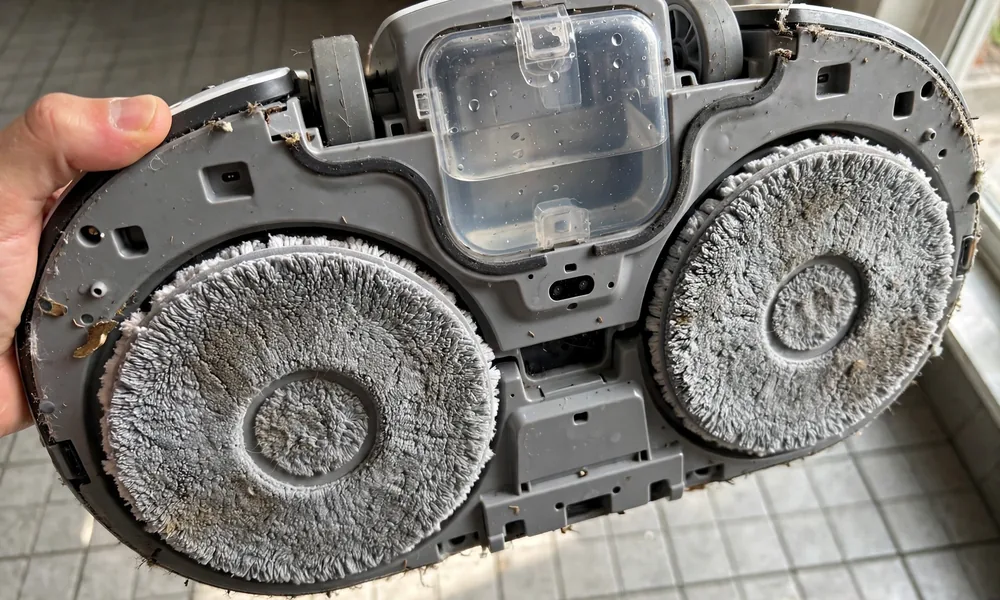
An ordinary robot mop drags a damp cloth behind it, which spreads dirt as much as it removes it, but a luxury mop uses two spinning pads that rotate in opposite directions, pressing down with real force. The pads spin hundreds of times a minute, and a small motor lifts them when the machine crosses a rug, so the carpet stays dry while the hard floor gets scrubbed. That scrubbing action is what lifts dried sauce and muddy footprints, and it is the difference between a floor that looks clean and one that is clean.
Step 3: The dock washes, dries, and refills the mop
The tall docking station is the real luxury in the system, and it is also the biggest single reason for the price. Inside it are two water tanks, one clean and one dirty, a set of brushes that scrub the mop pads, a heater that dries them with warm air so they do not smell, and a dust bag that empties the vacuum bin. The station refills the mop’s own small water tank before each run and washes the pads after, so the owner only has to empty the dirty water and refill the clean tank every few days. A machine without a good dock is a mop you have to wash by hand, which defeats the purpose, and how a luxury robot mop works shows just how much of the cleaning really happens at the dock, not on the floor.
Step 4: Sensors keep rugs dry and stairs safe
A robot mop that cannot tell a rug from a tile is a disaster waiting to happen, so luxury models carry a carpet sensor that lifts the pads the moment the wheels touch fabric, and some even lift the whole mopping plate clear of the floor. Cliff sensors look down at the floor ahead and stop the machine at the top of a staircase, while a bumper and a soft-touch sensor keep it from knocking over a vase or a pet’s water bowl. The newest models add a camera that recognises shoes, cables, and pet messes, steering around them instead of spreading them across the floor, which is a feature owners learn to love very quickly.
Step 5: The software plans every clean like a route
The software inside a luxury robot mop is as important as the hardware, because it turns the laser map into a cleaning plan. It divides the house into rooms, cleans the bedrooms before the kitchen so dirt is not carried through, and lets the owner draw no-go zones around a child’s play mat or a pet bed. That software is written and tested by a team that keeps working for years, and its cost is spread across every machine sold, which is why how a luxury robot mop is made includes a long testing stage where the mop is run through a fake home hundreds of times.
Step 6: Batteries, motors, and quiet running cost more than they look
A luxury robot mop needs a large battery to clean a whole house on one charge, usually a lithium pack that runs for two to three hours, and it needs strong suction motors that can pick up dust before the pads ever touch the floor. Both have to be quiet, because a machine that roars through the house at night will be switched off and forgotten, so the motors are balanced, the fans are shaped to cut noise, and the body is lined with sound-damping material. The wheels are built to climb the small lip between rooms without getting stuck, and the whole machine is sealed against water splashes from its own tanks.
Luxury Robot Mop Specs at a Glance
| Specification | Typical Luxury Value | What It Means for You |
|---|---|---|
| Navigation | Laser mapping plus camera | Neat rows, no missed patches |
| Mopping system | Dual spinning pads, auto lift | Real scrubbing, dry rugs |
| Docking station | Auto wash, hot-air dry, refill | Hands free for days at a time |
| Suction power | About 6,000 to 10,000 Pa | Dust gone before mopping starts |
| Battery life | Two to three hours per run | A whole house on one charge |
| Obstacle avoidance | Camera and 3D sensors | Steers around shoes and cables |
| Noise level | About 55 to 65 dB | Quiet enough to run at night |
What a Luxury Robot Mop Costs
A luxury robot mop usually costs between an estimated $900 and $1,800, with the top models that include a full wash-and-dry dock sitting at the high end and simpler laser-mapped models near the low end. The dock alone can account for a third of the price, because it contains its own pumps, heaters, and tanks, and the laser, the camera, and the scrubbing motors make up most of the rest. Buyers should check that the dock fits where they plan to put it, since the tall station needs space and a nearby socket, and they should measure the gap under their furniture, because a mop that cannot fit under the sofa will leave a dusty border around every room. The value is in the time saved, and the spec sheet is the clearest guide to it, which is why the specs of a luxury robot mop, explained are worth reading before choosing between models that look identical from the outside.

A Rare Fact
The first robot vacuum, sold in 2002, had no map at all and cleaned by bouncing off walls at random, yet people loved it because it worked while they were out. It took almost twenty years before a robot mop could wash its own pads, because the plumbing, heating, and dirty-water handling needed to fit inside a home appliance took that long to shrink and to become affordable. The modern dock is really a tiny laundry and a tiny sink in one box, and it is the part of the machine that would have seemed like science fiction to the first robot vacuum owners.


