Every luxury ship has a funnel, and every passenger recognises it. It is the tall, sculpted shape that rises above the top deck, often painted in the line’s colours, often the first thing you see when a ship comes into port. A funnel for a large luxury ship is estimated to cost between three and twelve million dollars, and the reasons have very little to do with smoke.
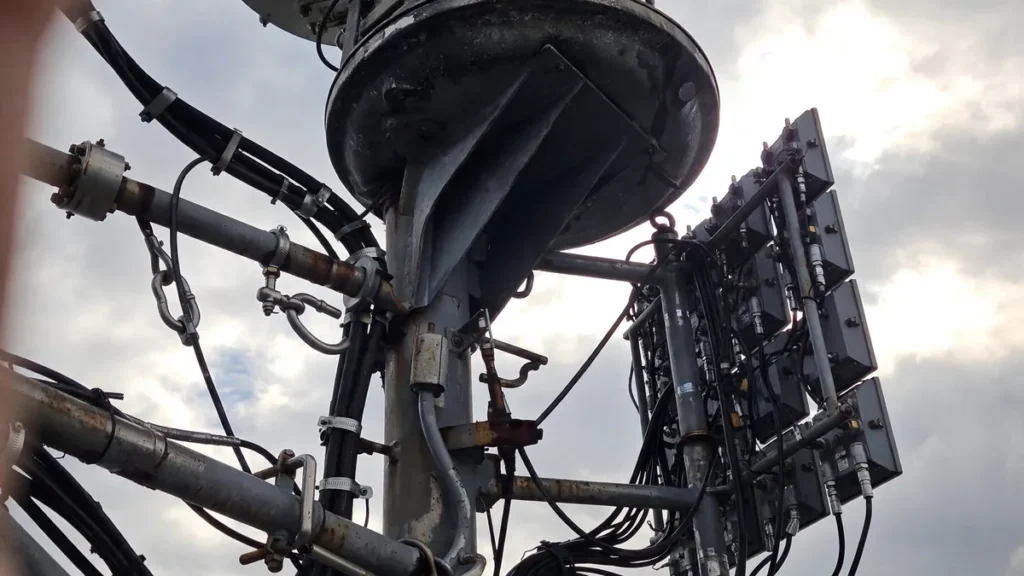
A modern funnel is not a pipe. It is a building in its own right, a structure the size of a small house that carries exhausts from several engines, houses radar and antennas, holds water tanks and ventilation machinery, and has to survive heat, salt, vibration and storms for thirty years, all while looking beautiful.
This article explains where the money goes, from the steel and the exhaust systems inside to the styling, the paint, and the engineering that keeps the smoke away from the passengers.

Size, Steel and the Structure Inside
The first cost driver is size. A funnel on a large luxury ship can be fifteen to twenty-five metres tall and ten metres across, which makes it larger than most houses, and it is built from steel plate that has to survive exhaust gas temperatures of several hundred degrees on the inside and salt spray on the outside.
Inside that casing sits a maze. Each engine has its own exhaust trunk, a large diameter pipe that runs up through the funnel and out of the top, and the trunks have to be routed so they do not interfere with each other, with the ventilation ducts, or with the water tanks and the radar equipment that also live inside. The routing is modelled in three dimensions before a single plate is cut, because a mistake discovered during construction means cutting open a structure that has already been welded, painted, and fitted out. The steel, the insulation, and the structure together are estimated to cost between one and three million dollars, before a single piece of equipment is fitted. The engines whose exhaust the funnel carries are a story of their own, and the specification of a luxury yacht engine shows how much power, and how much heat, those machines produce.
Exhaust, Emissions and the Clean Air Bill
The second cost driver is what the funnel does with the exhaust, and this is where the modern price has grown fastest. A luxury ship’s engines burn fuel, and the exhaust they produce contains soot, sulphur, and nitrogen oxides.
The main tool is the exhaust gas cleaning system, often called a scrubber, which washes the exhaust with seawater or with a chemical solution to remove sulphur. A scrubber for a large ship is a tower several metres tall, made from corrosion resistant alloys, with pumps, tanks, and pipework that have to survive hot, acidic water. A single system is estimated to cost between one and three million dollars, and a large ship may carry more than one. On top of that sit the selective catalytic reduction units, which use a chemical reaction to cut nitrogen oxides, and the particulate filters that catch soot. The funnel is shaped so the smoke rises clear of the decks, and the top is fitted with caps and deflectors that throw the exhaust upward and backward, away from the sun loungers and the balconies. The same concern with scale and emissions runs through the biggest ships afloat, and the full specification of a luxury ocean liner shows how the funnel figures fit into a vessel that carries thousands of people.
Styling, Paint and the Shape of a Brand
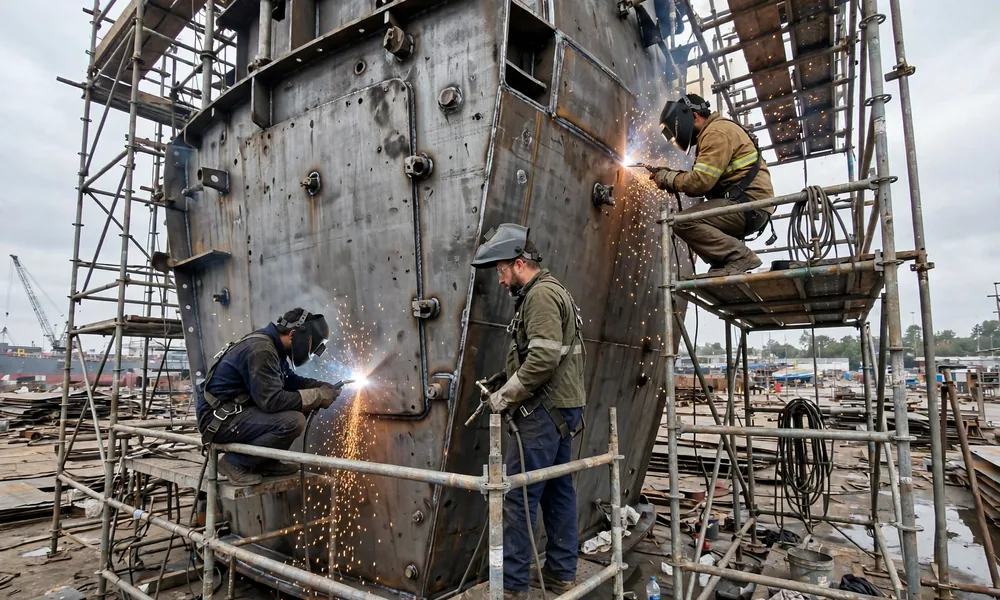
The third cost driver is the one passengers actually see: the styling. A funnel is the most recognisable part of a cruise line’s identity, and the lines spend serious money making it distinctive. The sculpted shapes, the raked tops, the coloured bands, and the logos are all designed by studios, modelled, and then built in steel, and a curved shape costs far more to build than a straight one. Every curve means plates bent on a press, welded along a line that is not straight, and faired smooth so the paint sits perfectly.
A funnel is painted with a marine coating system, several layers thick, designed to survive exhaust heat, ultraviolet light, and salt, and it is applied in a controlled environment, because a flaw in the coating means rust, and rust on the most visible part of the ship is the one thing a cruise line will not accept. The paint job alone is estimated to cost between one hundred thousand and three hundred thousand dollars, and it is redone on a regular cycle through the ship’s life. The funnel also carries the ship’s name, the line’s logo, and often a set of lights that make it glow at night. The drive to make ships cleaner and more efficient is reshaping the whole industry, and why a luxury electric ship costs so much shows what happens when builders try to get rid of the exhaust altogether.
The Price, in Plain Terms
The steel structure, insulation and foundations are estimated at one to three million dollars. The exhaust cleaning systems, scrubbers and catalytic units, are estimated at one to four million dollars. The styling, curved plating, paint and lighting are estimated at five hundred thousand to two million dollars. The engineering, wind tunnel testing, installation and sea trials are estimated at five hundred thousand to two million dollars. The total for a large luxury ship funnel lands, by most estimates, between three and twelve million dollars, and on the largest and most distinctive ships it can go higher still.
Those are estimated figures, and they move with the ship, the yard, and the regulations in force when the ship is built, but the shape of the bill is stable. Roughly a third goes into the structure, roughly a third into cleaning the exhaust, and roughly a third into the styling and the engineering that hold it all together.

A Rare Fact About the Funnel
Here is a detail that surprises even people who have cruised many times. On some modern luxury ships, the funnel is not a real funnel at all, or not entirely. The exhausts from the engines are routed up through a structure that looks like a funnel, but the funnel casing itself is mostly empty space, built as a sculptural shell around the pipes, the tanks, and the equipment inside. On a few ships, the funnel even houses a bar, a viewing platform, or a glass lift, so passengers can stand inside the most famous shape on the ship and look out over the sea.
What the Price Means for You
For a passenger, the price of the funnel is paid back in clean air and a clear view. A funnel that works means no soot on the sun loungers, no smell of exhaust on the balcony, and no smoke in the photographs. A funnel that is built well also means a ship that can enter the ports with the strictest air rules, which is why the newest ships can visit places the older ones cannot. It is the ship’s signature, written in steel, and it carries the engines’ exhaust, the ship’s clean air systems, and the cruise line’s identity, all at once.