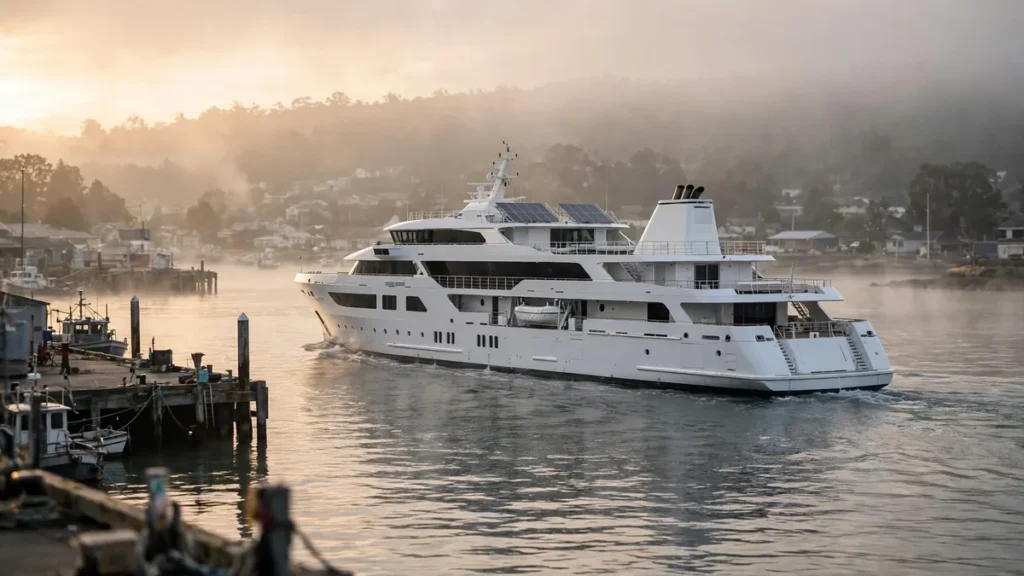
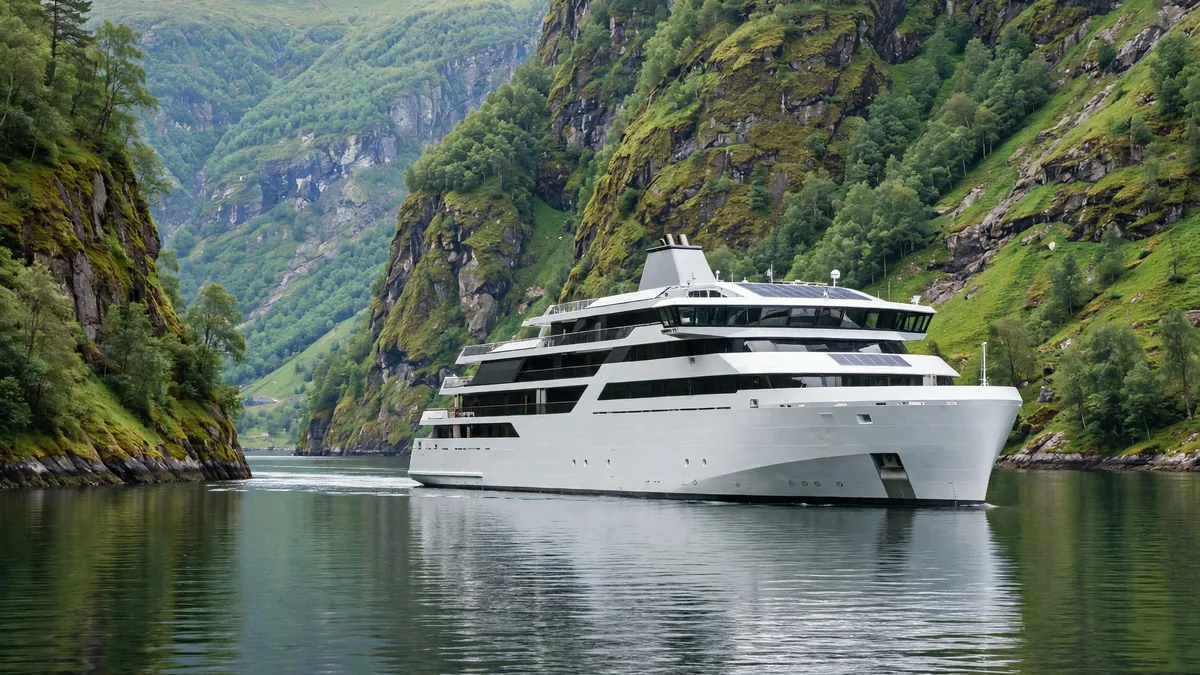
In a northern fjord, a large ship glides between steep green walls without a sound, no diesel throb, no smoke from the funnel, just the quiet wash of water at the bow and the reflection of the mountains in the hull. Passengers stand on deck in silence, listening to the water, and then someone asks the price of the silence, and the answer is the reason this article exists. The ship is a luxury electric ship, and it costs as much as it does for reasons that have almost nothing to do with how quiet it is.
This is why a luxury electric ship is so expensive, in seven costs, from the battery under the deck to the motors, the charging, the hull, the quiet and the yards that build them. Each reason alone sounds reasonable, and it is only when they are added together that the price starts to make sense, because a luxury electric ship is not a diesel ship with a battery, it is a different kind of machine altogether.
Reason 1: The battery is the biggest single cost in the ship
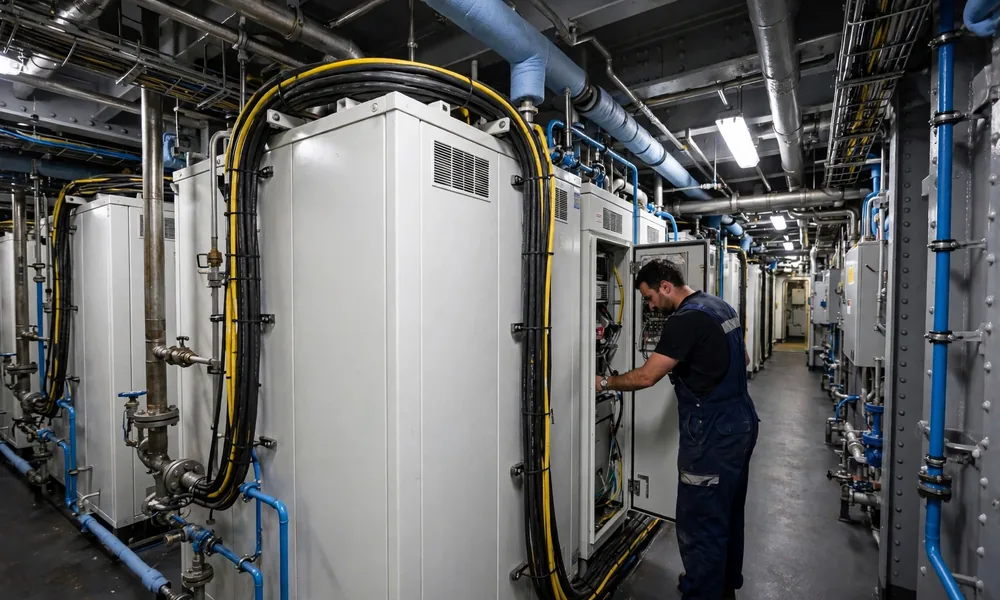
The first cost is the battery, and it is the largest single item in the whole ship. A luxury electric ship needs a battery measured in megawatt-hours, thousands of times larger than a car’s, made of thousands of cells wired together, cooled by liquid, wrapped in armour and watched by electronics that monitor every cell, every second. The cells alone cost millions, and the pack around them, the cooling, the fire protection and the software that keeps it safe, costs millions more, so the battery can be a third of the price of the whole ship. The guide to how a luxury electric ferry is made follows a smaller battery fitted to a smaller ship, and the pack there is what the whole vessel is built around.
Reason 2: Electric motors, and the power to use them
The second cost is the motors, and a luxury electric ship usually has two or more of them, each driving a propeller or a pod that can turn in any direction. Each motor is a large, precisely built machine, with copper windings and magnets that must be cooled while they work, and together they make more power than a diesel engine of the same size, delivered silently, with no vibration, and with full torque the instant the captain asks for it.
Reason 3: Charging infrastructure that does not exist yet
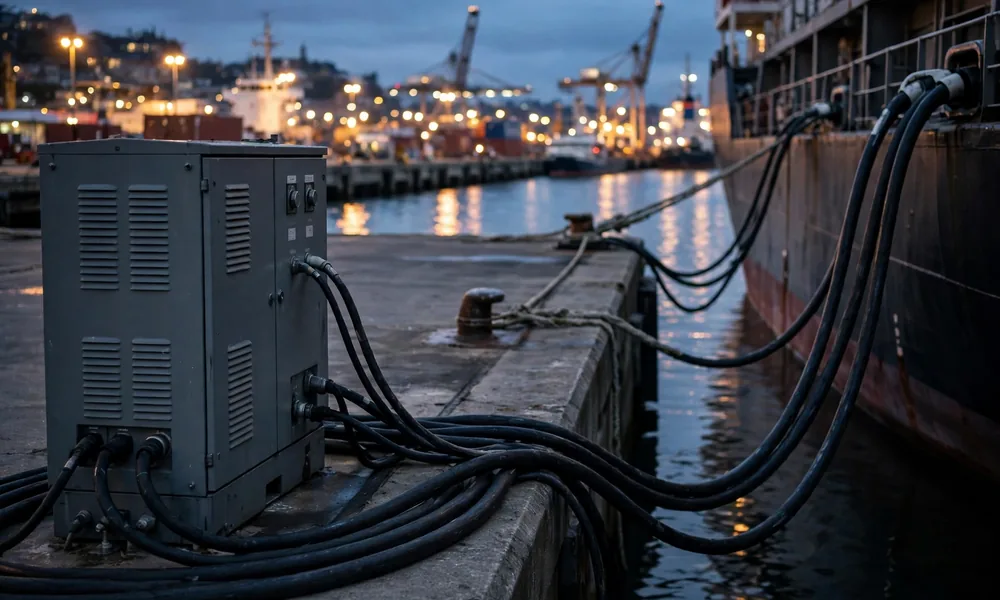
The third cost is the charging, and it is the one buyers forget because it is not on the ship. An electric ship needs a charger on shore that can deliver megawatts, more power than a small town uses, and most ports do not have one, so the owner pays for it, or pays the port to build it, and the charger must work in rain, in cold, and with a ship that is moving on the tide while it charges.
Reason 4: A hull built for weight, silence and efficiency
The fourth cost is the hull, and it is built differently from a diesel ship’s hull, because the battery is heavy and the ship must be efficient to make the battery last. The hull also carries the battery low and central, so the ship stays stable, and it is insulated against noise, not to keep the crew quiet, but to keep the ship quiet, because the silence is the point, and the guide to how a luxury solar ferry works shows the same thinking on a smaller scale, where the hull is shaped to make every watt of sun go further.
Reason 5: Silence, and the engineering that buys it
The fifth cost is the silence, and it is expensive because silence is not the absence of noise, it is the result of engineering. The motors are mounted on flexible beds that swallow vibration, the propellers are shaped to avoid the cavitation, the tiny bubbles that collapse and crackle, that makes a diesel ship audible for miles underwater, and the hull is lined with damping material that stops the sea’s own noise reaching the passengers.
Reason 6: Safety systems for a battery the size of a house
The sixth cost is safety, and it is the one that keeps the engineers awake. A battery the size of a house stores enough energy to be dangerous if it is damaged, so the ship carries fire detection that can find a hot cell before it fails, a cooling system that can flood a battery compartment, and a gas system that can smother a fire in seconds. The guide to how a luxury cargo ship is made shows the safety thinking on a conventional ship, where the fuel is the danger, and the electric ship is the same thinking applied to a danger that is newer, quieter and harder to see.
Reason 7: Few yards, few ships, and a market still being born
The seventh cost is the simplest: very few of these ships have ever been built. A yard that builds an electric ship is learning as it goes, designing the battery room, the charging and the safety systems for the first time, and the cost of that learning is spread across a handful of ships, not hundreds.
The electric ship at a glance
| Part | Typical luxury figure | What it tells you |
|---|---|---|
| Battery | Measured in megawatt-hours, thousands of cells | How far the ship can sail, and what it costs |
| Motors | Two or more electric motors, pod or shaft drive | How the ship moves, silently and precisely |
| Charging | Shore charger delivering megawatts | Where the ship refuels, and who paid for the plug |
| Hull | Long, narrow, smooth, built for efficiency | How far each charge goes |
| Silence | Flexible mounts, quiet propellers, damped hull | Why the ship is allowed where diesel ships are not |
| Safety | Fire detection, cooling, gas flooding, bulkheads | How a battery the size of a house is kept safe |
| Range | Shorter than diesel, growing with each generation | How far the ship can go between charges |
What it costs
A luxury electric ship typically costs an estimated $50,000,000 to $150,000,000, depending on its size, its battery and the standard of its passenger spaces. The estimate covers the ship alone, not the shore charger, the crew or the electricity, which are a permanent part of running a ship that must plug in every time it comes home.
A rare fact
One detail few passengers ever learn is that an electric ship can recover energy when it slows down, the same way an electric car does.
Add the seven costs together, the battery, the motors, the charging, the hull, the silence, the safety and the newness, and the price of a luxury electric ship stops looking like a luxury and starts looking like a first step. It is a ship built for a world that has decided the fjords should stay quiet, and the price is the price of being first, charged one silent ship at a time.