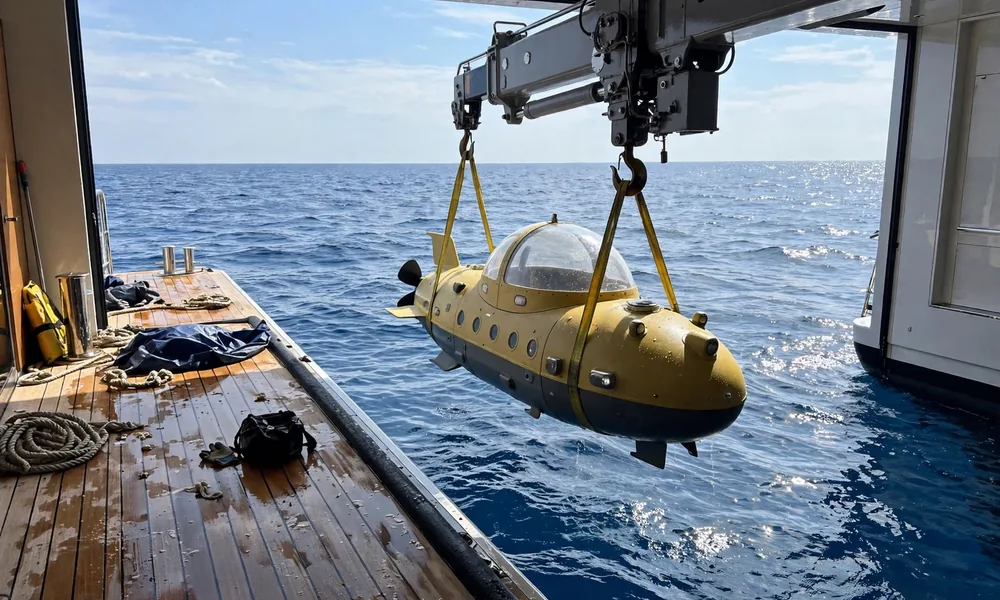
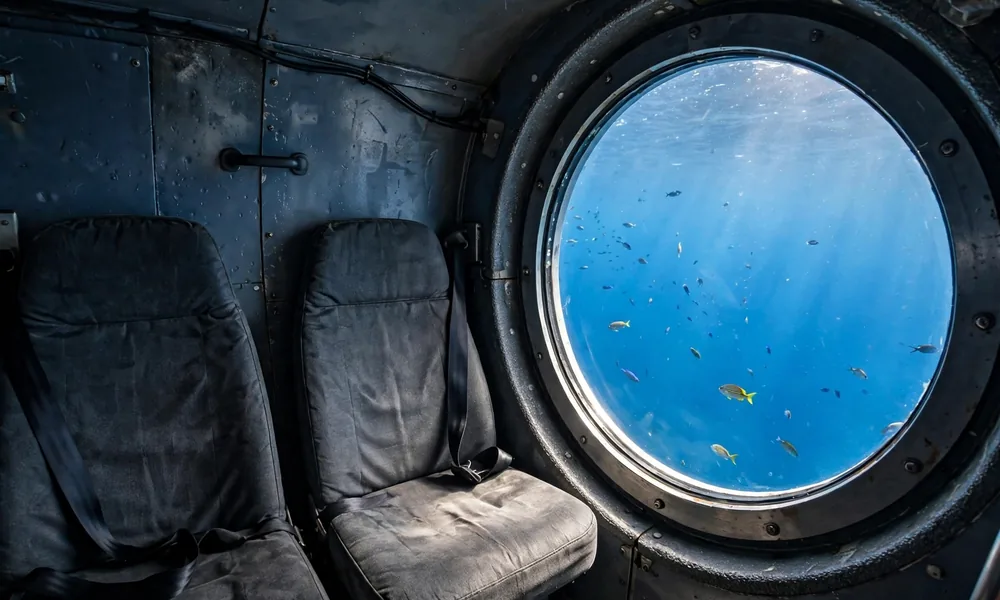
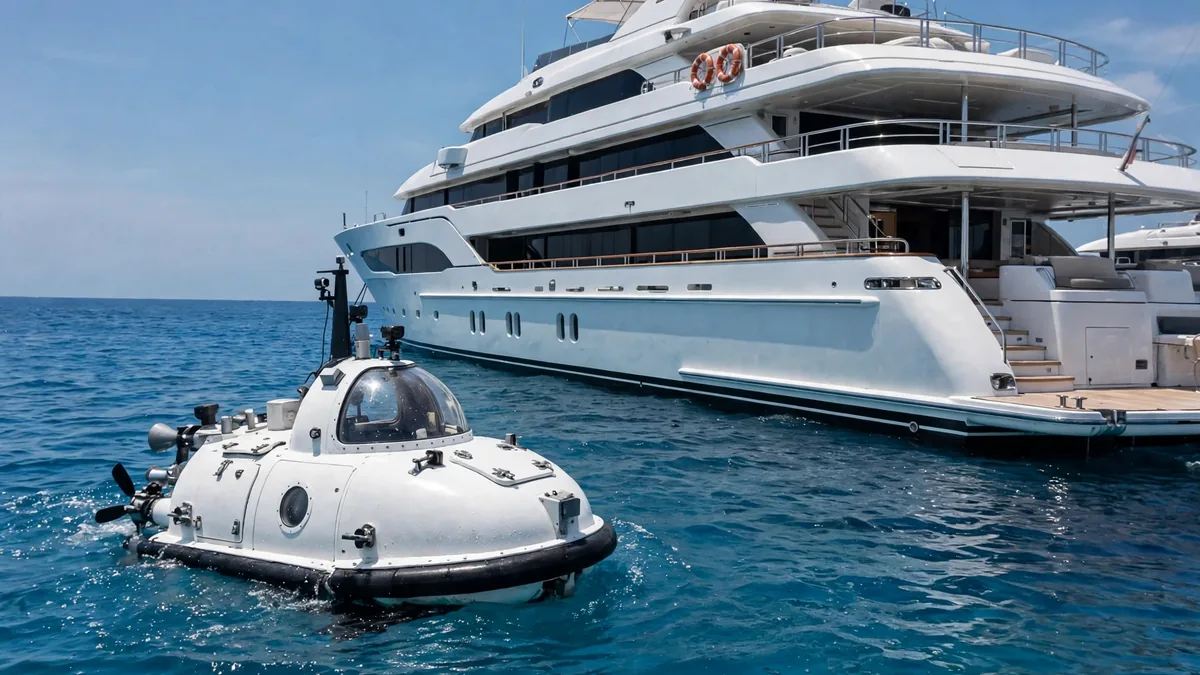
Open the garage door of a very large superyacht and you expect to find tenders, jet skis and diving gear. On a handful of yachts, you find something else: a small submarine, white and round as an egg, sitting on a cradle beside the toys. It seats two or three people, it dives to several hundred metres, and it costs more than everything else in the garage put together. Guests who have seen everything, private jets, race cars, island resorts, will queue for an hour in this little machine, because it does something no other yacht toy can do. It takes you somewhere no human was ever meant to go, and brings you back for lunch.
A personal submarine looks simple from the outside, a pressure hull, a viewport, a few thrusters, but it is one of the most demanding machines ever put aboard a yacht. It has to keep people alive under crushing pressure, in darkness, hundreds of metres from help, and then it has to be lifted back aboard, recharged and made ready to dive again the next day. Here are the six cost drivers behind the price.
Six Reasons a Yacht Submarine Costs So Much
- The pressure hull is the whole machine. A submarine’s hull has to resist the pressure of the deep ocean, which rises by roughly one atmosphere every ten metres. A hull rated for 500 metres is a precision-built sphere of titanium or high-strength steel, machined, tested and certified, and it is the single most expensive part of the boat.
- Life support is non-negotiable. Oxygen, carbon dioxide scrubbing, temperature control and emergency breathing gear all have to work perfectly, every dive, with backups for the backups. A failure at depth is not an inconvenience, it is a disaster, so the systems are built to aviation standards and tested constantly.
- The viewport is a marvel. The big acrylic dome that guests look through is cast, annealed and polished over weeks, and it has to stay perfectly clear under pressure while resisting scratches and crazing. A single dome can cost tens of thousands of dollars, and it is replaced on a strict schedule whether it looks worn or not.
- It needs its own launch system. A submarine cannot just be dropped over the side. It needs a crane or a lift rated for its full weight, a cradle in the garage, and a launch and recovery procedure that works in a swell. The crane, the garage space and the crew training are all part of the bill.
- Certification never stops. Personal submarines are classed and surveyed like small ships, with annual inspections, pressure testing and a paper trail for every dive. The classification society’s fees and the surveyor’s visits are a permanent running cost.
- It needs a pilot, not a driver. A submarine pilot is a specialist, trained and licensed, and on a yacht the pilot is usually a full-time crew member. The salary, the training and the simulator time are part of what the owner pays for every dive.
What a Yacht Submarine Costs
| Submarine Item | 2-Person, 100 m Rated | 3-Person, 300 m Rated | 5-Person, 500 m Rated |
|---|---|---|---|
| Submarine itself (estimate) | $1,000,000–$2,000,000 | $2,000,000–$4,000,000 | $4,000,000–$8,000,000 |
| Launch crane and cradle | $150,000–$300,000 | $300,000–$600,000 | $600,000–$1,000,000 |
| Garage space and fit-out | $100,000–$200,000 | $200,000–$400,000 | $400,000–$800,000 |
| Annual maintenance (estimate) | $80,000–$150,000 | $150,000–$300,000 | $300,000–$600,000 |
| Pilot salary per year | $80,000–$120,000 | $100,000–$150,000 | $120,000–$200,000 |
| Typical dive time | 4–6 hours | 6–8 hours | 8–12 hours |
| Top speed underwater | 2–3 knots | 3–4 knots | 3–5 knots |
All figures are estimates. The submarine itself is only part of the cost: the launch system, the garage and the crew can add half as much again, and the annual bill never goes away.
How a Yacht Submarine Works
A personal submarine is, at heart, a battery-powered underwater craft. Electric thrusters push it through the water at two to five knots, slow by any measure, but speed is not the point: the point is to hover, to drift over a reef or a wreck, and to look. Ballast tanks control depth, the pilot trims the craft with small adjustments, and the whole machine is designed to be slightly buoyant, so that if everything fails it floats back to the surface on its own.
Navigation underwater is a different world from navigation on the surface. There is no GPS below the waves, so the submarine relies on an acoustic positioning system, a sonar link to the yacht above that tracks where the craft is and lets the two talk to each other. The yacht’s own systems matter here too: how a yacht radar system works is part of the safety picture on the surface, keeping the area clear of traffic while the submarine is down, and the bridge crew tracks the dive the way air traffic control tracks a flight. The yacht propeller specs are relevant in a quieter way: the yacht’s own propellers are stopped during launch and recovery, because a turning propeller and a small submarine in the same water is a combination nobody wants.
Power is the limiting factor. A personal submarine runs on batteries, and a dive of six to eight hours uses most of the charge. Back aboard, the machine is plugged into the yacht’s power, recharged overnight, and checked over before the next dive. The hull is inspected, the seals are checked, the life support is tested, and the viewport is cleaned.
A Rare Fact From the Deep
Here is a detail few guests ever learn: the acrylic viewport on a personal submarine gets stronger, in a sense, as it goes deeper. The water pressure squeezes the dome evenly from all sides, pressing it more firmly into its seat, so the seal actually tightens with depth. The dome is designed for this, and it is tested to pressures far beyond its rated depth before it ever carries a passenger. It is a neat piece of physics, and it is also why the dome is replaced on schedule rather than on condition: the material ages with every pressure cycle, and the people who build these machines would rather replace a good dome early than trust a tired one. The keel below tells a similar story of quiet strength, and the yacht keel specs show how the lowest part of a yacht is built to take punishment no guest ever sees, just as the submarine’s hull takes the pressure no passenger ever feels.
What the Price Buys
If you are reading a yacht listing and it mentions a submarine, ask for the numbers: passenger count, rated depth, dive time and launch system. Those four tell you whether the submarine is a real capability or a garage ornament, how deep it can go, how long it can stay down, and whether it can actually be launched in the places the yacht visits. A two-person craft rated for 100 metres is a reef toy. A five-person craft rated for 500 metres is a research vessel that happens to live on a yacht. Either way, the price is the cost of keeping people alive in the deep ocean, and of bringing them home again, and no other toy on the yacht carries a bill quite like it.