There is a car that runs on sunlight, and it costs as much as a house. That sentence sounds like a riddle, but it is the honest description of a luxury solar car, a vehicle that carries solar panels on its body, a battery underneath, and a price tag that makes even seasoned car buyers pause. The panels themselves are not the mystery. Solar panels are cheap now, and they sit on millions of roofs. The mystery is everything around them: the body that has to be light enough for the sun to matter, the engineering that has to squeeze every watt, and the fact that almost nobody builds these cars, so each one is effectively a handmade experiment sold at a price that has to cover the whole experiment.
A solar car is not a normal car with panels glued on top. It is a different kind of machine, designed from the first sketch around a single idea: the sun provides only a small amount of power, so the car must waste almost none of it. That idea drives every decision, from the shape of the body to the tyres, and every one of those decisions costs money. The result is a car that can, on a good day, drive itself on sunshine alone, and a price tag that reflects how hard that is to achieve.

The sun gives very little, so the car must waste nothing
The first reason a luxury solar car is so expensive is the physics of sunlight. The sun delivers about one kilowatt of power per square metre at noon on a clear day, and a car has only about five square metres of usable surface for panels. Even with efficient panels, that means the car can collect only a few kilowatts at best, where an ordinary electric car draws a hundred kilowatts or more from its battery when accelerating. The panels on a luxury solar car, as an estimate, add only 30 to 70 kilometres of range on a sunny day, depending on the weather and the season. That sounds small, and it is, but it is also the point: the car is designed so that a small amount of energy goes a long way.
Aerodynamics is the second expensive obsession. A luxury solar car is shaped like a teardrop, with a drag coefficient far lower than a normal car, sometimes as low as 0.17 where an ordinary car is near 0.30. That shape is not a styling choice. It is the result of hundreds of hours in a wind tunnel, testing and retesting a body that has to slip through the air with almost no resistance. Wind tunnel time is expensive, and the shapes it produces are expensive to build, because a teardrop does not lend itself to a normal production line. The wheels are covered, the mirrors are replaced by cameras, and the underside is completely smooth, all of which add cost and complexity for gains measured in single percentage points.
Solar cells that belong on a spacecraft
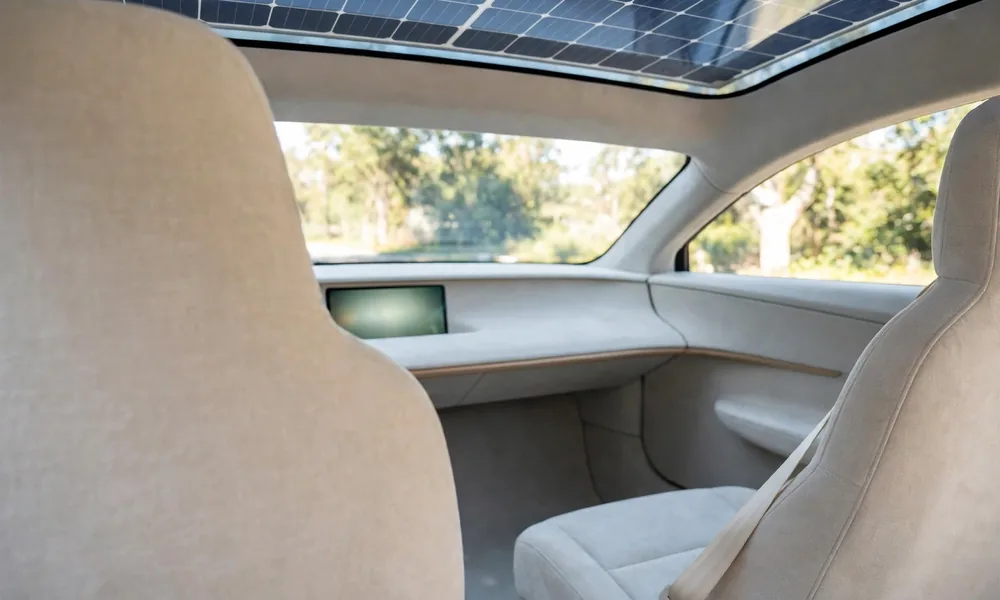
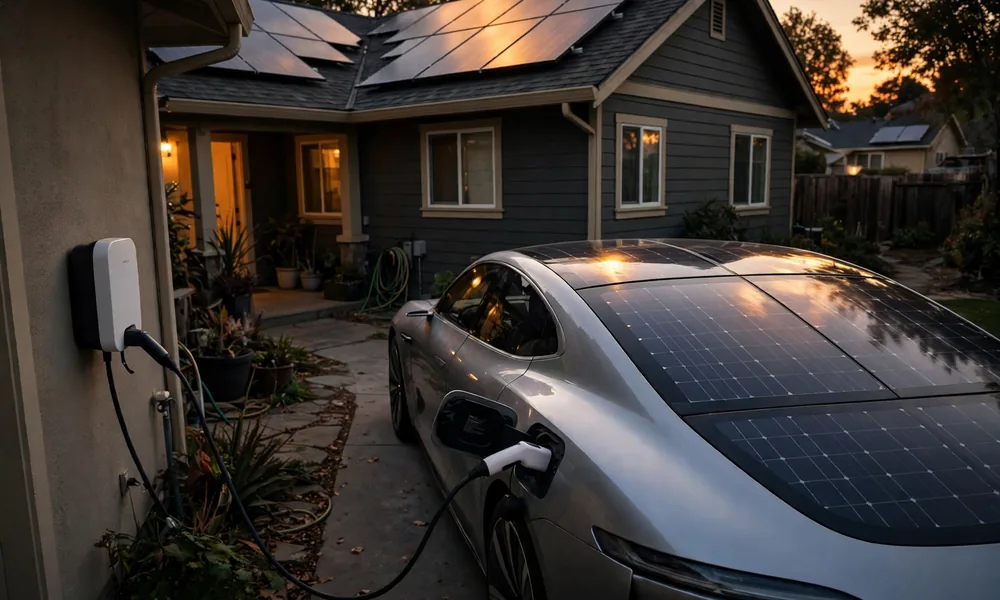
The solar panels themselves are not ordinary panels. A luxury solar car uses high-efficiency cells, often the same kind used on satellites, that convert more than 25 percent of the sunlight they receive into electricity, where a rooftop panel manages around 20 percent. Those cells are expensive to make, and they are expensive to fit, because they have to follow the curves of the car’s body without cracking, survive stone chips and rain, and keep working for the life of the car. The panels are laminated into the bodywork itself, which means a damaged panel cannot be swapped like a roof panel. It has to be repaired by a specialist, and that repair is priced accordingly.
Handmade in tiny numbers
The third reason is volume, or the lack of it. A luxury solar car is built in the hundreds, not the hundreds of thousands, and sometimes in the dozens. Every fixed cost of developing the car, from the crash-testing programme to the software, is divided by a tiny number of vehicles, so each car carries a huge share of the development bill. A normal car maker spends a billion dollars developing a new model and sells a million of them. A solar car maker spends far less in total, but sells so few that the cost per car is still enormous.
Where the money actually goes
Put the car together and the cost breaks down into recognisable parts. As an estimate, the carbon-fibre body and aerodynamics account for roughly a quarter of the total cost, because the materials and the wind tunnel work are both expensive. The solar panels and their electronics account for another significant share, and the battery, motors and power electronics account for a similar slice again. The interior, which is deliberately light and simple, costs less than in a normal luxury car, but it is still hand-built. Development and certification take a large share, and the rest goes to the maker’s margin and supporting a tiny fleet worldwide.
The quiet catch: the sun is not always there
There is one more cost, and it is not on the build sheet. A solar car depends on the weather, and the weather is not a reliable supplier. On a cloudy winter day in northern Europe, the panels may add almost nothing to the range, and the car becomes an ordinary electric car with a small battery and a very expensive body. Owners who live in sunny places get the most from the panels, and owners in cloudy places get the least, which means the value of the car depends on where it is parked. Some buyers hesitate over exactly that, even when they love the idea.
A rare fact worth knowing
Here is a detail that surprises even people who follow solar cars closely. The panels on a luxury solar car are so efficient at collecting light that they can generate a useful amount of power even when the car is parked in the shade of a building, from the diffuse light bouncing off the walls and the pavement. On a bright overcast day a parked solar car can still add a few kilometres of range. It is a small gain, but it is the kind of gain the whole car is built around, and the first solar racing cars discovered it decades ago.
A luxury solar car is expensive because it is a spacecraft-grade solar array wrapped in a carbon-fibre teardrop, built by hand in tiny numbers and asked to pass the same tests as a family car. To see the figures, read the solar car spec sheet, and for how the system works, see how a luxury solar car works. For a different answer about expensive new technology, see why a luxury hybrid car is so expensive.
| Cost area | Share of build cost (estimate) | Why it costs so much |
|---|---|---|
| Carbon-fibre body and aerodynamics | 20–25% | Hand-laid fibre, wind tunnel development |
| Solar panels and electronics | 15–20% | Space-grade cells, laminated into bodywork |
| Battery, motors, power electronics | 20–25% | Specialist low-loss systems |
| Interior and trim | 5–10% | Lightweight, hand-built, deliberately simple |
| Development, testing, certification | 20–25% | Crash tests on hand-built cars, tiny volume |
| Support and margin | 5–10% | Specialist servicing for a tiny fleet |