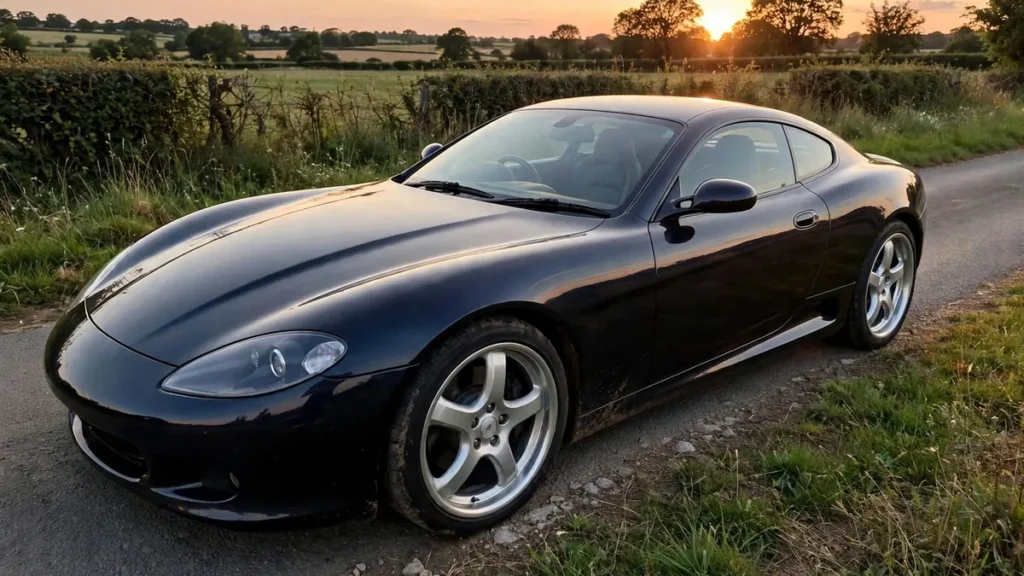
The sports car in the showroom window was the colour of spilled ink, low enough that I had to crouch to see the roof, and it had a queue. Not a queue of buyers, exactly, but a queue of people waiting to stand close to it, to photograph it, to rest a hand on the sill and feel how cold the carbon was. The price tag was a small white card, and the number on it was longer than a phone number. Nobody in the queue thought it was a mistake. The question was not whether it was expensive, but what could possibly make a car cost that much.
A luxury sports car is not a fast car with a nicer badge. It is a machine built in tiny numbers, by hand, from materials that belong in aircraft and racing cars, and every part of it is pushed further than a normal car could ever justify. The price is not one thing but six or seven things, stacked on top of each other: an engine built by one person, a body made from carbon fibre, an interior sewn by hand, and a development bill split across a few hundred cars instead of a few hundred thousand. This guide breaks down where the money goes.

The Engine, Built by One Pair of Hands
The first cost driver is the engine, and it is built the way a watch is built. In the most exclusive sports cars, a single technician assembles each engine from start to finish, signing a small plaque that is bolted to the finished motor. The parts are machined to tolerances a normal car factory would never attempt, balanced and measured by hand, and the engine is run on a test bench before it ever meets the car.
The performance is the other half of the bill. A modern sports car engine makes 600 to 800 horsepower from a small, high-revving motor, often with twin turbochargers, and it has to survive track days at full throttle without overheating or wearing out. The cooling, the oiling, and the exhaust are all engineered for that punishment, and every part is tested far beyond what a road car would ever need. The craft of building such a machine is shown in how a luxury sports car is made, which follows the engine, the chassis and the body from the workshop floor to the finished car.
Carbon Fibre and the Weight War
The second cost driver is the body, and it is made from carbon fibre. A carbon-fibre monocoque, the tub that the driver sits in, is lighter and stiffer than steel, and it is what lets a sports car be both fast and safe. But carbon fibre is slow and expensive to make: layers of woven cloth are laid by hand into a mould, soaked in resin, and baked in a giant oven called an autoclave for hours. A single body panel can take a day, and a mistake means starting again, because carbon fibre cannot be patched the way steel can.
The weight saving is the point. Every kilogram saved makes the car accelerate faster, brake shorter, and corner harder, and the best sports cars weigh little more than a family hatchback despite carrying a huge engine. The result is a car that feels glued to the tarmac at speeds where a normal car would feel light and nervous.

An Interior Sewn, Not Assembled
The third cost driver is the interior, and it is sewn, not assembled. The leather is cut by hand from hides chosen for their grain, stitched by craftspeople who train for years, and fitted to a cabin that is barely bigger than a cockpit. The carbon-fibre trim is polished until it looks like black glass, the metal controls are machined from solid aluminium, and even the stitching is a signature: a contrasting thread, laid in a pattern that belongs to one maker alone. A single interior can take a team days to finish.
The technology inside is bespoke too. The instruments are a digital display that changes with the driving mode, the sound system is tuned to the exact shape of the cabin, and the seats are carbon shells trimmed in leather, built to hold a driver through a corner at twice the speed a normal car could manage. The same obsession with the driving experience is explained in how a luxury sports car works, which covers the engine, the aerodynamics and the chassis working together.
Why Small Numbers Mean Big Prices
The fourth cost driver is the simplest and the most punishing: volume. A normal car maker splits the cost of designing a car across hundreds of thousands of vehicles, so each one carries a tiny share. A luxury sports car maker splits the same kind of bill across a few hundred cars, so each one carries an enormous share. The crash testing, the emissions testing, the wind tunnel time, and the years of engineering are all real costs, and there are almost no cars to spread them across.
The fifth and sixth drivers follow from the same logic. The car is tested far harder than a normal car, with thousands of laps on racing circuits and in deserts and arctic cold, because a sports car that fails at speed is a danger, not an inconvenience. The figures behind all of this are laid out in the luxury sports car specifications explained, which translates the power, the weight and the lap times into plain numbers.
Where the Money Goes
| Cost driver | What it adds |
|---|---|
| Hand-built engine | One technician, days of assembly, bench testing |
| Carbon-fibre body | Hand-laid cloth, autoclave baking, hours per panel |
| Hand-sewn interior | Cut and stitched leather, machined metal controls |
| Low-volume tooling | Development bill split across a few hundred cars |
| Testing and racing | Thousands of track laps, extreme climate testing |
| Aerodynamics | Months of wind tunnel work, active wings |
| Exclusivity | Waiting lists, limited runs, strong resale value |
The table tells the story in one glance: there is no single expensive part, there are seven expensive habits, and they all pull in the same direction. The price is the honest sum of those choices, not a markup added at the end.

Price, and What You Are Really Paying For
A luxury sports car costs around 250,000 to 2,000,000 dollars, and that is an estimate, not a list price, because prices vary enormously by maker, by model, and by how limited the production run is. The difference from a fast normal car is not one part but all of them at once: the hand-built engine, the carbon body, the sewn interior, and the development bill split across a handful of cars. The engine and the carbon body are the two biggest costs, and the testing and the tooling are not far behind.
A Rare Fact Worth Knowing
Here is the detail that surprises almost everyone who hears it for the first time. The paint on a luxury sports car can take weeks to apply. The body is painted, polished, painted again, and polished again, layer upon layer, until the finish is deeper than glass, and some colours are mixed by hand in batches so small that a repair years later needs the original recipe. The car in the showroom window is, in effect, a racing machine dressed by hand, and the price tag is the only place the maker adds up exactly how far they went.