It is a plank on a spring, mounted on the back of a boat. A child could draw it in three lines, and a backyard pool sells one for the price of a bicycle. Then the yard sends the invoice for the yacht version, and the number looks like a mistake. It is not. It is the price of putting a diving board on a vessel that moves, rolls, and lives in salt water.
A luxury yacht diving board is a small springboard fitted to a private yacht, usually at the stern or on a sun deck, for guests to dive into the sea at anchor. It is a private fitting for a handful of people, not a public amenity, and everything about it is built for one yacht, one deck, and one set of sea conditions. The price comes from the board, the spring, the structure underneath, and the rules that govern all three.
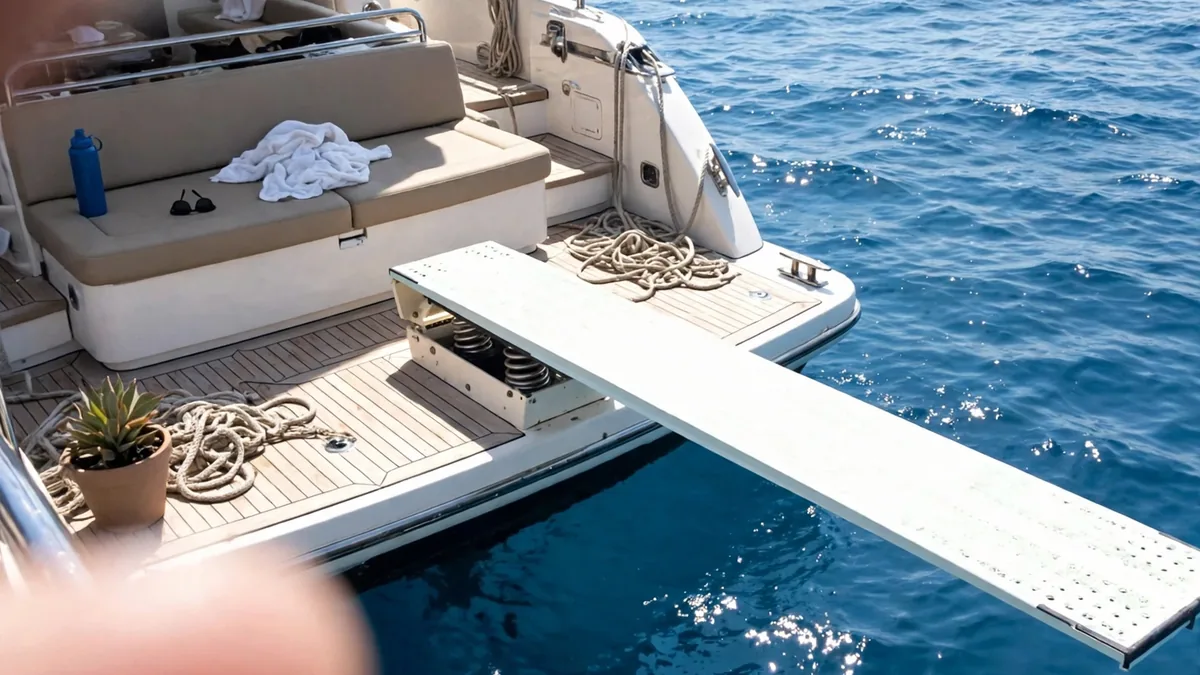
1. The board itself, and why it is not a backyard plank
The board is the smallest part of the bill. A yacht diving board is usually 3 to 4 metres long, made from marine composite or laminated hardwood sealed against salt water, with a non-slip surface for wet bare feet. A backyard board is fibreglass over foam, built for a pool that never moves. A yacht board is built for a deck that rolls, a sun that never lets up, and spray that dries into salt daily.
The board alone is typically estimated at $3,000 to $10,000, rising with length and finish. The board is replaced more often than any other part, usually every five to eight years, because flexing and salt slowly take the spring out of it.
2. The spring and fulcrum, and the cost of a tuned bounce
The spring is what makes a diving board, and on a yacht it is a sealed, marine-grade unit, not a hardware-shop coil. The fulcrum, the roller the board pivots on, must be adjustable so the bounce can be tuned for different weights, and every moving part must be sealed against salt water. Salt gets into anything unsealed, and a seized fulcrum turns a springboard into a plank.
A marine spring and fulcrum assembly is typically estimated at $5,000 to $15,000. The cost comes from the materials, usually stainless steel and sealed bearings, and from the tuning: the spring rate must match the board length and the divers’ weight, so the unit is ordered for the yacht rather than bought off a shelf. A small piece of deck hardware can carry a similar price, as shown in why a yacht swim ladder can cost as much as a small boat.
3. The structure underneath, and the deck that takes the bounce
The structure is the first big cost. A diver landing on a springboard sends a sharp load down through the base, and the deck underneath must take it without flexing or cracking. On a yacht the deck is a sandwich of composite or aluminium, and the board base needs a reinforced mounting point with backing plates and extra framing built into the deck.
That reinforcement is typically estimated at $8,000 to $25,000, because it is structural work, not a bolt-on job. The yard must open the deck, add framing, seal it, and refinish the surface so the repair disappears. A board fitted to a deck never designed for one costs far more than one fitted to a deck planned for it from the first drawing.
4. Safety and certification, and the rules nobody sees
Safety is the cost driver that surprises owners most. A diving board needs a clear zone of water below it, a minimum depth, and a handrail and non-slip steps. At anchor, the crew check the water depth before anyone dives, because a bay seabed can be far shallower than it looks. The board is locked or removed whenever the yacht is under way.
The certification and safety work is typically estimated at $3,000 to $10,000. It covers the risk assessment, depth markings, signage, locking mechanism, and insurance review. A private yacht has fewer rules than a public ship, but the owner carries the liability, and the insurer wants the board fitted and checked properly. Another deck fitting done to the same standard is covered in why a yacht jet ski carries a five-figure price.
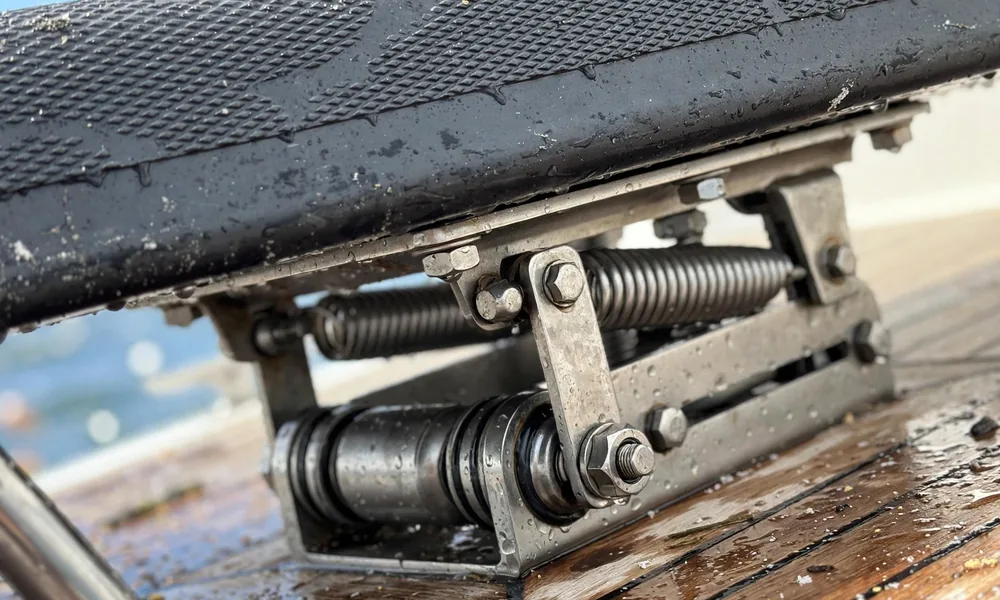
5. Installation, and the price of a one-off fitting
Installation is a one-off job. The board, spring, and base arrive as separate parts, and a yard crew fits them to a deck that is never quite flat or level, and never the same as the last yacht they worked on. The alignment must be exact, because a board a few degrees off level throws the diver sideways.
Installation labour is typically estimated at $5,000 to $15,000, including the sea trial at anchor. The sea trial is the part owners forget: the crew test the board at anchor, check the bounce, the water depth, and the locking mechanism. A board never tested at anchor is one nobody should dive from.
6. Maintenance, and the short life of salt-exposed parts
Maintenance is the cost that keeps coming. The spring and fulcrum need servicing every year, the non-slip surface replacing every two to three years, and the board itself resealing or replacing every five to eight years. Salt water is patient, and works on every seal, bearing, and fastener.
Annual maintenance is typically estimated at $1,000 to $3,000, and a full overhaul at $5,000 to $12,000. The numbers are small next to the installation, but they never stop. The same logic applies across the deck, as explained in why a yacht sundeck demands a fortune in engineering.
The Specifications at a Glance
Here are the numbers that matter most on a luxury yacht diving board.
| Specification | Typical Luxury Range |
|---|---|
| Board length | 3 to 4 metres |
| Board material | Marine composite or sealed laminated hardwood |
| Board height above water | 1 to 3 metres |
| Maximum diver weight | 100 to 120 kilograms |
| Minimum water depth below | 3 to 4 metres, checked before use |
| Spring and fulcrum | Sealed stainless steel, adjustable |
| Board service life | 5 to 8 years before replacement |
| Annual maintenance | $1,000 to $3,000 |
What Does a Luxury Yacht Diving Board Cost?
A luxury yacht diving board installation is estimated at roughly $25,000 to $90,000 in total. A simple board on a deck designed for it is estimated at roughly $25,000 to $45,000, while a longer board on a deck needing structural reinforcement, custom finishing, and full safety certification is estimated at roughly $60,000 to $90,000. The board is the cheapest part; the structure, spring, and certification are where the money goes.
A Rare Fact
A yacht diving board is one of the few fittings on board only ever used at anchor. It is locked, folded, or removed whenever the yacht is under way, because a board sticking out over the water at speed is a hazard to the yacht and to anything alongside it. It spends most of its life doing nothing at all.
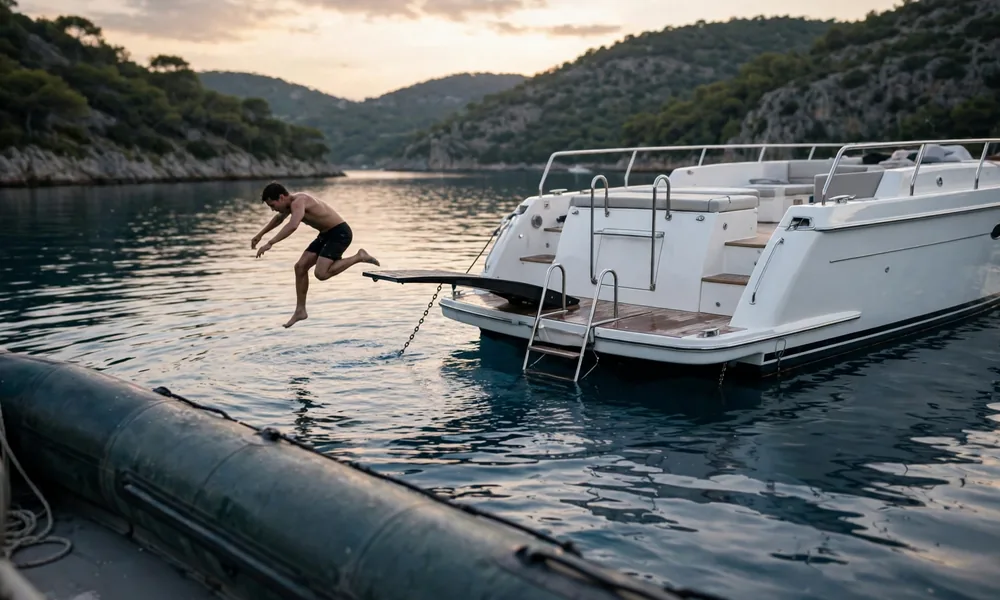
The price stops looking like a mistake once you know where the money goes. The board is cheap, the spring is precise, the deck reinforcement is structural work, and the safety rules are the part nobody sees until the insurer asks.


