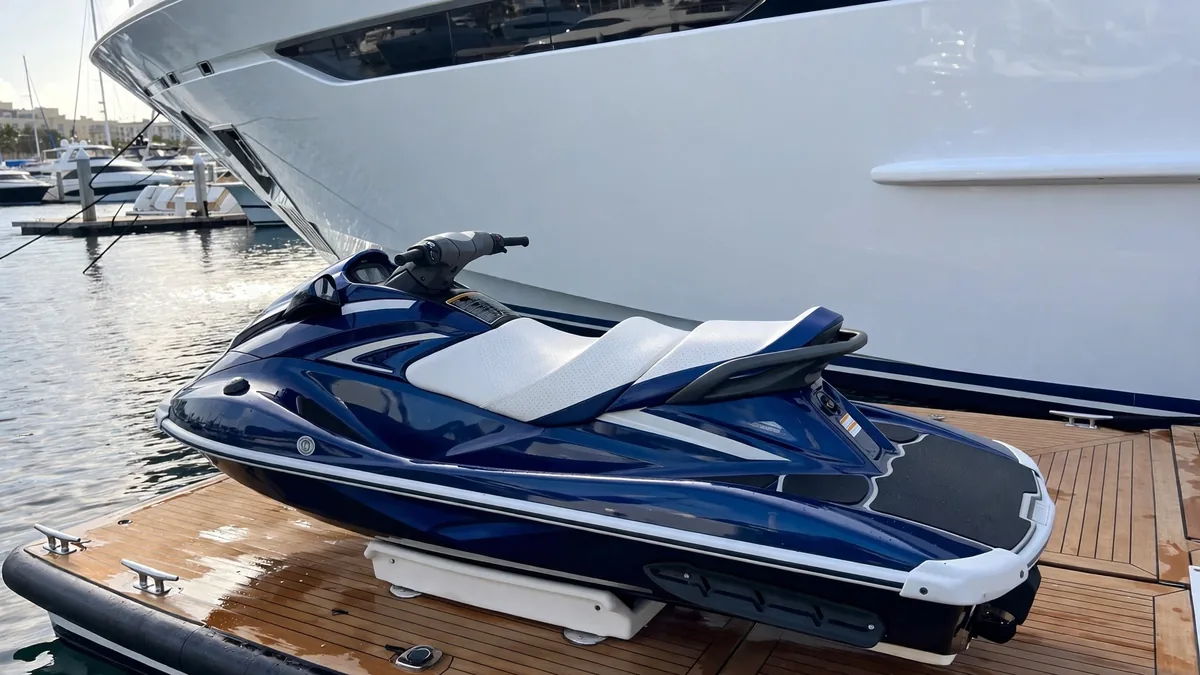
The jet ski sat in its cradle on the swim platform, covered in a fitted canvas that matched the yacht’s own upholstery, and it looked less like a toy than a piece of the yacht itself. When the cover came off, the paint gleamed in the same colour as the hull, the seat was stitched leather instead of vinyl, and the dashboard had a screen where a normal jet ski would have a few warning lights. A guest asked the price, and the captain answered without blinking. It cost more than a family car, and the owner had bought two.
A luxury yacht jet ski is a familiar machine rebuilt to a different standard, and the price follows the rebuild. The engine, the hull, the finish, and the storage all change when a jet ski has to live on a superyacht, and each change adds cost. This article follows the money from the showroom to the sea.
How It Is Made
1. The hull is built for the sea, not the lake
A normal jet ski is built for calm lakes and rivers, but a yacht jet ski must handle open water, chop, and the wake of a large ship. Its hull is deeper, heavier, and reinforced, with a shape that cuts through waves instead of slamming into them. A stronger hull is also a safer hull, because a jet ski that flexes at speed in rough water is a jet ski that will eventually crack.
2. The engine is marinised and tuned
Most luxury yacht jet skis use a supercharged four-stroke engine of 1.6 to 1.8 litres, producing 230 to 300 horsepower, and every part of it is marinised: the cooling system runs on sea water through a closed loop, the electrics are sealed, and the exhaust is routed so it cannot flood the engine when the ski sits in waves. The engine is tuned for instant response rather than top speed alone, because the rider needs power to climb out of a trough or to tow a wakeboarder. How the machine actually runs on the water is described in how a luxury yacht jet ski works.
3. The finish matches the yacht
The paint on a yacht jet ski is the same marine paint used on the mothership, applied in the same yard, in the same colour, with the same clear coat. The seat is reupholstered in marine leather or high-grade vinyl that matches the yacht’s sun pads, and the handlebars, mirrors, and trim are finished in stainless steel or carbon fibre instead of plastic. This is not vanity alone: a jet ski that matches the yacht photographs well, and on a charter yacht, photographs are part of the product.
4. Electronics go far beyond a normal ski
A luxury jet ski carries a colour display with GPS, speed, fuel, and engine data, and some models add a depth sounder and a Bluetooth sound system. The key is often a coded lanyard or a digital fob that limits speed for inexperienced riders, which matters when guests who have never ridden a jet ski are handed the controls. The electronics are sealed against spray and dunking, and the battery is a sealed marine unit that holds its charge through months of storage.
5. Storage aboard is part of the design
A yacht jet ski must fit in a garage, on a swim platform, or in a cradle on deck, and it must be launched and recovered without scratching the yacht. Builders fit lifting points, chocks, and a fitted cover, and the ski is often delivered with a custom cradle that bolts to the yacht’s own deck fittings. The tender that shares the garage is a related machine, and what makes a luxury electric dinghy work shows how small boats are engineered for life aboard.
6. Safety systems protect the rider
Jet skis are fast, and a yacht jet ski is faster than most, so safety systems are taken seriously. A lanyard kills the engine if the rider falls off, the hull has built-in flotation so the ski stays upright, and the throttle is progressive so a nervous rider cannot accidentally launch the ski. The crew briefs every guest before a ride, fits life jackets, and sets a boundary for how far from the yacht riders may go. Insurance for a yacht’s jet skis is a separate line in the yacht’s policy, and it is priced for the risk of inexperienced riders on a powerful machine.
7. Maintenance is constant and specialist
Salt water is hard on everything, so after every use the crew flushes the engine with fresh water, washes the hull, and dries the seat and storage compartments. The jet pump is inspected for debris, the impeller is checked for nicks, and the supercharger is serviced on a strict schedule. The hull itself is a major cost driver, and why a luxury yacht hull costs so much explains why marine hulls are priced the way they are.
Specs at a Glance
| Specification | Typical figure | What it means |
|---|---|---|
| Engine | 1.6–1.8 L supercharged | Four-stroke marine engine with a supercharger |
| Power | 230–300 hp | Maximum engine output |
| Top speed | 65–70 mph | Maximum speed on flat water |
| Length | 3.3–3.7 m | Overall length of the ski |
| Dry weight | 350–400 kg | Weight without fuel or rider |
| Fuel capacity | 60–70 L | Fuel carried for a day of riding |
| Seating | 2–3 riders | Number of people the ski is rated for |
| Hull material | Fibreglass / carbon | Material of the reinforced hull |
| Display | Colour GPS screen | Speed, fuel, engine, and navigation data |
| Storage | 100+ litres | Sealed storage for safety kit and belongings |

What It Costs
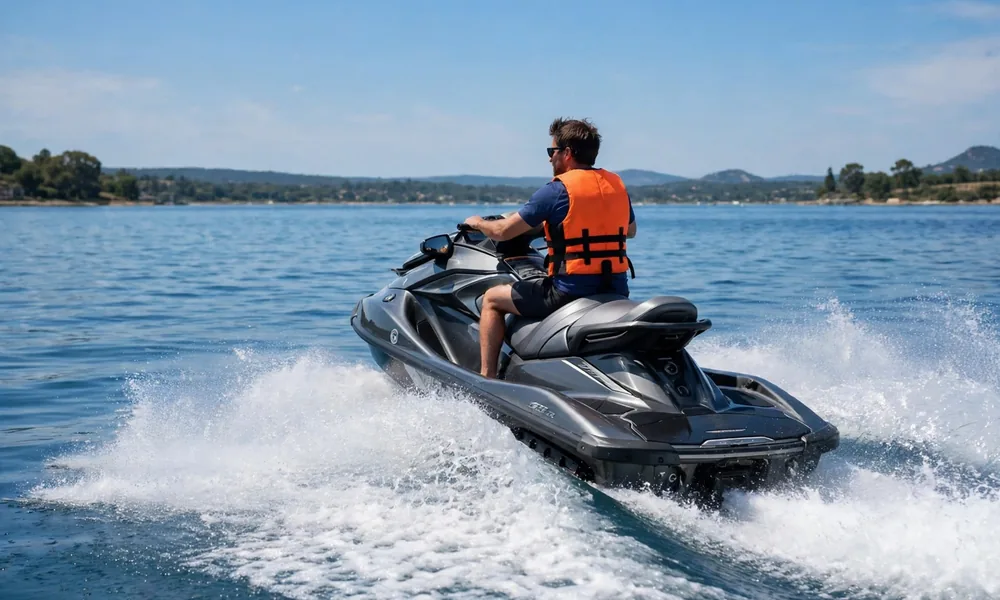
A luxury yacht jet ski typically costs an estimated $18,000 to $40,000, with the top of the range reserved for limited editions and fully customised models painted to match a superyacht. Those are estimates, because the custom paint, upholstery, and cradle are usually priced as part of the yacht’s own build or refit, not as a separate line. A standard jet ski with the same engine costs roughly half as much, and the difference is the marinising, the finish, and the integration with the yacht. Running costs include fuel, servicing, and replacement of wear parts such as the impeller, and a busy charter yacht can spend an estimated $2,000 to $5,000 a year keeping two jet skis in perfect condition. It is a lot of money for a toy, but on a yacht where a single day of charter costs more than the jet ski itself, the maths looks different to the owner.
A Rare Fact
Some superyachts carry jet skis that have never been ridden in open water at all, because they are used only as tenders to ferry guests the short distance from the yacht to a beach. The ski is launched, a guest rides pillion behind a crew member, and the ski returns to its cradle, all within sight of the yacht. It is the most expensive taxi ride in the world, and the owners would not have it any other way.


