The tender garage door on the superyacht slid open, and the jet ski inside looked smaller than the room built to hold it. It sat on a cradle between a pair of paddleboards and a folded inflatable, its hull polished, its seat still covered, and a crew member checked the battery gauge the way a pilot checks fuel before a flight.
A luxury yacht jet ski is a small personal watercraft carried aboard a larger yacht, and it is chosen, stored, and maintained to the same standard as the yacht itself. The numbers on its specification sheet decide whether it can do all of that, and this guide reads those numbers one by one.
1. Length, width, and the garage it must fit
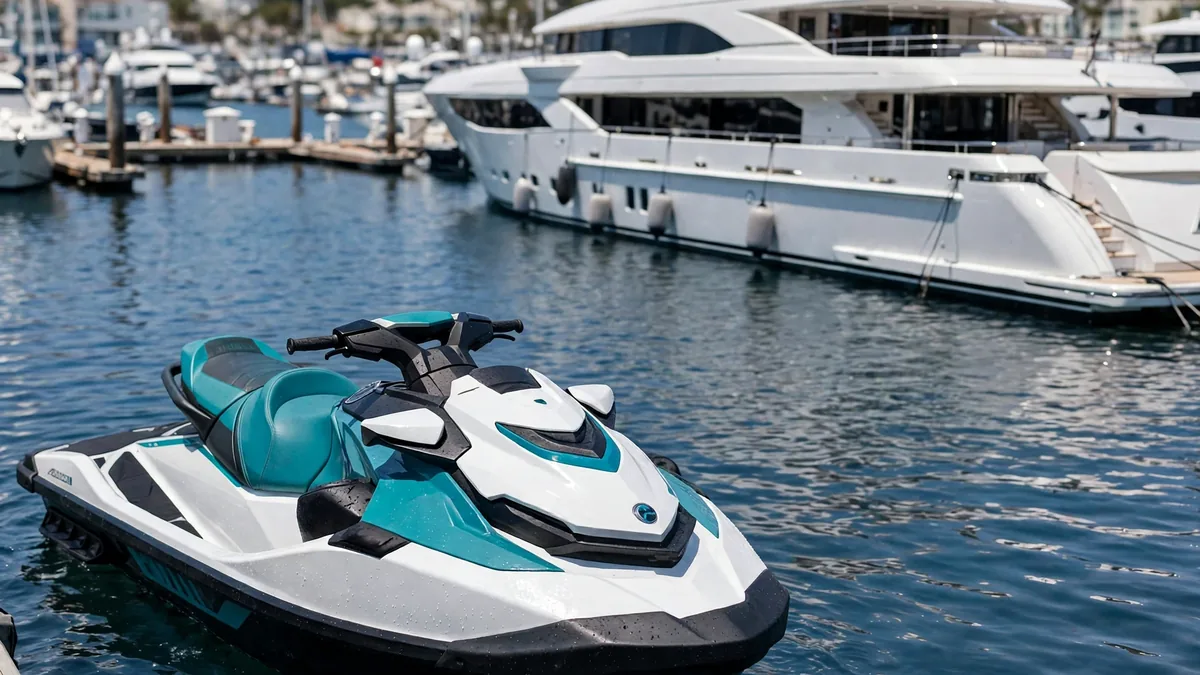
A luxury yacht jet ski usually measures between 3.1 and 3.6 metres long and about 1.2 metres wide, which is compact for a watercraft but still too large to squeeze into a space that was not designed for it. The tender garage on a yacht is measured to the centimetre, and the ski is bought to fit the garage, not the other way round, so length is the first number a buyer checks.
Width matters for a different reason. A wider hull is steadier at low speed, which is what a guest needs when stepping on from a swim platform, and it carries more weight without sitting low in the water. A narrower hull is quicker through a turn, but it is also easier to tip when a rider climbs aboard in a swell. How a jet ski is launched and recovered from a yacht is described in how a luxury yacht jet ski works, where the garage, the cradle, and the launch system are taken apart.
2. Weight, and what the crane can lift
A luxury jet ski usually weighs between 250 and 400 kilograms, including its battery or a full fuel tank, and that weight decides which crane or davit can lift it. The yacht’s lifting gear has a rated limit, and the ski, its cradle, and any fuel or charging kit all count against that limit, so a heavier ski can mean a bigger crane or a different storage plan.
Weight also changes how the ski behaves. A heavier ski rides more smoothly through chop, because it is less easily thrown by a wave, but it is slower to accelerate and harder to beach by hand.
3. Power, and the choice between petrol and electric
Power on a luxury jet ski is usually given in horsepower, and most models fall between 130 and 300 horsepower, with electric models given in kilowatts instead, usually around 50 to 110 kilowatts. Horsepower decides the top speed and how quickly the ski pulls a rider out of the water, but it is not the whole story, because a heavier ski needs more of it just to keep up.
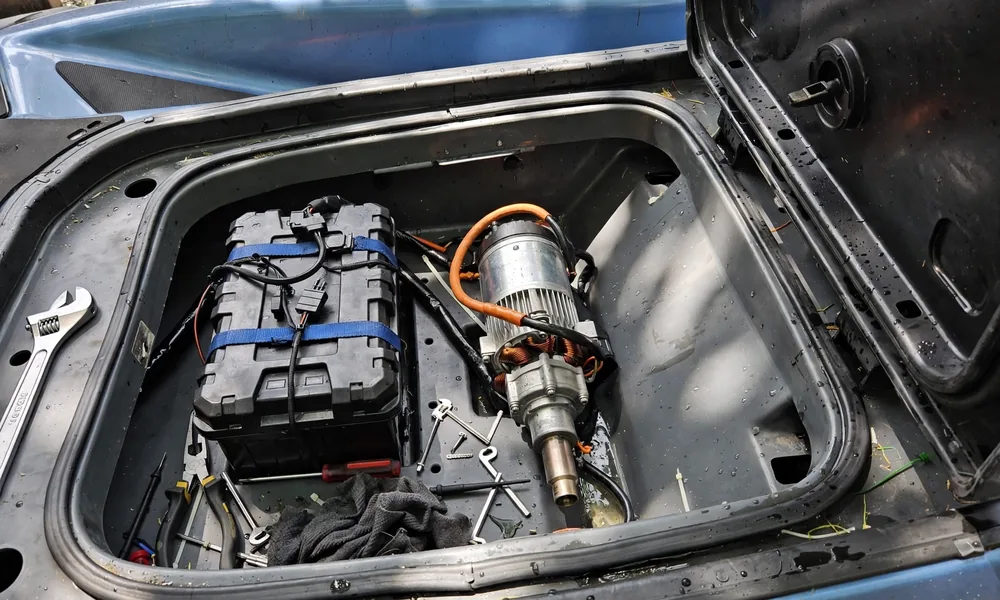
Electric jet skis are becoming common aboard superyachts, because they run almost silently, produce no exhaust, and can be charged from the yacht’s own power. The price of that silence is part of the story in why a luxury yacht jet ski is so expensive, where the cost of the craft, its battery, and its yacht fittings are added up.
4. Battery or fuel, and how long the ride lasts
A petrol jet ski usually carries a fuel tank of 60 to 70 litres, which gives it a range of roughly 100 to 150 kilometres at cruising speed, depending on the rider and the sea. An electric jet ski carries a lithium battery of roughly 10 to 20 kilowatt-hours, which gives it about 45 to 90 minutes of riding, or roughly 30 to 60 kilometres, before it needs a charge.
Charging is the practical difference. A petrol ski is refuelled in minutes from a jerry can on the dock, while an electric ski needs two to four hours on a shore supply or the yacht’s own charger.
5. Speed, handling, and the safety systems around them
Top speed on a luxury jet ski usually falls between 90 and 110 kilometres per hour, though most riding happens far more slowly, at 40 to 60 kilometres per hour.
Safety is built into the specification sheet. A lanyard kill switch stops the engine the moment the rider falls off, a learning key can cap the speed for a guest, and the hull is fitted with a sealed engine bay so that a capsize does not flood the motor. The ski also has to be easy to climb back onto, which is why the boarding step at the stern and the grip on the seat are part of the design, not an afterthought. The platform it launches from matters as much as the ski itself, and luxury yacht swim platform specs explained shows how the stern platform is sized to take the weight of the craft and the people boarding it.

The Specifications at a Glance
Here are the numbers that matter most on a luxury yacht jet ski, and what a good figure looks like for each one.
| Specification | Typical Luxury Range |
|---|---|
| Length | 3.1 to 3.6 metres |
| Width | About 1.2 metres |
| Weight, ready to ride | 250 to 400 kilograms |
| Power, petrol | 130 to 300 horsepower |
| Power, electric | 50 to 110 kilowatts |
| Battery capacity, electric | 10 to 20 kilowatt-hours, lithium |
| Fuel capacity, petrol | 60 to 70 litres |
| Range, electric | 30 to 60 kilometres, 45 to 90 minutes |
| Range, petrol | 100 to 150 kilometres |
| Top speed | 90 to 110 kilometres per hour |
| Riders | One to three, depending on model |
| Charging time, electric | About 2 to 4 hours |
What Does a Luxury Yacht Jet Ski Cost?
A luxury yacht jet ski is typically priced at roughly $18,000 to $45,000. A petrol model with 130 horsepower is typically priced at roughly $18,000 to $25,000, while an electric flagship with a 20 kilowatt-hour battery, 110 kilowatts of power, and a finish matched to the yacht is typically priced at roughly $35,000 to $45,000, before the cradle, the covers, and the charging kit are added.
A Rare Fact
The first personal watercraft was not built for fun at all. It was designed in the 1960s as a small powered ski for one rider, and the earliest versions were ridden standing up, like a surfboard with a motor. The sit-down design that every yacht carries today came later, when makers realised that most riders wanted a seat, a steering bar, and a place for a passenger.
Length decides whether it fits the garage, weight decides whether the crane can lift it, power decides how fast it goes, the battery or the tank decides how long it runs, and the safety systems decide whether a guest can ride it. Read those five, and the jet ski stops being a toy and starts being part of the yacht.


