You walk up to your front door with your arms full of shopping, and before your hand reaches the handle, there is a soft click. The bolt has already withdrawn. No key, no fumbling, no balancing bags on one knee while you search a pocket. The door simply recognised you and opened, and by the time you are inside it has locked itself behind you again.
That small moment is the promise of a luxury smart lock, and it is a harder engineering problem than it looks. A lock is the one machine in a house that must never fail open, must never fail closed when you need to get out, and must keep working when the power goes out, the internet goes down and a stranger tries to trick it. Luxury makers solve that with layers: a mechanical lock that works with a key, an electronic brain that decides who may enter, and a set of sensors that watch the door itself.
Here is how the whole system works, from your fingerprint to the bolt in the frame.
How It Works
Step 1: The lock recognises you
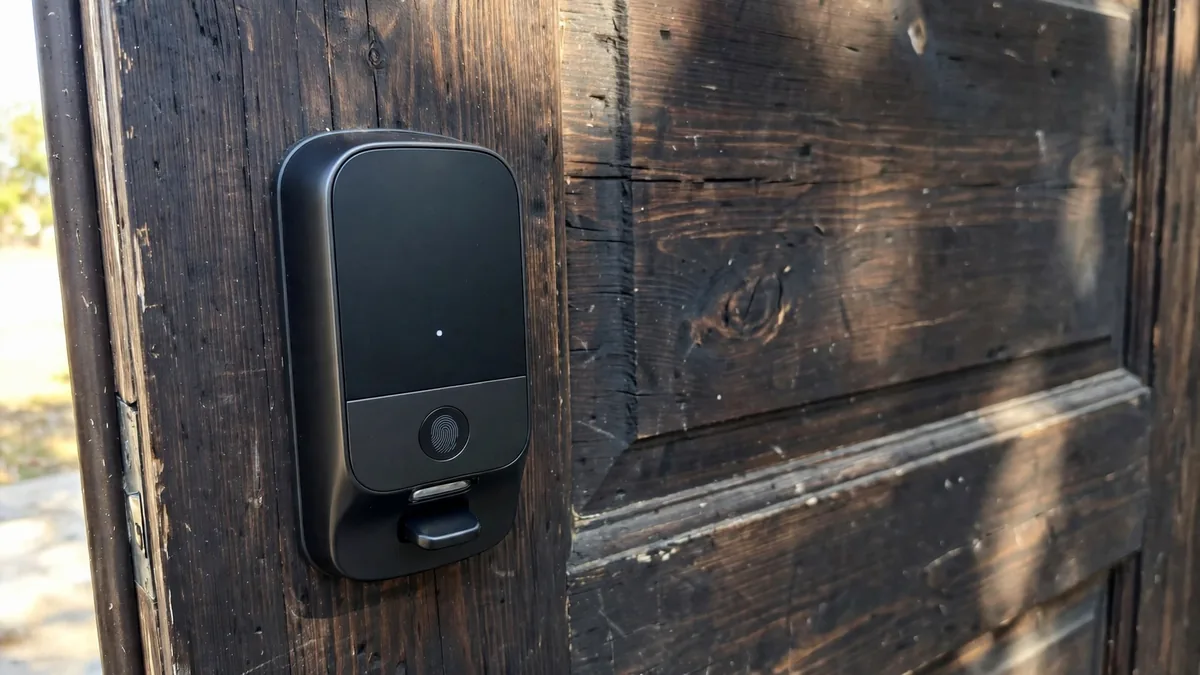
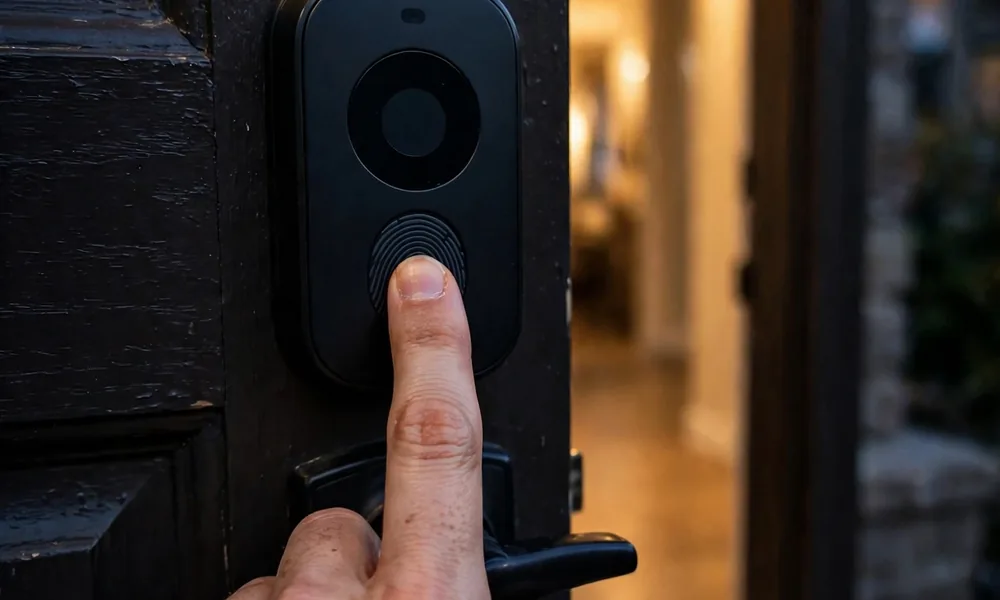
A smart lock has to know who is standing outside, and a luxury model offers several ways to prove it. The most common is a fingerprint sensor, which reads the ridges of your finger and compares them to a template stored inside the lock itself, never sent to the internet. Others use a PIN code on a small keypad, a phone that talks to the lock over Bluetooth, or a key fob that works like a contactless card. Recognition takes less than a second, and the lock is designed to fail safe: if it cannot recognise you, it stays locked.
Step 2: The motor drives the bolt
Once the lock has decided to open, a small electric motor inside the body turns a gear that retracts the bolt from the frame. The motor is powerful enough to drive a heavy deadbolt, but it is also geared so that the bolt moves smoothly and quietly, without the clunk of a cheap lock. A sensor watches the bolt’s position, so the lock knows whether it is fully open, fully closed or stuck halfway, and if something blocks it, the motor stops and tries again rather than forcing the mechanism.

Step 3: The door sensor watches the door itself
A lock that only knows about its own bolt is only half a system, so a luxury smart lock also watches the door. A small magnetic sensor, or a sensor built into the lock, detects whether the door is open, closed or ajar, and a gyroscope can tell if someone is trying to force it. The lock uses this information to lock itself automatically a few seconds after you close the door, so you never have to remember, and to warn you if the door is left open or the bolt did not fully engage.
Step 4: The brain decides who may enter, and when
Inside the lock is a small processor that holds the list of who is allowed in, and under what conditions. You can give a cleaner a code that works only on Tuesday mornings, a guest a code that expires on Sunday, and a family member a fingerprint that works any time. The processor logs every entry and every failed attempt, with the time and the method used, so you can see exactly who came and went. A luxury lock encrypts all of this, because a list of who lives in a house is exactly the kind of information a burglar would love to steal.
Step 5: The lock talks to the house
A smart lock rarely works alone. Through Wi-Fi or a small hub, it connects to the rest of the home: the lights that turn on when you arrive, the heating that warms up when the first person comes home, the camera that records who is at the door. When you unlock the door, the house can disarm the alarm, and when you lock it at night, it can turn the lights off and set the alarm. The connection is also how the lock receives software updates, which fix bugs and close security holes, and how it sends you a notification if someone tries the wrong code too many times. The radio in the lock is low-power, because the lock runs on batteries and must last for months between changes.
Step 6: The battery keeps it alive, and the failsafes keep it safe
A lock that dies when its battery runs out would be useless, so a luxury smart lock is designed around power failure. It runs on standard batteries that last six months to a year, and it warns you weeks before they run low, with a light, a sound and a phone notification. If the batteries do die, there is a hidden USB port on the outside that lets you power the lock from a phone charger just long enough to open it, and the physical key still works.
| Specification | Typical figure |
|---|---|
| Unlock methods | Fingerprint, PIN, phone, key fob, physical key |
| Unlock time | Under one second for fingerprint or phone |
| Connectivity | Bluetooth, Wi-Fi or hub, encrypted |
| Battery life | Six to twelve months on standard batteries |
| Auto-lock | Seconds after the door closes, with door sensor |
| Failsafes | Physical key, USB emergency power, inside thumb turn |
What One Costs
A luxury smart lock typically costs an estimated $300 to $800 for the lock itself, with professional installation adding more if the door needs new fitting. That is far more than a traditional deadbolt, but the price buys the fingerprint sensor, the motor, the door sensor, the encrypted processor and the software that ties it together, plus the testing that proves it cannot be opened with a magnet, a copied fingerprint or a dead battery. The fingerprint reader is the part you touch every day, and how a fingerprint sensor works explains the technology behind that small glass window, while how an e-bike smart lock works shows the same idea applied to a machine that has to survive rain, vibration and theft attempts on the street.
A Rare Fact
Some luxury smart locks can tell the difference between a real finger and a copy made from a photograph or a mould, because they check for the tiny electrical properties of living skin and for the pulse in the fingertip. Early fingerprint readers could be fooled by a printed copy, and the fix was not a better camera but a sensor that asks a simple question: is this finger alive? It is a small detail, and it is the difference between a lock that looks clever and a lock that actually keeps a house safe.
A smart lock does not make a door stronger. The bolt, the frame and the hinges do that, and a luxury lock is honest about it: it is a better way of deciding who may open a strong door, not a substitute for one. What it gives you is the end of lost keys, the end of wondering whether you locked up, and a record of who came home and when. If you want a lock that also listens to music, how luxury earbuds work is a different kind of everyday machine, but for the front door, the quiet click of a bolt withdrawing before you touch the handle is luxury enough.