She taps her phone once, and the lock on her e-bike clicks open before she has taken her gloves off. No key to fumble for in the rain, no heavy chain to carry. It feels like a small magic trick, but inside that little black box sits a surprising amount of engineering: a motor, a radio, a battery, a sensor that knows when someone is tampering with it, and a computer that decides in a fraction of a second whether you are the person it should obey.
How an E-Bike Smart Lock Works
An e-bike smart lock replaces a physical key with a phone, a code or a fingerprint, and adds an alarm and a connection. It bolts to the frame or the rear wheel and drives a hardened steel bolt into place with a small electric motor. Around that mechanical job sits a layer of electronics: a Bluetooth or mobile radio, a rechargeable battery, a motion sensor and a processor that checks every unlock request before the bolt moves.
Step 1: The lock wakes and checks for its owner
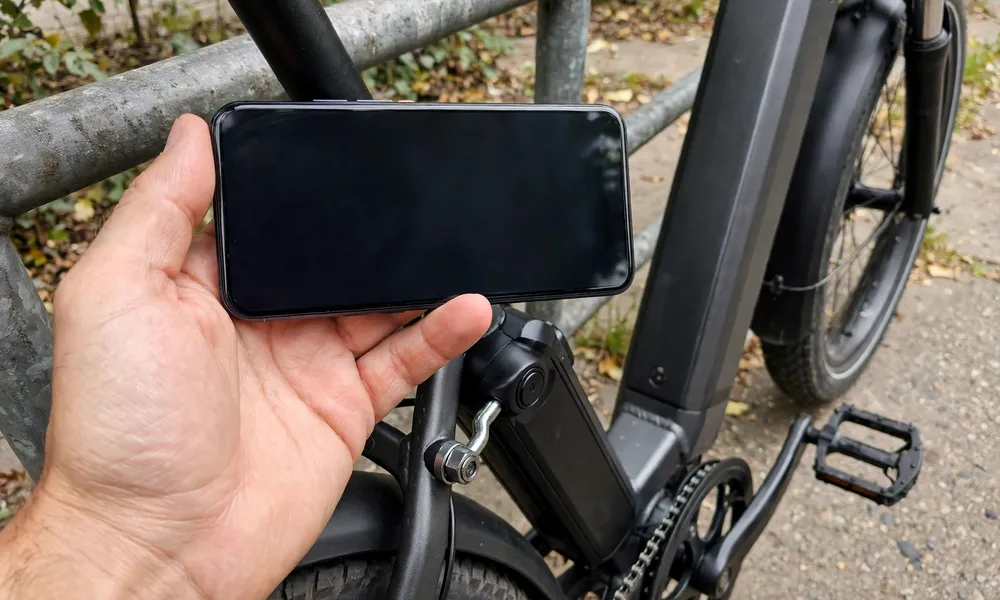
The lock spends most of its life asleep, sipping almost no power, its radio listening in short bursts. When you walk up with your phone, the lock’s Bluetooth radio hears it and wakes the processor. The two then run a handshake: the phone proves it holds the right digital key, and the lock checks it against the one stored inside. Only if that check passes does the lock prepare to open. The battery inside an e-bike has nothing to do with this — the lock carries its own small rechargeable cell, so it keeps working even when the main battery is removed for charging.
Step 2: The motor drives the bolt home
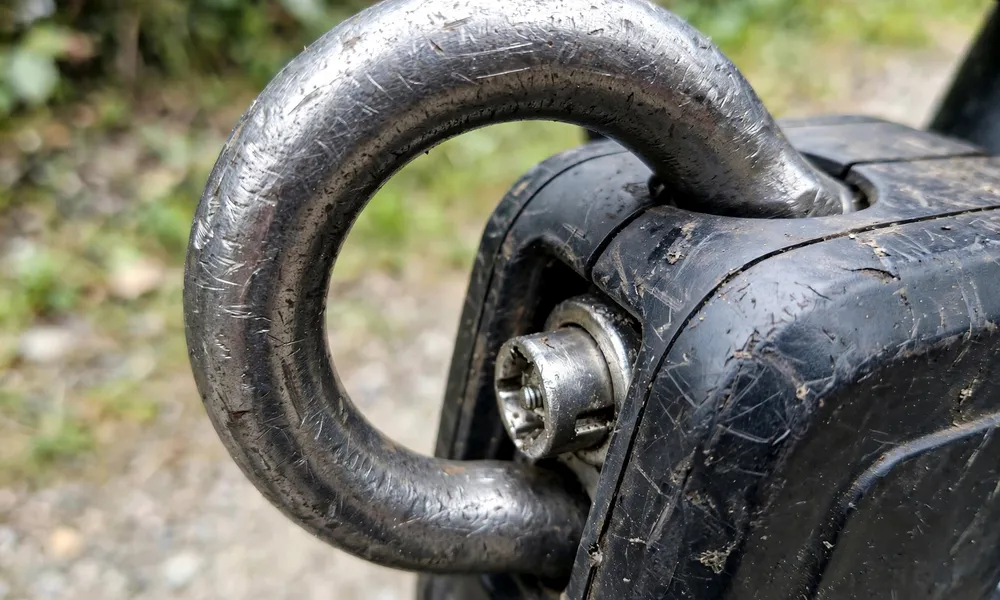
Once the lock has approved the request, a tiny motor turns a gear that slides the locking bolt. In a frame lock, the bolt passes through the rear wheel and stops it turning; in a U-lock, the shackle closes around the frame and a fixed rack. The bolt is hardened steel, shaped to resist cutting and levering, and the motor holds it firmly once seated. The movement takes less than a second, and a click tells the rider it is done. If the bolt meets resistance, the lock stops the motor rather than forcing it, to protect the gears.
Step 3: The keypad and fingerprint give you a backup
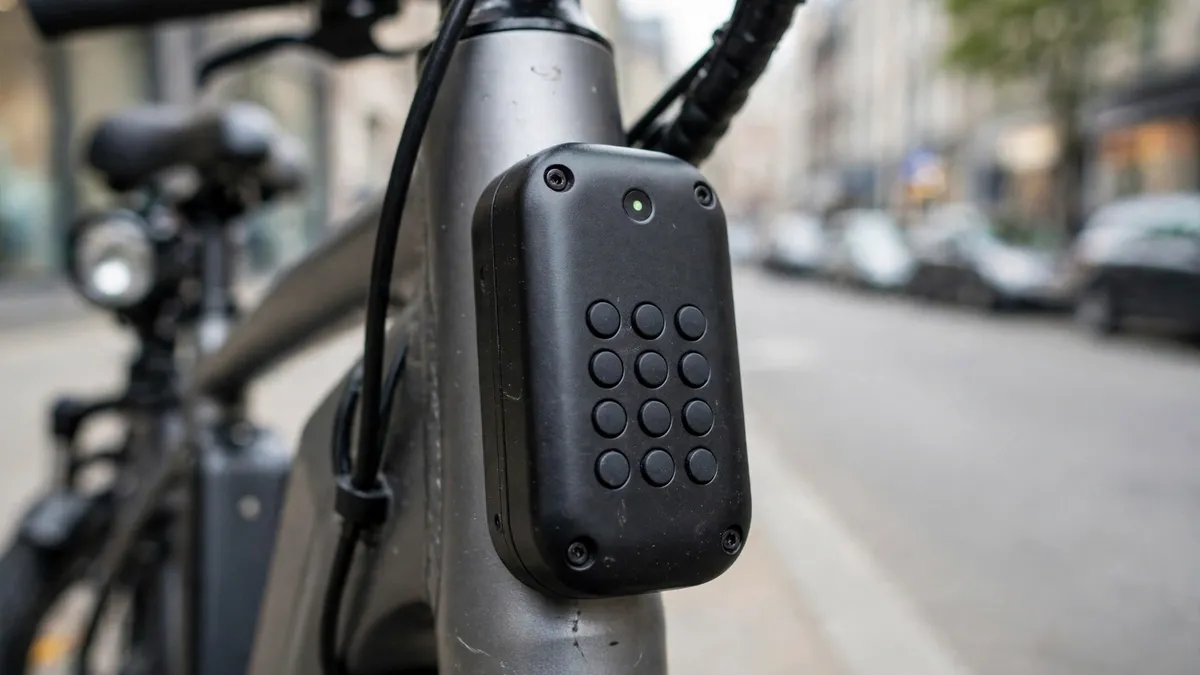
Phones run out of charge, so a good smart lock never depends on one. Many carry a small keypad on the housing, where a four to six digit code opens the lock, and some add a fingerprint reader for one-touch unlocking. The code lives inside the lock, not in the cloud, so it works with no phone signal. Owners can create temporary codes for a friend or a courier, and delete them later from the app. The display on an e-bike shows speed and range, but the lock keeps its own secrets: after several wrong codes it locks out further tries for a few minutes, making guessing useless.
Step 4: The alarm watches for tampering
While the bike is parked and locked, an accelerometer inside watches for movement. A light bump — a passer-by brushing the bike — earns nothing, because the sensor ignores small knocks. But a sustained shake, a cut, or the bike being lifted triggers a loud alarm, typically over 100 decibels, and a notification to the owner’s phone. The alarm is deliberately unpleasant and hard to silence without the key: a thief wants a quiet bike, and a screaming one draws exactly the attention they do not want.
Step 5: The connection tracks the bike
Many smart locks also carry a mobile or GPS connection, so the lock can report where the bike is. When the bike moves while locked, the lock wakes, fixes its position, and sends a map alert. Some locks keep a low-power connection alive for weeks, and keep working even if the main battery is removed, because the tracking cell hides inside the lock. It cannot stop a determined thief, but it turns a stolen bike from a lost cause into a moving dot on a map the owner and police can follow.
Step 6: The motor and brakes stay locked too
On many e-bikes the smart lock talks to the bike. When the lock engages, it can tell the motor controller to disable the drive, so even if a thief cuts the lock, the bike will not assist them — it becomes a very heavy bicycle. The disc brakes on an e-bike can also be held shut by some integrated locks, making wheeling the bike away almost impossible. This pairing is what makes a smart lock more than a padlock with a radio: it turns the bike into a machine that refuses to cooperate with anyone but its owner.
Step 7: The lock sleeps, charges and updates
Between rides the lock manages its power carefully. Its battery charges from a USB cable or, on some models, from the bike’s own battery while riding, and can last weeks or months because the radio and processor sleep most of the time. The lock also updates its software over the air, fixing security flaws and adding features without the owner doing anything. The catch is that a dead lock battery means a lock that cannot open by phone, which is why the keypad, the backup code and the physical key override exist — a smart lock is only as good as its plan for that day.
| Specification | Typical value |
|---|---|
| Unlock methods | Phone, keypad code, fingerprint, physical key |
| Connection | Bluetooth, plus GPS or mobile on some models |
| Alarm volume | About 100 to 120 decibels |
| Lock battery life | Several weeks to a few months |
| Bolt material | Hardened steel, 12 to 16 millimetres thick |
| Unlock time | Under one second |
| Weight | 500 grams to 1.5 kilograms |
Price varies widely with the features. Estimates put a basic Bluetooth smart lock at roughly 50 to 120 US dollars, while a model with GPS tracking, a loud alarm and motor integration costs roughly 150 to 350. Fitting is usually a ten-minute job, though some frame locks need a bike shop. Those are estimates, not list prices. The real cost of a cheap lock is not the purchase price: a lock that fails in the rain or runs flat costs its owner a walk home, which is why riders who depend on their bike buy the better lock.
A rare fact: some smart locks can tell a thief from a storm. Their motion sensors learn the pattern of a bike rocked by wind or bumped by a neighbour’s handlebars, and stay silent, but a sustained sawing vibration or the bike being lifted sets them off within seconds. It is a small piece of pattern recognition inside a device most people think of as a padlock, and the reason a good smart lock rarely cries wolf.
The e-bike smart lock works because it layers three defences on a simple steel bolt: a digital key that cannot be copied by cutting, an alarm that makes theft loud and public, and a connection that lets the owner watch the bike from anywhere. Any one of those can be beaten on its own. Together they turn a parked e-bike from an easy target into a machine that shouts, refuses to move, and tells its owner where it is.