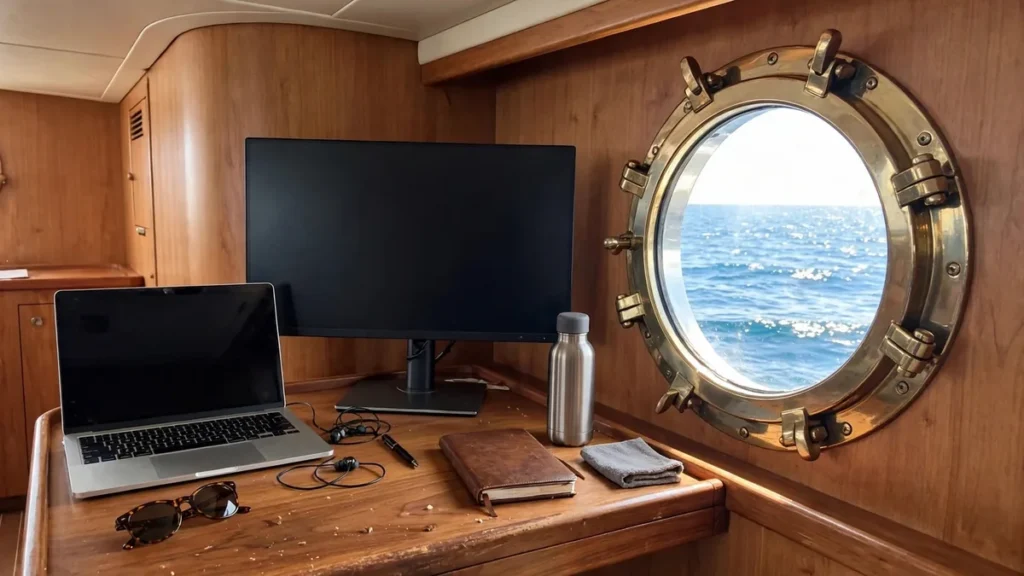
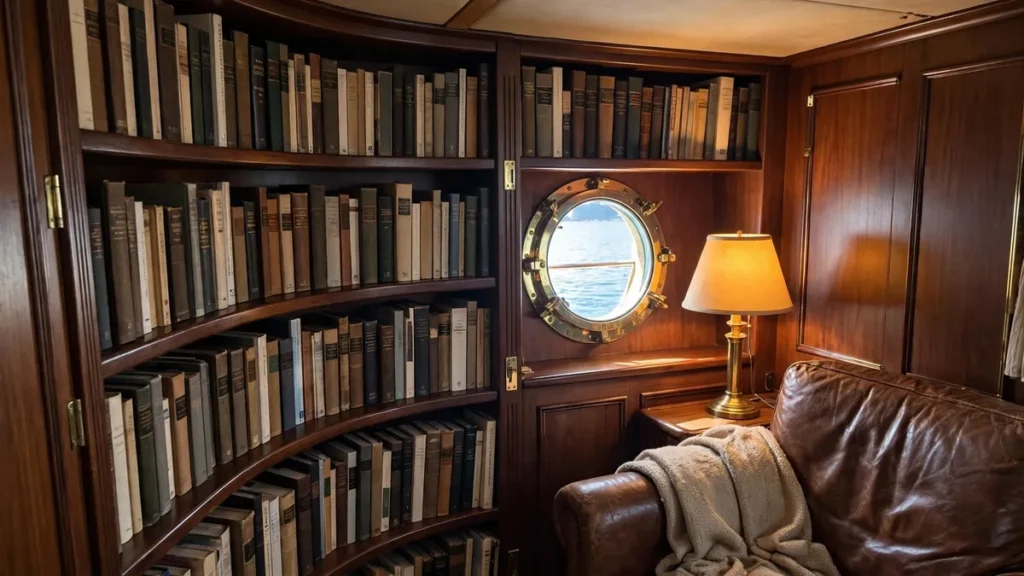
A wine cellar on a superyacht is a small room fighting a large problem. Wine wants darkness, stillness and a steady cool temperature, and a yacht offers bright sun, constant motion and an engine room full of heat. Keeping a bottle in perfect condition at sea takes a room built like a vault, cooled like a fridge and steadied like a gyroscope.
The best yacht cellars hold hundreds of bottles, some worth more than the room itself, and they keep them safe through storms, tropical heat and long passages between ports. The crew treat the cellar like a vault, and they guard it accordingly. This is how a luxury yacht wine cellar works.
How It Works
Step 1: The cellar is built as an insulated room within a room
The cellar starts as a box inside the yacht. Builders frame a small room, usually deep in the hull on a lower deck where the temperature is naturally steadier, and line it with thick insulation on every side, including the floor and the ceiling, so the heat of the engine room and the sun on the deck cannot reach the bottles.
The walls are sealed with a vapour barrier that stops damp air from creeping in, and the door is a heavy, insulated panel with a magnetic seal, closer to a cold-room door than a cabin door. Once it closes, the cellar becomes its own small climate, cut off from the rest of the yacht, and the cooling system only has to hold that one room steady.
Step 2: Cooling holds the temperature steady to the degree
Inside the sealed room, a dedicated cooling unit holds the temperature in a narrow band, usually between twelve and fourteen degrees, and it holds it there day and night. The unit is sized generously, so it can cope with a tropical afternoon and a door opened for a tasting, and it is built with a backup compressor that takes over automatically if the first one fails.
Step 3: Humidity is controlled so corks never dry out
Temperature is only half the battle. A cork that dries out shrinks, lets air into the bottle and ruins the wine, so the cellar holds its humidity high, usually around seventy percent, and holds it there as steadily as the temperature. A humidifier adds moisture when the air is too dry, and a dehumidifier takes it away when the sea air pushes it too high.
The racks themselves help, because wood holds a little moisture and releases it slowly, buffering the room against short changes. The crew check the humidity as part of their daily rounds, and the system logs every change, so a slow drift can be caught and corrected long before a cork is at risk.

Step 4: Racks cradle every bottle against the motion of the sea
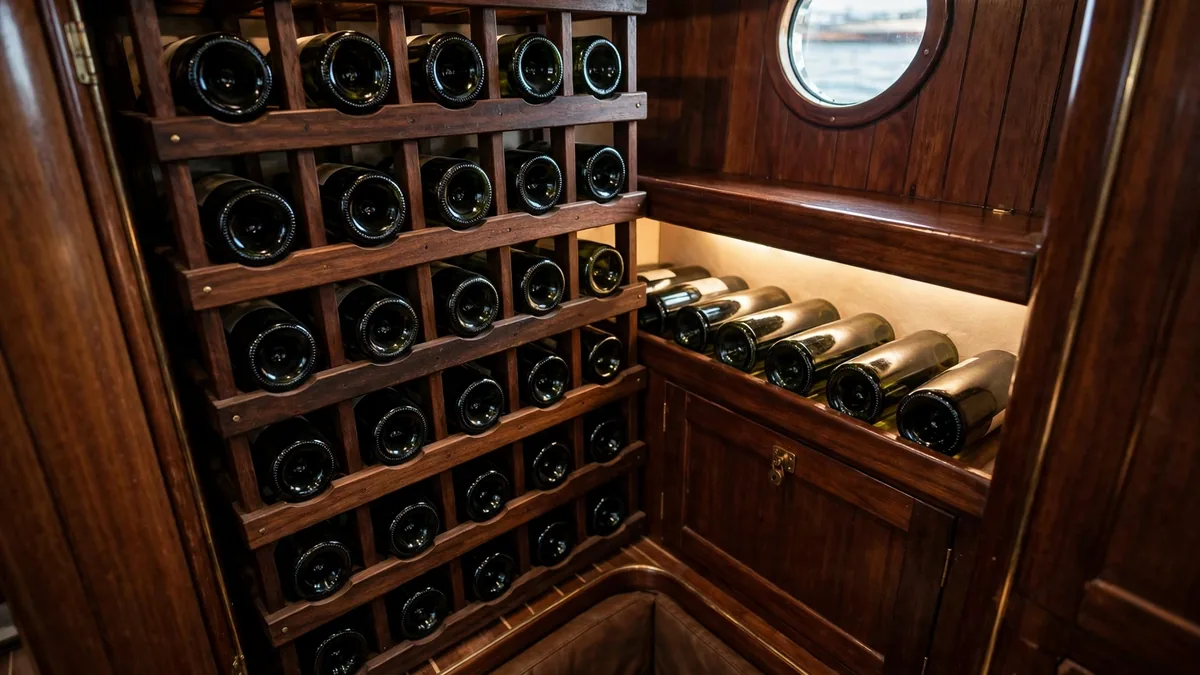
The racks are the heart of the cellar, and they are built for the sea first and for display second. Bottles lie horizontally, so the wine stays in contact with the cork, and each bottle sits in its own cradle, lined with felt or cork, so it cannot roll or knock against its neighbours when the yacht moves.
The racks are built from hardwood, screwed and glued into the walls and the floor, and the front of each row has a low rail that stops a bottle sliding out in a roll. Heavy bottles go low, light bottles go high, and the most valuable bottles sit in the centre of the room, where the motion is least and the temperature is most stable.
Step 5: Light and vibration are kept out of the room
Wine hates light, and the cellar is built to keep it out. There are no windows, and the lighting is a warm, low-level glow that switches on only when someone is in the room, with no ultraviolet light to fade labels or warm the bottles. The lights are on a timer, so a forgotten switch cannot leave them burning all night. Vibration is handled with the same care: the cellar sits far from the engines, the cooling unit rests on anti-vibration pads, and the racks are isolated from the hull, so the low hum of the ship never reaches the wine.
Step 6: The collection is logged, tracked and served
The final part of the cellar is not a machine but a system. Every bottle is logged when it comes aboard, with its vintage, its producer and its place on the rack, and the inventory is kept in a small digital catalogue that the steward can check from anywhere on the yacht. When a bottle is taken for dinner, it is marked as served, so the owner always knows what remains. Serving is planned too: a bottle needed for dinner moves to a smaller service fridge a few hours before, so it reaches the table at the right temperature, carried in a padded case across the rolling deck.
| Spec | Detail |
|---|---|
| Location | Deep in the hull on a lower deck, away from heat and motion |
| Insulation | Thick insulation and vapour barrier on every side, sealed heavy door |
| Temperature | Held near twelve to fourteen degrees by a dedicated unit with backup |
| Humidity | Held near seventy percent so corks stay swollen and sealed |
| Racking | Hardwood cradles, felt-lined, with rails, heaviest bottles lowest |
| Inventory | Every bottle logged in a digital catalogue and tracked when served |
The hardest part of a yacht wine cellar is that it must never fail, because a failure is not a broken machine but a ruined collection. A cooling fault in a hot climate can spoil a bottle in hours, so the cellar is built with a backup for every vital part, and the crew check it every day as part of their rounds. The room itself is small and dark and rarely seen by guests, but it protects some of the most valuable cargo on the whole yacht.
What One Costs
A luxury yacht wine cellar typically costs an estimated $150,000 to $600,000 to build and fit out, and the price is set mostly by the cooling system, the insulation and the custom racking rather than the size of the room. A compact cellar holding a few hundred bottles sits near the bottom of the range, while a large cellar with a backup compressor, a tasting area and a thousand bottles costs far more. The wine inside can be worth many times the room, and how a luxury yacht galley is made shows the kitchen that serves the wine, while how a luxury yacht is made follows the whole vessel from hull to handover.
A Rare Fact
Some yacht cellars hide a small tasting table that folds down from the wall, with two stools that pull out of the racking, so the owner and a guest can taste a bottle in the cool dark of the cellar itself, without the wine ever leaving the room that keeps it safe.
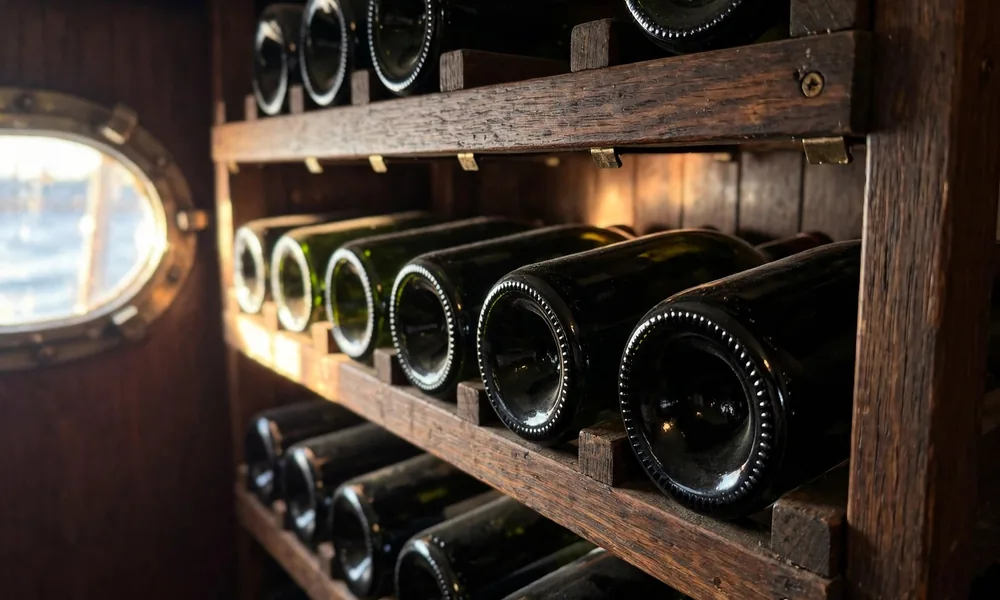
A luxury yacht wine cellar is an insulated vault, a careful climate and a wall of wooden cradles, built to keep wine still, cool and dark on a moving sea. It is one of the smallest rooms on a superyacht, and one of the most carefully engineered. For the water that keeps the whole yacht comfortable, how a luxury yacht pool is made shows the very different engineering behind the deck above.