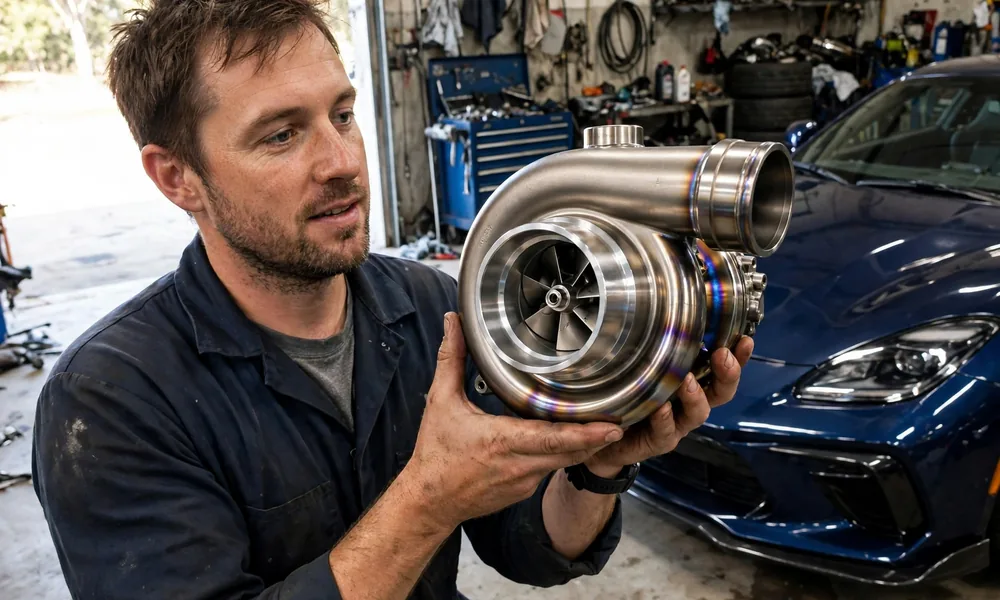
A turbocharger is a small machine that does a violent job. It sits in the hottest, fastest stream of gas a car engine makes, spins at speeds no ordinary bearing could survive, and forces extra air into the engine so it can burn more fuel and make more power. When that turbocharger is made from titanium, it becomes lighter, stronger and far more expensive, and its spec sheet starts to look like a document from an aerospace workshop rather than a car parts catalogue.
The numbers on that sheet matter because a turbocharger lives or dies on fractions. A wheel a few grams lighter spools sooner, a housing a few millimetres tighter holds boost better, and a turbine that can take a little more heat keeps making power on a long straight when a cheaper unit would have to back off. Reading the sheet properly means knowing which figures change the way a car drives and which ones are only there to impress.
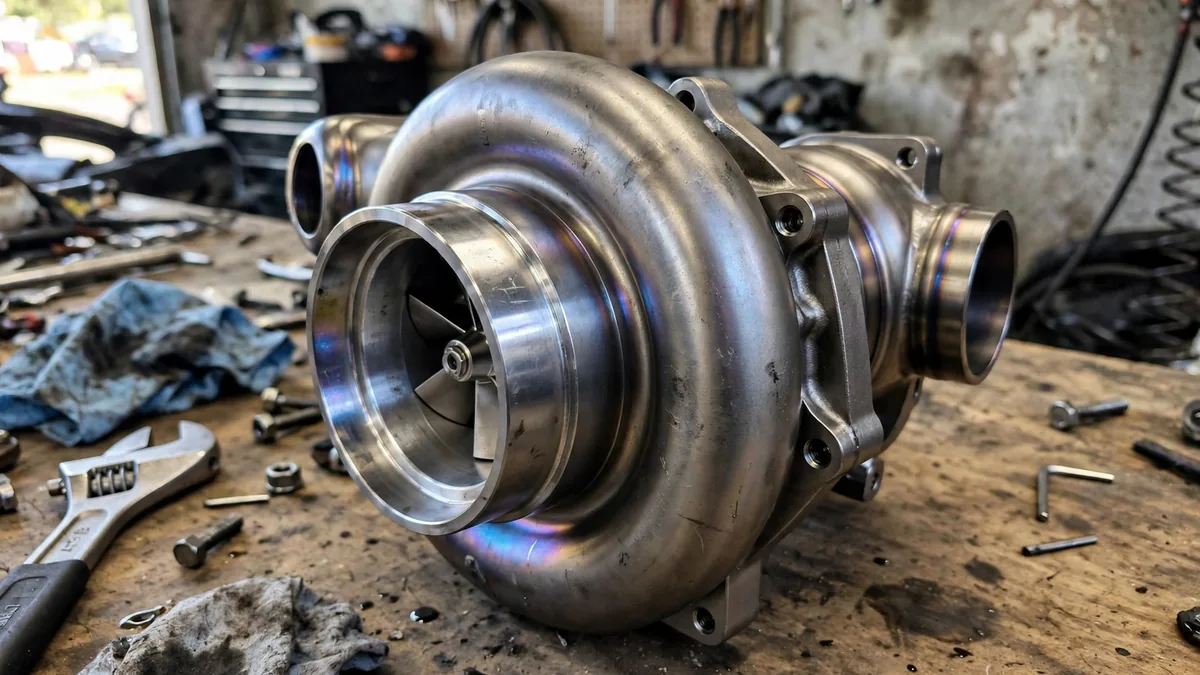
Luxury Titanium Turbocharger Specs at a Glance
| Spec | Detail |
|---|---|
| Turbine wheel material | Titanium aluminide, about half the weight of a nickel alloy wheel |
| Maximum shaft speed | About 150,000 to 200,000 revolutions per minute |
| Peak boost pressure | Roughly 1.5 to 2.5 bar above atmospheric pressure |
| Exhaust gas temperature | Up to about 950 degrees Celsius at full load |
| Compressor wheel size | About 50 to 80 millimetres at the inducer, by application |
| Bearing type | Ball bearings or floating journal bearings, oil fed |
| Spool time | Full boost in roughly 1 to 2 seconds from low revs |
| Unit weight | About 5 to 9 kilograms, depending on size and housing |
These are typical figures, not promises. One maker may trade a little boost for faster spool, another may trade weight for heat tolerance, and the numbers only make sense together.
The Turbine Wheel and Why Titanium Wins
The turbine wheel is the heart of the turbocharger, and it is the part titanium changes most. A conventional turbine wheel is made from a heavy nickel alloy, and every gram of it must be spun up by exhaust gas before the turbo can make boost. A titanium aluminide wheel weighs roughly half as much, so it accelerates sooner, and the driver feels the difference as a car that pulls earlier out of a corner instead of waiting for the boost to arrive.
Weight is only half the story. The turbine wheel sits in exhaust gas that can reach about 950 degrees Celsius, and most light metals would soften or creep at that temperature. Titanium aluminide holds its strength in that heat, which is why it is used in jet engines as well as in the best road-car turbos. The how the luxury titanium turbocharger works story shows how that heat flows through the housing and into the wheel, and the wheel is the part that must survive it thousands of times without cracking.
Making the wheel is slow work. Titanium aluminide is hard to cast and harder to machine, and each wheel is balanced to a tolerance measured in fractions of a gram, because at 200,000 revolutions per minute even a tiny imbalance shakes the whole unit apart. The wheel is usually machined from a single casting, then checked on a balancing machine at speeds a normal workshop never sees, and a wheel that fails the check is scrapped rather than fixed.
Boost, Spool and the Feeling of Power
Boost pressure is the headline number, and a luxury titanium turbo usually runs about 1.5 to 2.5 bar above atmospheric pressure, which roughly doubles or triples the air the engine breathes. That air is what makes the power, and the boost figure tells you how hard the turbo is working, but it tells you nothing on its own about how the car feels, because a big turbo making high boost late is slower in real driving than a smaller one making less boost sooner.
Spool time is the number drivers actually feel. Full boost in roughly one to two seconds from low revs is the range for a well-matched titanium unit, and the light turbine wheel is what makes that possible. The why the luxury titanium turbocharger is so expensive story explains how much of that price is the wheel itself, and the spool figure is the return on that money, a car that answers the throttle instead of pausing to think about it.
Heat, Bearings and Staying Alive
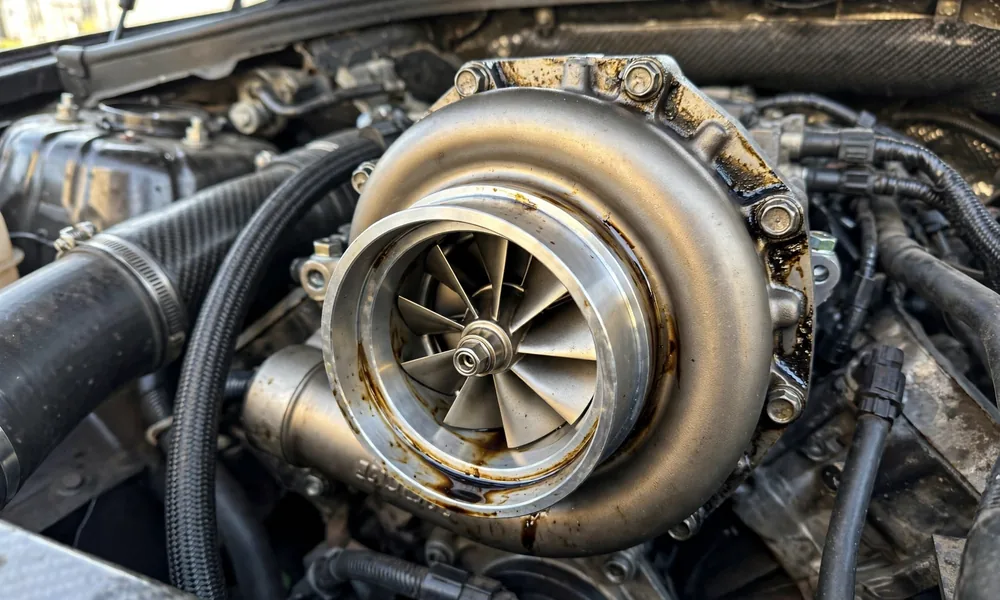
Heat is the turbocharger’s enemy, and the bearing system is what keeps it alive. The shaft between the turbine and the compressor spins at up to 200,000 revolutions per minute, and it rides on bearings fed with engine oil, which both lubricates and cools. Ball bearings spool faster and survive heat better, journal bearings are cheaper and quieter, and the choice shapes the whole character of the unit, from how quickly it answers to how long it lasts.
Cooling does not stop when the engine does. After a hard drive, the turbine housing stays hot enough to cook the oil left inside it, and the best installations keep coolant or oil flowing after shutdown, or ask the driver to let the engine idle for a minute. The luxury titanium exhaust specs show the same heat problem downstream, where the exhaust must carry that gas away without melting, and the turbo and the exhaust are really one heat system, not two separate parts.
As an estimate, a luxury titanium turbocharger costs about $8,000 to $25,000, the titanium turbine wheel about $3,000 to $8,000 of that, the housing and compressor about $2,000 to $6,000 more, and the bearings, balancing and fitting about $2,000 to $6,000 on top. These are estimated ranges, not quotes, and the final figure depends on the size of the unit, the car it fits and the maker. What never changes is that the turbo is the hardest-working part of the engine, spinning faster than anything else on the car.
A Rare Fact From the World of Titanium Turbochargers
Here is a detail few drivers ever learn: a titanium turbocharger can be damaged by a cold start in winter. Titanium aluminide is strong when hot but brittle when cold, and a hard throttle press before the oil has warmed can stress the turbine wheel in ways a nickel wheel would shrug off. The best cars warm the turbo gently, holding back full boost until the oil temperature rises, and owners who respect that warm-up get years more life from a unit that would otherwise fail early.
What the Specs Mean for You
If you are comparing titanium turbochargers, start with four numbers: turbine wheel weight, maximum shaft speed, spool time and exhaust temperature tolerance. A wheel about half the weight of a nickel one, a shaft that holds together past 150,000 revolutions per minute, full boost in under two seconds and a turbine that survives close to 950 degrees Celsius is worth its price. Peak boost matters less than the brochures suggest, and spool matters more than anyone admits, because a turbo that answers quickly is the one that makes a car feel fast on a real road, not just on a test bench. Ask how the unit is cooled after shutdown, too, since that quiet detail decides how long the bearings last. The best titanium turbocharger is the one you forget about, power arriving the moment you ask for it.