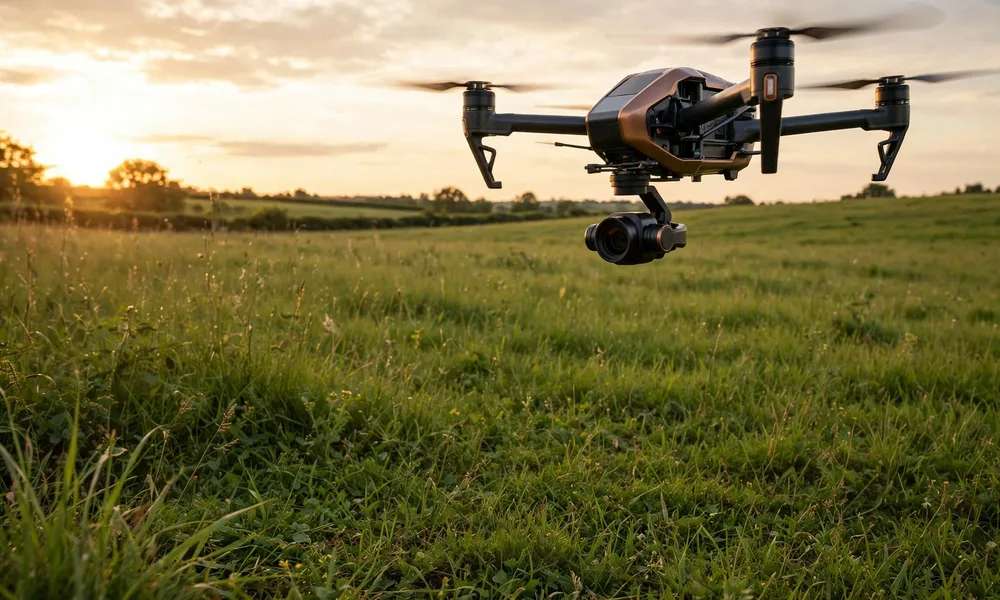
A luxury drone camera sees the world the way a bird does, only steadier. It hangs beneath a buzzing quadcopter, glides over cliffs and rooftops, and sends back footage so smooth that it looks as if the camera were floating on rails instead of fighting the wind.
That smoothness is engineered, not luck. This is how a luxury drone camera is made, from a bare lens and a handful of motors to a flying camera that can hold a shot perfectly still in a gust.
How It’s Made
Step 1: The lens is ground and coated
Every drone camera begins with glass. Blanks of optical glass are ground and polished into lens elements, each one shaped to bend light by exactly the right amount, and then coated with thin layers that cut reflections and keep colours true. A speck of dust or a scratch at this stage would show up in every photograph the camera ever takes, so the work is done in a clean room, by people in gloves and hairnets.
The finished elements are stacked into a lens barrel, spaced by thin rings and sealed against moisture. Each lens is tested on an optical bench, photographing a chart of fine lines, and only the lenses that resolve every line sharply are allowed into a camera.
Step 2: The sensor and processor are fitted
Behind the lens sits the image sensor, a chip covered in millions of tiny light-sensitive points that turn light into digital pictures. The sensor is mounted on a small board with the image processor beside it, a chip that reads the sensor, steadies the picture, compresses the video and sends it down to the pilot, all in a fraction of a second.
Both chips are sensitive to heat and static, so they are fitted in a room where the air is filtered and the workers wear grounded wrist straps. Once mounted, the sensor is checked for dead pixels, the tiny points that would leave a black dot in every frame, and any sensor with too many is replaced. The processor is then given a small heat spreader, a thin plate of copper that carries warmth away from the chip so the picture does not grow noisy on a long, hot shoot.
Step 3: The gimbal motors are built
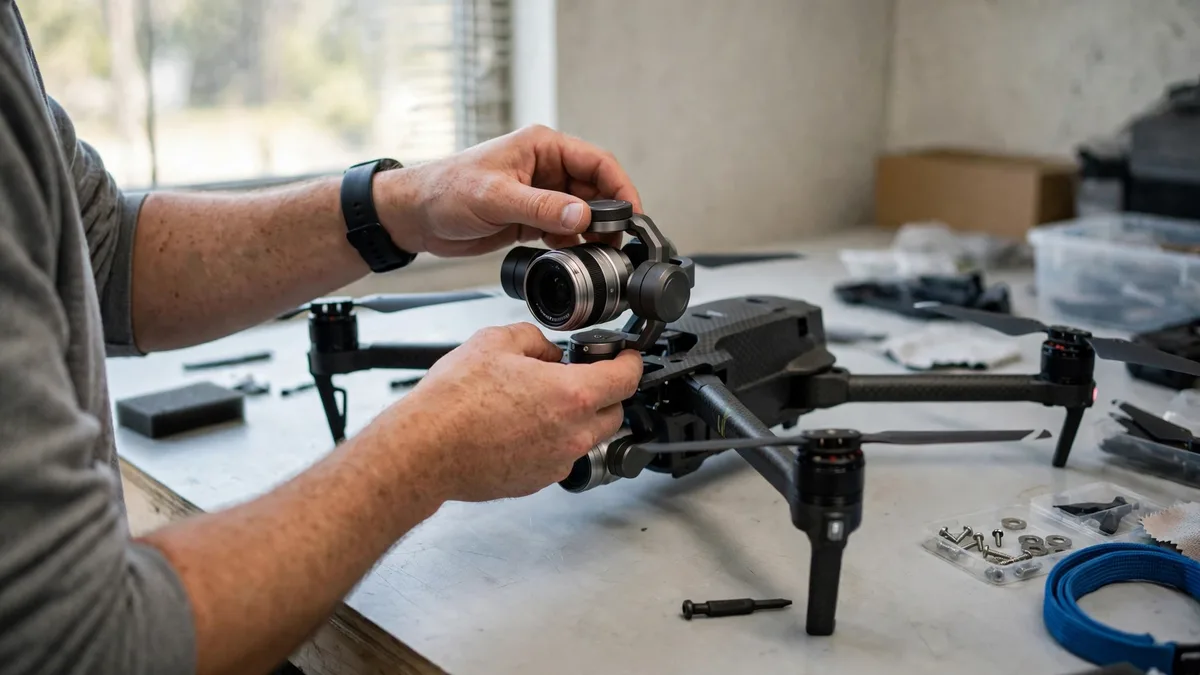
The gimbal is what keeps the camera steady while the drone bucks and tilts. It is a frame of three small motors, one for each direction of movement, that can tilt the camera up and down, roll it side to side, and pan it around. The motors are brushless, with no parts that rub, so they can make thousands of tiny corrections a second without wearing out.
Each motor is wound with fine copper wire, fitted with magnets and balanced, because a motor that vibrates will shake the picture. The three motors are joined into the gimbal frame, and the whole assembly is tested by shaking it on a rig while the camera holds its aim.
Step 4: The camera body is assembled
The lens, sensor and gimbal come together inside a small body of magnesium alloy, a metal chosen because it is light, stiff and good at shedding heat. The body is milled, then fitted with rubber seals around every seam, because a drone camera works in rain, dust and sea spray, and a single drop of water on the sensor would end the shoot.
Inside the body, the boards are stacked like a sandwich, connected by flat ribbon cables that fold neatly into place. The whole camera weighs less than a paperback book, yet it carries the optics of a camera ten times its size. A small fan is sometimes tucked into the body as well, whispering air across the processor on long video shoots in summer heat.
Step 5: The software and stabilisation are tuned
A drone camera is only as good as its software. Engineers load it with programs that read the gimbal sensors, predict the drone’s next wobble, and move the motors to cancel it out before the picture ever shakes. The camera also gets its shooting modes here, from slow cinematic pans to tracking a moving subject on its own.
The tuning is done on a vibration table, where the camera is shaken in every direction while it films a test pattern. Engineers watch the footage frame by frame, adjusting the software until the picture stays locked, even as the table rattles beneath it.
Step 6: The camera is flight tested and calibrated
A finished drone camera is mounted under a drone and flown. Test pilots fly it through wind, over water and into the sun, checking that the picture stays steady, the colours stay true, and the focus holds from a few metres to the horizon. Any camera that hunts for focus or drifts off level goes back to the bench.
Then the camera is calibrated, its lens and sensor matched so the picture is sharp from edge to edge, and its colours tuned against a reference chart. Only then is it boxed with its lens cap and cables, ready to be bolted under a drone and flown for real.
| Spec | Detail |
|---|---|
| Lens | Ground optical glass, coated against reflections, tested on an optical bench |
| Sensor | Millions of light-sensitive points, checked for dead pixels |
| Gimbal | Three brushless motors correcting tilt, roll and pan thousands of times a second |
| Body | Magnesium alloy, sealed against rain and dust, lighter than a paperback |
| Stabilisation | Software tuned on a vibration table until footage stays locked |
| Testing | Real flights in wind and sun, then colour calibration against a chart |
The hardest part of building a luxury drone camera is the weight. Every gram matters, because a heavier camera means a shorter flight, yet the camera must carry a large lens, a big sensor and three motors, and still survive a hard landing. The camera that solves this feels weightless in the hand and rock steady in the air, and it is the reason drone footage can look like it was shot from a crane.
What One Costs
A luxury drone camera typically costs an estimated $1,500 to $6,000 on its own, and the price is set mostly by the size of its sensor, the quality of its lens and how steady its gimbal is. A compact camera sits near the bottom of the range, while a large-sensor cinema camera with a three-axis gimbal costs far more. For the full machine it flies under, how a luxury drone is made follows the airframe and motors, and how a luxury drone works explains how the whole aircraft stays in the air.
A Rare Fact
A luxury drone camera can keep a shot level even when the drone itself is tilted at forty-five degrees in a strong wind. The gimbal motors tilt the camera back the other way, so the horizon in the footage stays perfectly flat while the drone leans hard into the gust, like a waiter carrying a tray through a crowd.
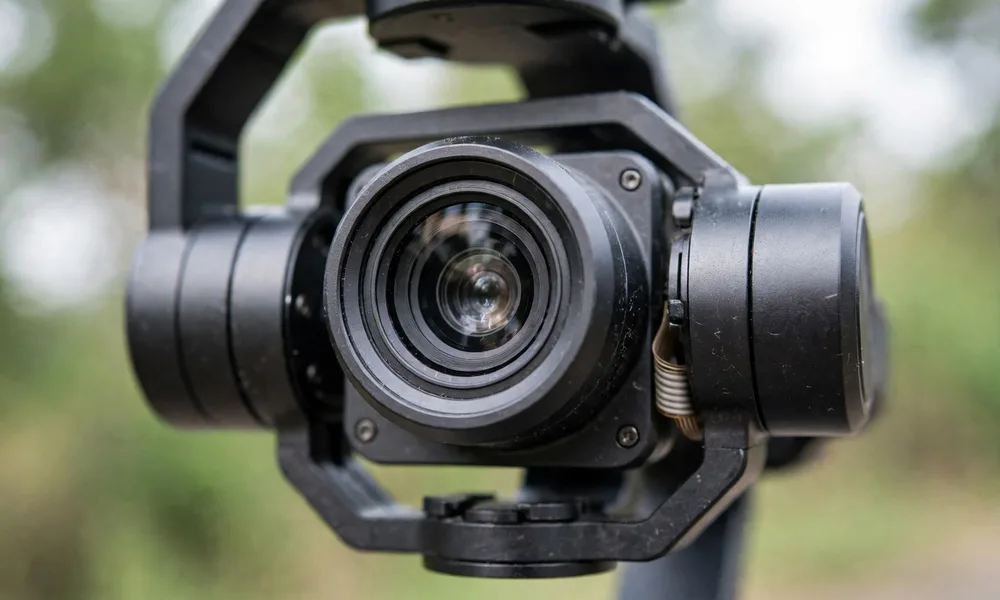
A luxury drone camera is polished glass, a watchful sensor and three small motors that never stop correcting. It is built in clean rooms, tuned on shaking tables, and then it spends its life hanging under a buzzing machine, turning rough air into smooth cinema. For the numbers behind the whole aircraft, the luxury drone specifications break down range, speed and flight time.