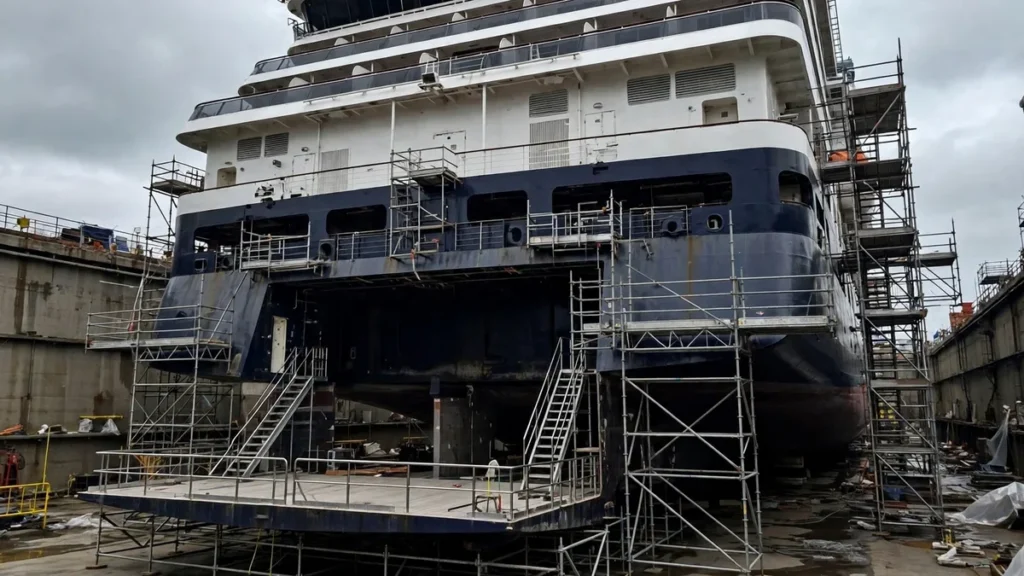
Every passenger remembers the bow of a luxury ship, because it is the part that leads into the horizon. The stern carries the propellers, the rudders, and the wide flat decks where tenders are launched and guests step onto a swim platform.
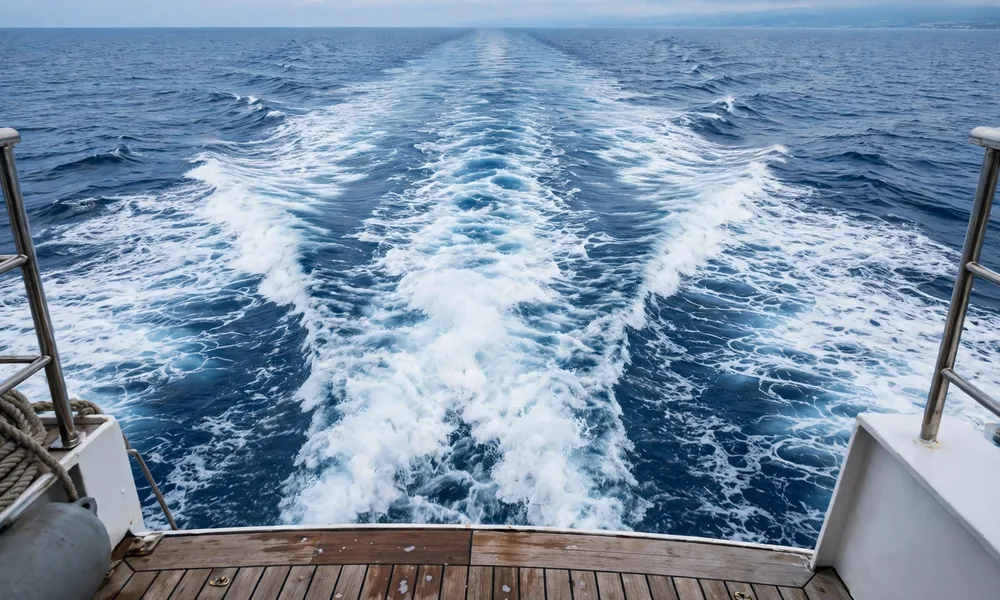
The stern has a harder job than the bow in one important way. The bow only has to part the water, but the stern has to put the water back together again, cleanly, after the hull has pushed it aside. If the water leaves the stern in a messy, turbulent tumble, the propellers work in dirty water, the ship vibrates, and fuel is wasted. If it leaves smoothly, the propellers bite clean water, the ride is quiet, and the ship slips along with less effort.
This guide explains the main figures on a luxury ship stern spec sheet, from the shape of the hull at the back to the size of the rudders and the width of the transom, and what each one means for the way the ship moves, sounds, and feels.
Luxury Ship Stern Specs at a Glance
| Specification | Typical range | What it decides |
|---|---|---|
| Transom width | 25 to 40 metres | Stability and deck space aft |
| Transom immersion depth | 1 to 3 metres | Drag and wake smoothness |
| Propeller diameter | 5 to 7 metres | Thrust and efficiency |
| Rudder area | 25 to 45 square metres | Turning power at low speed |
| Stern overhang length | 8 to 15 metres | Pitch damping in waves |
| Swim platform load rating | 10 to 25 tonnes | Tender and guest operations |
The Transom: The Flat Back That Carries the Ship
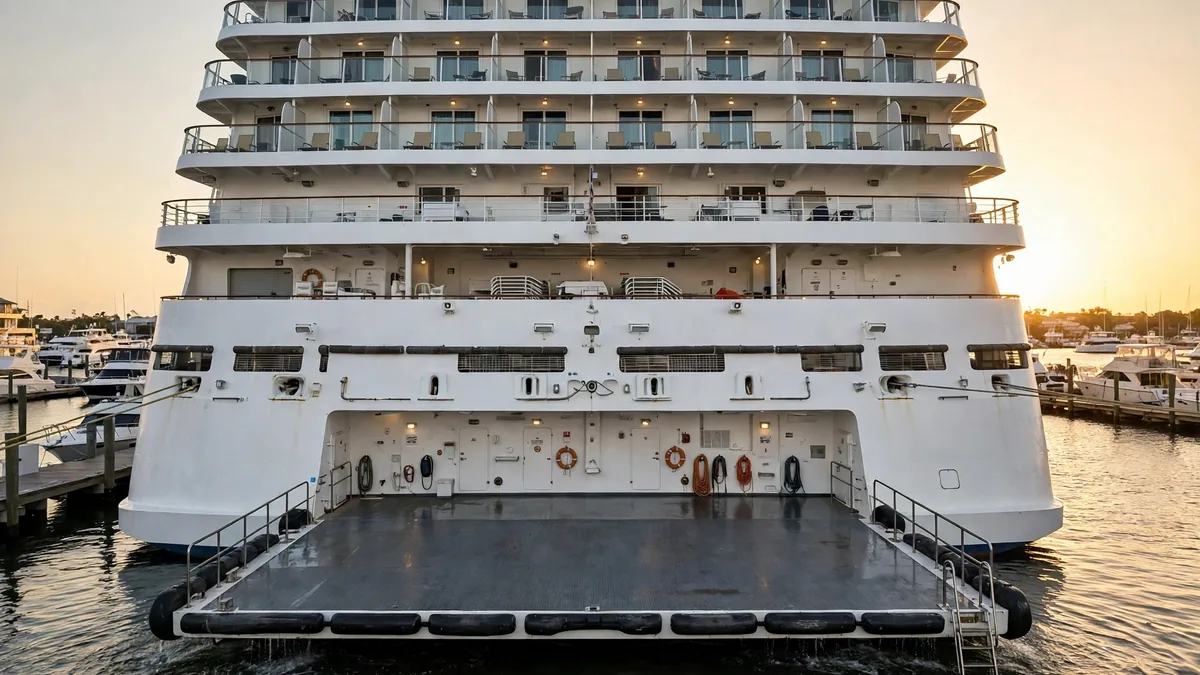
The transom is the flat wall at the very back of the ship, and on a modern luxury vessel it is enormous, often twenty-five to forty metres wide. The flat back carries cabins, restaurants and open decks right to the end of the ship, instead of squeezing them into a narrowing wedge, and its width gives the ship a broad base that resists rolling.
A transom that sits deep in the water drags a turbulent wake behind it, and the spec sheet records the transom immersion depth, usually one to three metres, because that number decides how much of the flat wall is actually in the water. At cruising speed, the water flowing under the hull should break cleanly away from the bottom edge of the transom, leaving a smooth hollow behind the ship. If the transom is too deep, the water clings and churns, and the ship pays for it in fuel. The engines that drive the ship through that water are a story of their own, and the specification of a luxury yacht engine shows how power, torque and weight are balanced in the machinery spaces just forward of the stern.
Propellers and Rudders: The Business End
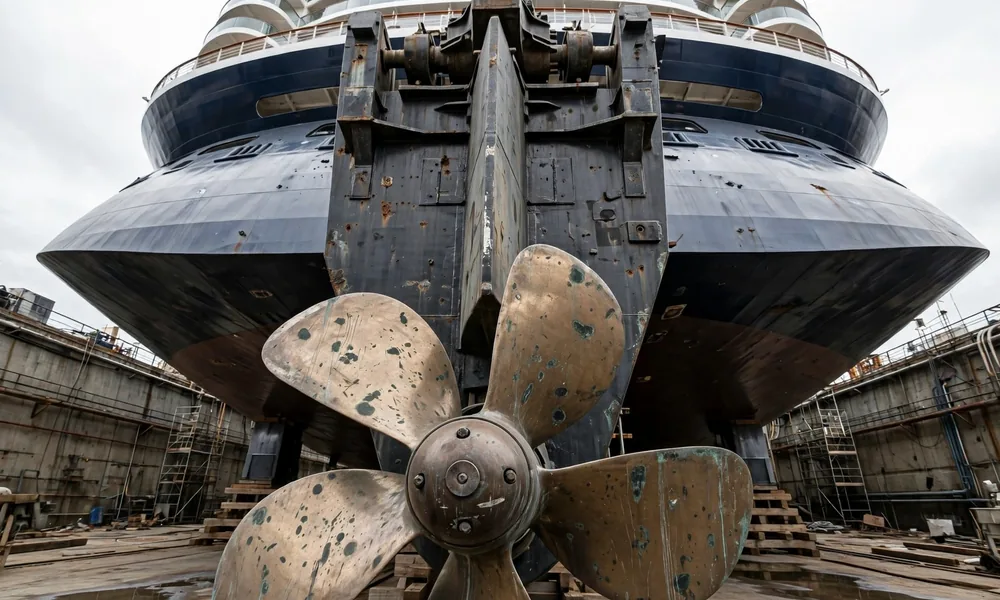
Under the stern, out of sight, sit the propellers, and their diameter is one of the most important numbers on the sheet. On a large luxury ship each propeller is typically five to seven metres across, which means a single blade is taller than a person. The size matters because a bigger propeller turning more slowly is more efficient than a small one spinning fast.
The propellers on modern luxury ships are usually fixed-pitch, with five or six blades cast from a nickel-aluminium-bronze alloy that resists corrosion and cavitation. Cavitation is the enemy here: when a blade moves too fast through the water, the pressure on its back drops so low that the water briefly boils, forming bubbles that collapse violently against the metal. The spec sheet records the blade area ratio and the tip speed, and the designers keep the tip speed below the point where cavitation starts at cruising speed, which is one reason the propellers are so large and turn so slowly. Behind each propeller sits a rudder, and the rudder area, usually twenty-five to forty-five square metres, decides how the ship turns. The rudders sit directly in the propeller wash, so even a small movement has a strong effect.
Overhang, Pitch and the Ride at the Back
The stern overhang is the length of hull that sticks out behind the waterline at the back, usually eight to fifteen metres on a large ship, and it does a quiet job that passengers feel without ever noticing. The overhang acts like a long lever arm, damping that pitching motion, so the ship rocks fore and aft less violently than it would with a short, chopped-off stern.
The spec sheet also records the stern’s natural pitching period, the time it takes the ship to complete one full pitch cycle, because if that period matches the period of the waves, the motion amplifies instead of damping. A stern that sticks out far behind the waterline is vulnerable when the ship reverses into a berth, and it limits how close the ship can come to a quay. The same balance between strength and weight runs through the whole hull, and how a carbon fibre hull is specified shows the extreme end of that trade, where builders chase every kilogram.
The Swim Platform and the Working Stern
At the very bottom of the transom, just above the water, sits the feature passengers actually use: the swim platform. On many luxury ships it is a hydraulically lowered deck that drops to the waterline, rated on the sheet for ten to twenty-five tonnes, enough to carry a tender, a group of swimmers, or a small fleet of kayaks.
Above the platform, the stern houses the tender bays, where the ship’s boats are stored and launched through large shell doors in the side of the hull. The doors themselves are on the spec sheet, with their opening dimensions and their sealing pressure, because a shell door that leaks is a serious problem, and one that cannot open in a seaway strands the tenders inside. The stern is also where the mooring deck sits, with its winches and bollards, and where the ship takes on stores. When builders want that steel to be lighter without giving up strength, the options get expensive fast, and why a titanium hull costs so much explains the most extreme answer to that problem.
A Rare Fact About the Stern
Here is a detail that surprises most people who have cruised. On some modern luxury ships, the propellers are not fixed to shafts at all. They sit in pods that hang below the stern and can rotate a full three hundred and sixty degrees, which means the ship can push itself sideways, spin in its own length, and even reverse without ever turning the rudders. The pods are controlled by joysticks on the bridge, and in port the captain can slide a ship the size of a tower block into a berth with the delicacy of parking a car.
What the Specs Mean for You
If you are choosing a cabin, the stern specification tells you what to expect. A wide transom with a long overhang means a stable ride and generous aft decks, but also more motion in the rearmost cabins when the sea gets up.
Stand at the stern rail on your next voyage and watch the wake. If it runs away flat and clean, you are looking at a stern that was designed well, and at numbers on a spec sheet that were chosen with care.