Open the door of a luxury car and the first thing you notice is not the wood or the chrome, it is the smell. Warm, rich and faintly sweet, the smell of leather fills the cabin before you have even sat down, and it tells you what kind of car this is.
That smell and that softness are not accidents. They come from hides chosen one by one, tanned slowly, dyed through, and cut and stitched by people who can read a hide like a map. This is how luxury car leather works, from the tannery to the seat.

How It Works
Step 1: The hides are chosen and graded
It starts with the hide, and only a small share of hides ever become car leather. Graders lay each hide out and look for scars, insect bites, stretch marks and thin patches, marking every flaw with chalk. The cleanest hides go to the seats and door panels, where the eye falls first.
Size matters too. A car seat needs large, even panels, so small or uneven hides are set aside for smaller parts. The best hides come from cattle raised in cool climates, where the skin is thicker and the insect damage is lighter, and each hide is tracked from the tannery to the car. The hides are stored flat in a cool room, never folded, because a crease pressed into raw hide will survive tanning and show in the finished leather.
Step 2: The hides are tanned and softened
Tanning turns a raw hide into leather that will not rot and will not stiffen. The hides are soaked, cleaned and tanned, often with chrome salts for strength and then with vegetable agents for softness, a process that takes days rather than hours. Rushing it leaves leather that cracks in the sun.
After tanning, the hides are oiled and stretched, then dried slowly so they stay supple. A luxury hide is soft enough to fold without creasing and strong enough to hold its shape on a seat for a decade, a balance the tannery tunes by feel as much as by recipe. The tannery keeps a sample from every batch, so if a seat ever needs matching leather years later, the original colour and finish can be found.

Step 3: The leather is dyed and finished
Dyeing is done in drums, where the hides tumble in dye that soaks right through the fibre, so a scratch will not show a pale line underneath. The colour is matched to a sample kept from the car’s order, and the hides are checked in daylight before they leave the drum.
Then comes the finish, a thin coating that gives the leather its sheen and its protection against spills, sunlight and wear. Luxury leather keeps a natural grain and a soft touch, so the coating is kept light, just enough to protect without making the surface feel like plastic. A final coat of wax is buffed in by hand on the best hides, giving a soft glow that deepens with use rather than wearing away.
Step 4: The panels are cut and matched
Cutting is where the craft shows. A cutter lays the pattern pieces on the hide, working around every chalk mark, and cuts with a sharp knife or a steel die. The grain must run the same way across the seat, and the panels for one seat are cut from the same hide so the colour never shifts.
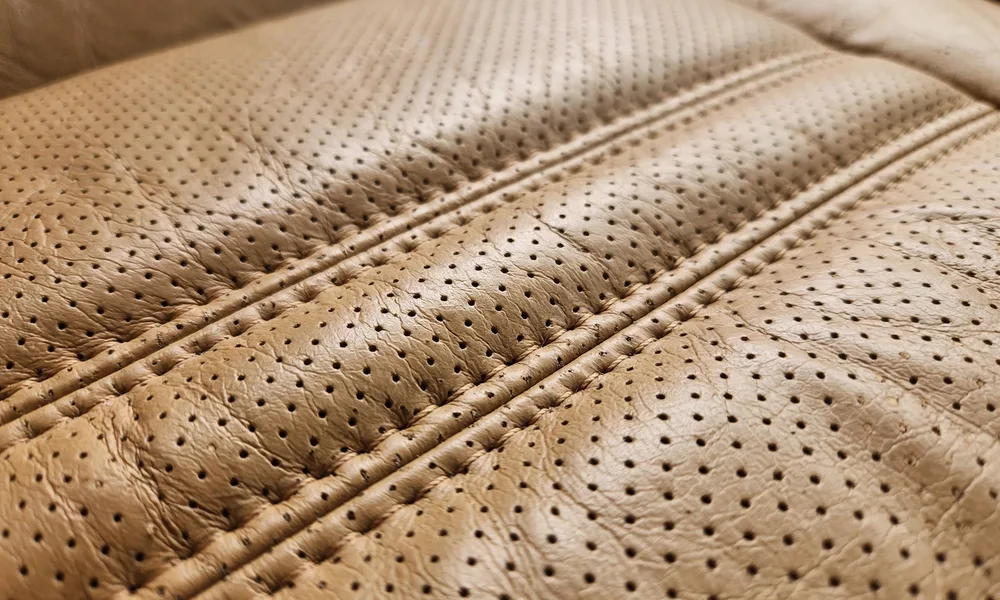
Perforated leather takes an extra pass, with tiny holes punched in neat rows for the seat ventilation to breathe through. Each hole must be clean and even, because a ragged perforation will catch the eye every time the door opens. The offcuts are not wasted, since small pieces become steering wheel wraps, gear lever boots and trim for the door pockets.
Step 5: The panels are stitched and piped
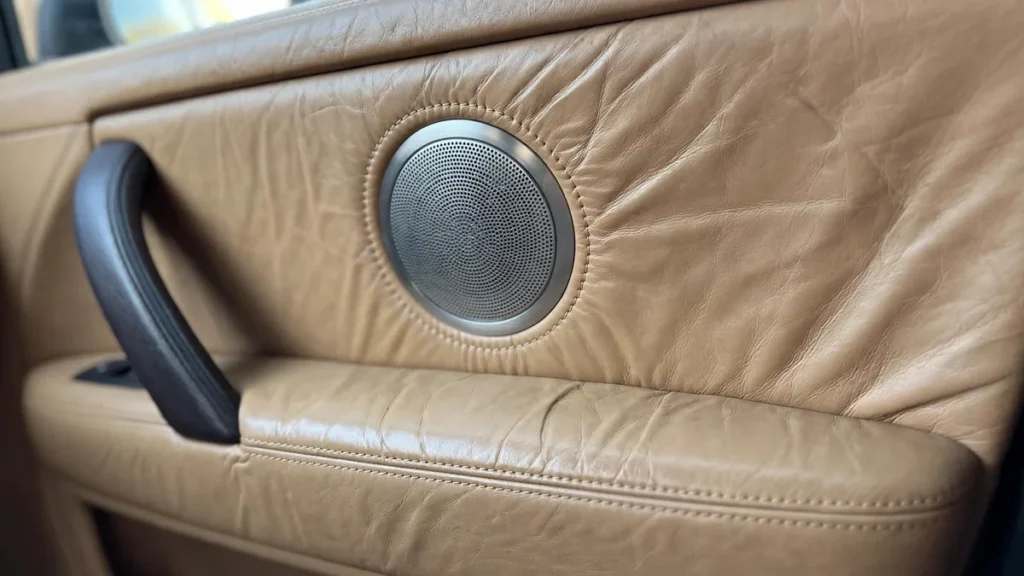
Stitching joins the panels into seat covers, door inserts and armrests. Sewers work on industrial machines, keeping the seam allowance even and the stitch length steady, and add piping where the design calls for a tailored edge. Contrast stitching, where the thread is a different colour, shows every mistake.
Quilted seats are stitched through the leather and a thin foam backing before the panels are joined, which gives the diamond pattern its soft puff. The finished covers are turned, pressed and checked, and any seam that puckers is unpicked and sewn again. The thread is a heavy bonded type that will not snap under the pull of a passenger sliding in and out of the seat a thousand times.
Step 6: The leather is fitted, conditioned and cared for
The last step is fitting. The covers are pulled over the seat foam, worked smooth by hand, and clipped or stitched underneath, so the leather sits tight with no wrinkles at the corners. The seats are then conditioned, a light cream rubbed in to feed the surface before the car leaves the factory. The conditioner is left to soak in overnight, so the surface feels dry to the touch but stays soft underneath when the car is delivered.
That care continues with the owner. Luxury leather is cleaned with a gentle product and conditioned a few times a year, which keeps it soft and stops the sun from drying it out. Looked after, it ages gracefully, growing a soft sheen rather than wearing thin.
| Spec | Detail |
|---|---|
| Hides | Graded by hand, only the cleanest become seat and door leather |
| Tanning | Chrome and vegetable tanning over days, oiled and slow dried |
| Dyeing | Drum dyed right through the fibre, daylight colour matched |
| Finish | Light protective coating, natural grain kept, soft to the touch |
| Cutting | Panels cut around flaws, grain matched, one hide per seat |
| Care | Gentle cleaning and conditioning a few times a year |
The hardest part of car leather is the hide itself. No two hides are alike, and the cutter must find enough clean, even leather in a natural skin full of scars and stretch marks to cover a whole seat without a single flaw showing.
What One Costs
A full luxury leather interior typically costs an estimated $5,000 to $15,000, set mostly by the hide grade, the stitching and how much of the cabin is covered. Leather seats alone sit near the bottom, while a full cabin with quilted seats, door panels and dashboard trim costs far more. The seat the leather covers is the bigger machine, and how a luxury car seat works explains the motors and air bladders underneath it, while how luxury car leather is made follows the factory side of the same story.
A Rare Fact
Some luxury car makers keep a library of leather samples from every car they have built, so an owner restoring a twenty-year-old car can order a hide dyed to the exact batch colour of the original, matched from a swatch cut the day the car was made.
Luxury car leather works as a chain: hides graded by hand, tanned slowly for strength and softness, dyed right through, cut around every flaw, stitched with even seams, and conditioned so it ages with a soft sheen. It is the part of the car you touch most. A well kept cabin can still smell of leather years after the car was built, which is why owners guard it so carefully. The shine on the outside gets the same patience, and how luxury car paint is made shows how the body earns its mirror finish.