A luxury ship hull is the largest single object most people will ever stand beside, a steel shell longer than a city block and taller than a house, yet it begins life as flat plates of steel stacked in a yard.
Modern hulls are not built in one piece. They are built in sections, called blocks, each one a giant steel box made in a workshop, then lifted by crane into a dry dock and welded to its neighbours until the whole ship takes shape. This is how a luxury ship hull is made, from the first plate to the day the dock is flooded and the ship floats for the first time.

How It’s Made
Step 1: The shape is drawn and the plates are cut
Every hull starts as a drawing, a set of smooth curves worked out by naval architects who balance speed, stability and space inside. Once the shape is settled, the yard takes the curves apart into flat patterns, one for every plate of steel in the hull.
The plates arrive at the yard by lorry or barge, are checked for flaws, and are cut to their patterns with plasma torches or great cutting machines that follow the drawings exactly. Each plate is marked with its place in the hull, like a piece of a giant jigsaw, and its edges are bevelled so the welds that join them will bite deep into the metal.
Step 2: The plates are rolled to the hull’s curves
Flat plate cannot follow the curve of a hull, so each plate is passed through great rollers that bend it a little at a time until it matches the shape of the drawing.
A plate that is bent too far cannot be bent back cleanly, so the work is careful and unhurried. The same care with a strong backbone low in the vessel runs through the whole build, and the way a luxury ship bow is made shows how the curved steel at the very front of the ship is shaped to meet the sea first.
Step 3: The hull is built in blocks
Instead of building the whole hull in the dry dock, the yard builds it in blocks, each one a section of hull perhaps twenty metres long, made in a covered workshop where the weather cannot slow the work. Inside each block stands a skeleton of steel frames, curved ribs that give the skin its shape and carry the loads of the sea into the rest of the hull. The rolled plates are lifted into place, held against the frames with clamps and wedges, and tacked in position.
Pipes, cables and even whole rooms are fitted into the blocks while they are still in the workshop, where access is easy.
Step 4: The blocks are welded into one hull
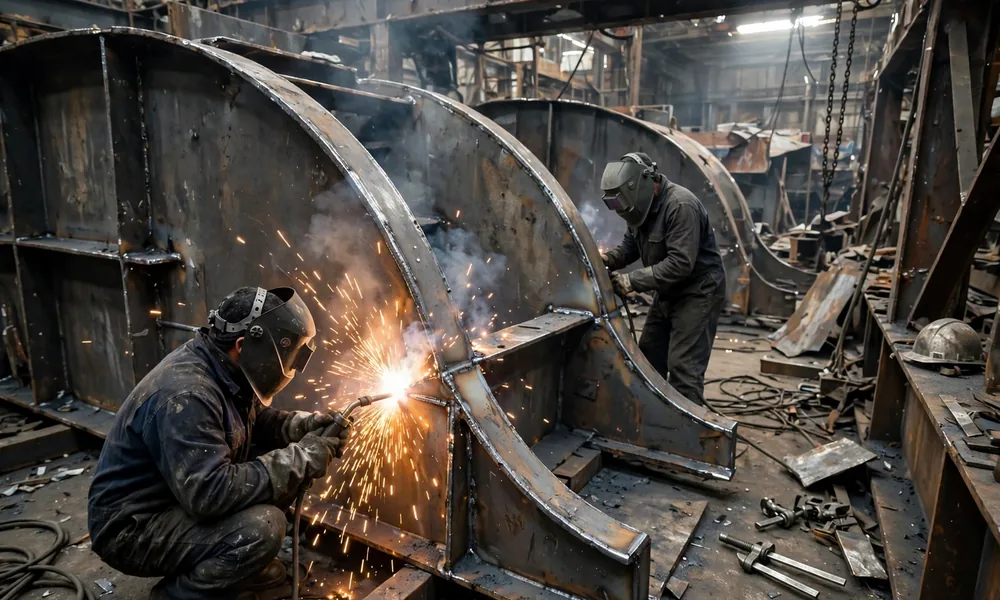
Once the blocks are ready, huge cranes lift them into the dry dock and set them down in line, one after another, until the shape of the ship appears. Surveyors check the line of the hull with lasers, because a hull that is out of true by even a little would steer badly for the rest of her life. The blocks are then welded together along their edges, in long seams that run around the whole cross-section of the ship.
Welders work in pairs, one on each side of a seam, so the heat stays balanced and the plate does not pull out of shape. Every weld is inspected, first by eye and then with sound waves or X-rays that can find a flaw hidden deep inside the metal.
Step 5: Decks, bulkheads and the double bottom go in
With the outer skin complete, the yard builds the inside of the hull. Steel decks are fitted at each level, dividing the ship into floors for cabins, lounges and machinery, and watertight bulkheads are built across the hull, dividing it into compartments so that flooding in one space cannot spread through the whole ship. Stairwells, lift shafts and corridors are cut through the decks as the work goes on.
Between the outer bottom and the inner bottom a double bottom is built, a space that holds ballast water and fuel and gives the ship a second skin if the outer bottom is ever damaged. The strength of the stern, where the rudder and propellers hang, is part of the same structure, and the way a luxury ship stern is made shows how the back end of the hull is closed and strengthened to carry its loads.
Step 6: The hull is faired, coated and launched
When the last block is welded, the hull is faired, which means the surface is checked for bumps and hollows and ground smooth until water will flow over it without tripping. Workers run long straight edges along the steel, mark the high spots, and grind them down by hand, because a smooth hull slips through the water quietly and saves fuel over the life of the ship.
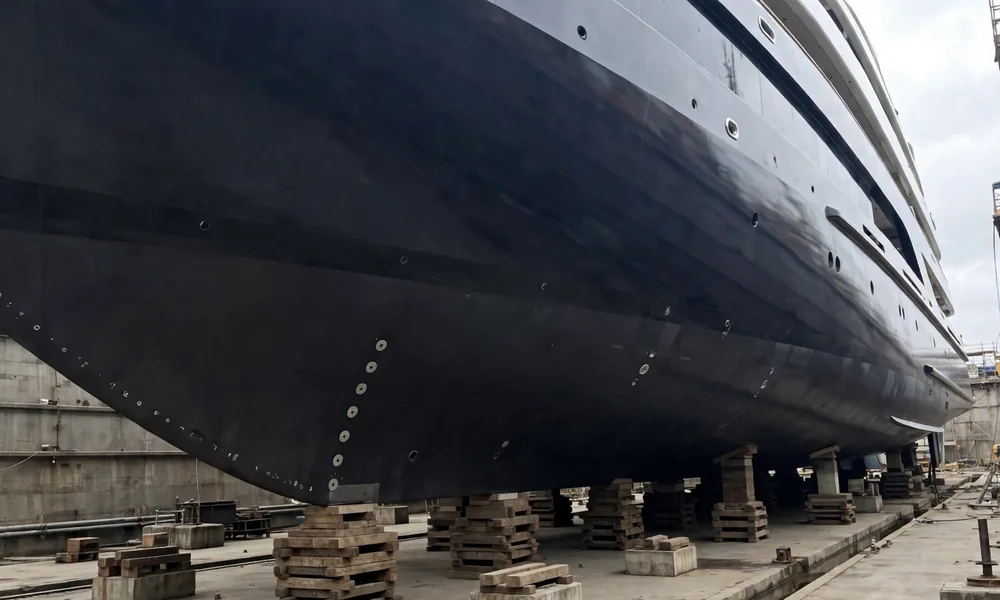
Then the hull is blasted clean and given its protective coatings, and the yard inspects the whole ship once more, weld by weld, before the dock is flooded. Only when she sits true in the water, with no leak and no list, is the hull judged a success. The numbers that describe her shape and strength are written into a specification, and the way the luxury ship keel is specified shows how the backbone beneath the hull is measured and recorded.
| Spec | Detail |
|---|---|
| Plates | Thick shipbuilding steel, cut to pattern and bevelled so the welds bite deep into the metal |
| Rolling | Plates bent through great rollers, some in two directions at once, checked against templates |
| Blocks | Hull built in sections of about twenty metres, each with its own frame of curved steel ribs |
| Welding | Blocks joined in dry dock, welds inspected with sound waves or X-rays, flaws cut out and redone |
| Inside | Steel decks, watertight bulkheads and a double bottom tying the hull into one stiff box |
| Finish | Faired smooth by hand, blasted clean, coated, then floated out of the dock for the first time |
What One Costs Building a luxury ship hull is an estimated 50,000,000 to 200,000,000 dollars as the largest single part of a new ship, depending on the size of the vessel, the thickness of the plate and how much of the fitting out is done inside the blocks.
A Rare Fact Some of the largest shipyards build a hull in more than a hundred separate blocks, and the biggest cranes in the yard can lift a single block weighing over a thousand tonnes. The blocks are built upside down in some yards, so the welders can work looking down at the steel instead of lying on their backs beneath it, and the finished block is turned over by crane before it is joined to its neighbours.
A luxury ship hull is drawn to a compromise between speed and space, built up from rolled steel plates on a frame of ribs, joined block by block in a dry dock, then faired by hand and floated for the first time. It is the largest thing the yard will ever build, and the part of the ship that decides how she moves, how much she carries, and how safely she brings everyone home.