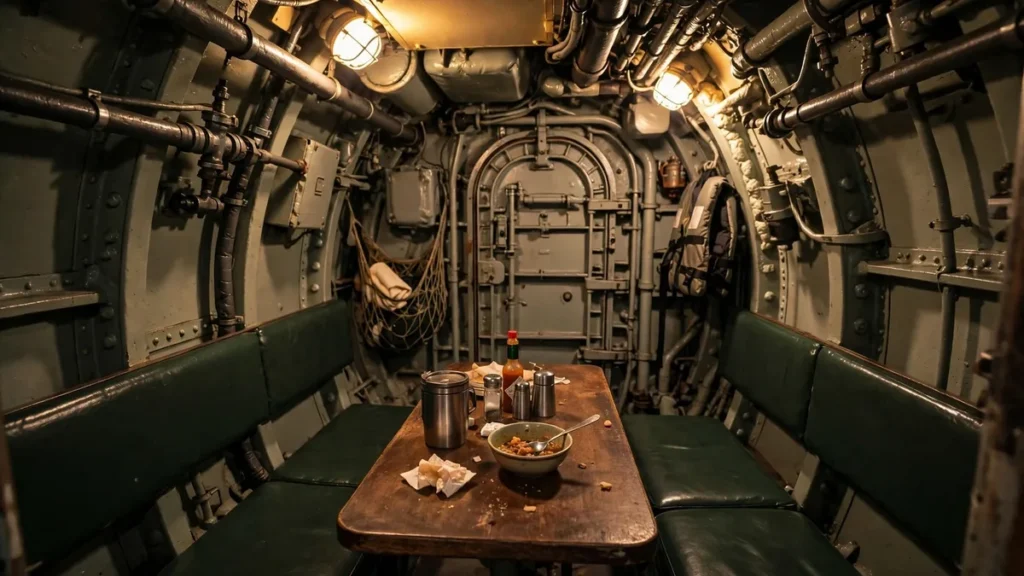
Two hundred metres below the surface, in a steel tube where no window has ever opened, a cook is plating dinner for thirty people. The kitchen is smaller than a garden shed, the cook works alone, and every pot is held down by a rail because the boat can tilt without warning. There is no shop to run to, no delivery van, and no second chance: if dinner fails, thirty tired sailors go hungry until breakfast.
A luxury submarine galley is the tiny kitchen built inside the pressure hull of a submarine, made to feed the whole crew for weeks underwater with no fresh supplies. It is a very different machine from the galley of a ship or a yacht, where space is generous and food arrives in port every few days. Here the cook works in a space barely bigger than a cupboard, the food is stored in every spare corner of the boat, and the meals are timed to the watch system, so someone is always eating, sleeping or working. This is how it works, from the stores in the torpedo room to the last plate served at midnight.
How It Works
Step 1: The stores are packed before the boat sails
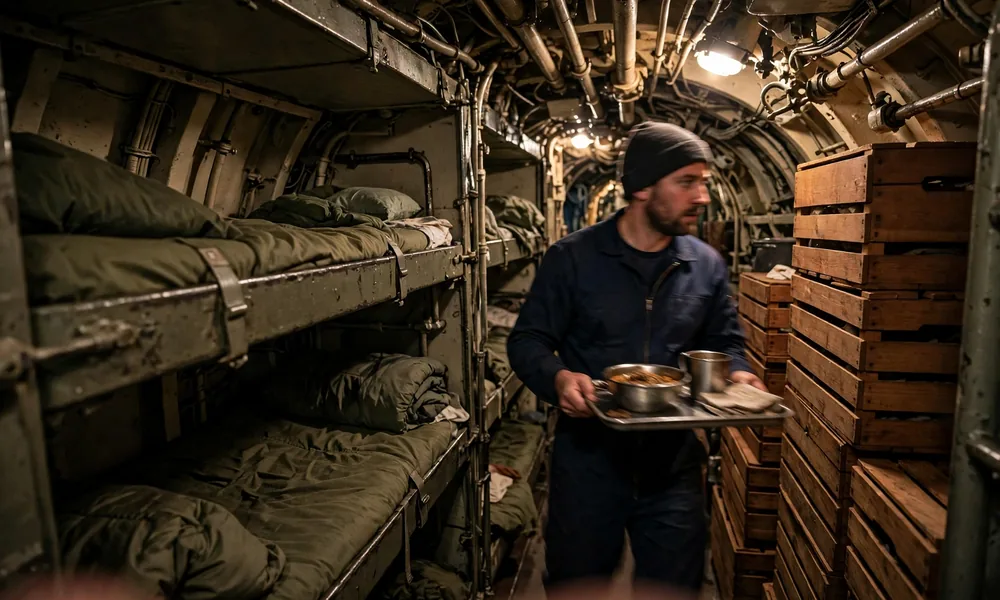
A submarine galley starts working weeks before the boat leaves port, because everything the crew will eat has to be loaded first. The cook and the captain plan the menus for the whole patrol, counting every meal, and the food is bought in bulk: tinned goods, dried pasta, frozen meat and fresh vegetables that will last the first week. The stores are packed into every spare space in the boat, including the torpedo room and the corridors, because the galley itself has room for only a few days of food. Fresh food is eaten first, then frozen, then tinned, in a strict order that the cook follows like a timetable.
Step 2: The cook works alone in a steel cupboard
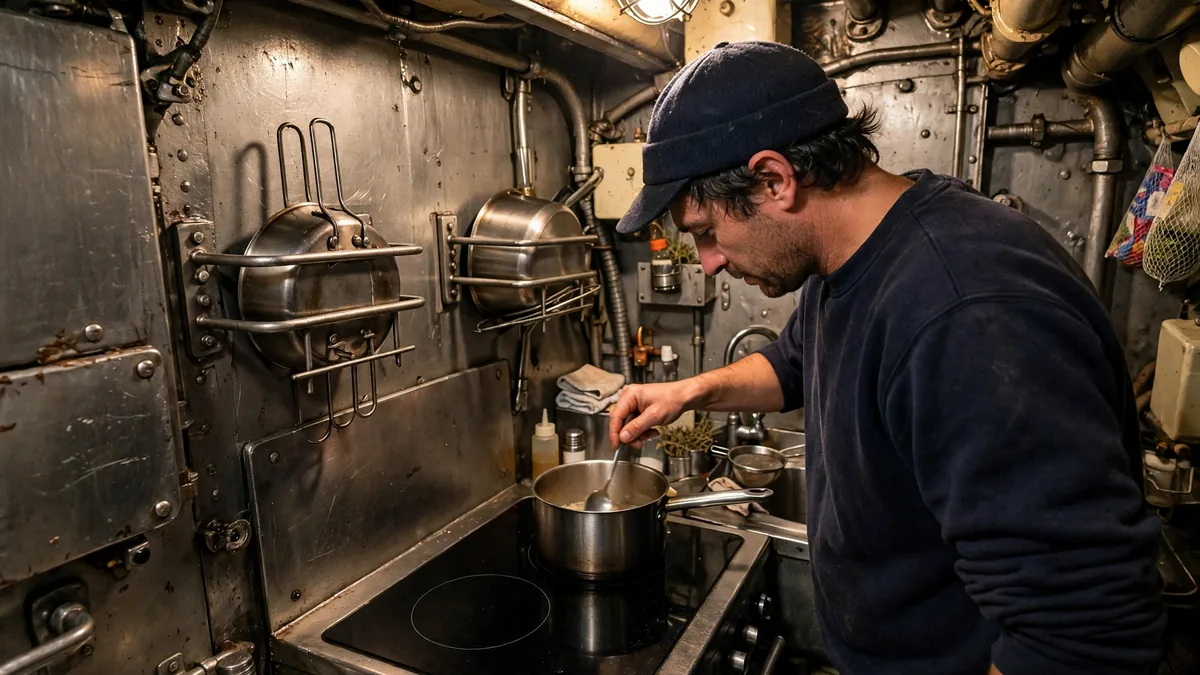
The galley itself is a small steel room, barely two metres wide, with a stove, a sink, a fridge and a worktop, and one cook works it alone. The stove is a compact induction hob with rails around it, so pots cannot slide off when the boat tilts, and the oven is small enough that only one tray fits at a time. The cook plans each meal around a single pot or a single tray, because there is no room for a second dish to wait. Knives, boards and utensils are kept in racks and nets, so nothing loose can fly across the room in rough water.
Step 3: Cooking without smoke, flame or smell
A submarine cannot afford smoke, flame or strong smells, because the air inside is recycled and there is nowhere for smoke to go. The galley uses induction hobs and a small electric oven, with no open flame at all, and the ventilation pulls cooking air through filters that strip out grease and smell before the air goes back to the crew. Meals are built around boiling, baking and steaming, with sauces made in a single pan and bread baked in small batches. The rule is simple: if a dish fills the boat with smell, it is not cooked again. Big galleys take the same care with air and heat, as a luxury ship galley is made shows, only in a room a hundred times larger.
Step 4: Keeping food cold and fresh underwater
Cold storage on a submarine is a battle, because the fridge and the freezer are small and the boat is warm inside. The cook keeps the fridge at a steady few degrees above freezing, with the most perishable food at the front so it is used first, and the freezer holds the meat for the second half of the patrol. Fresh vegetables are stored in a cool locker with good airflow, and the cook checks them daily, throwing out anything that has turned before it can spoil the rest. Water is rationed too, so washing up is done in a single sink of hot water. A yacht galley takes the same care with cold food, as how a luxury yacht galley works shows.
Step 5: Serving meals to the watch system
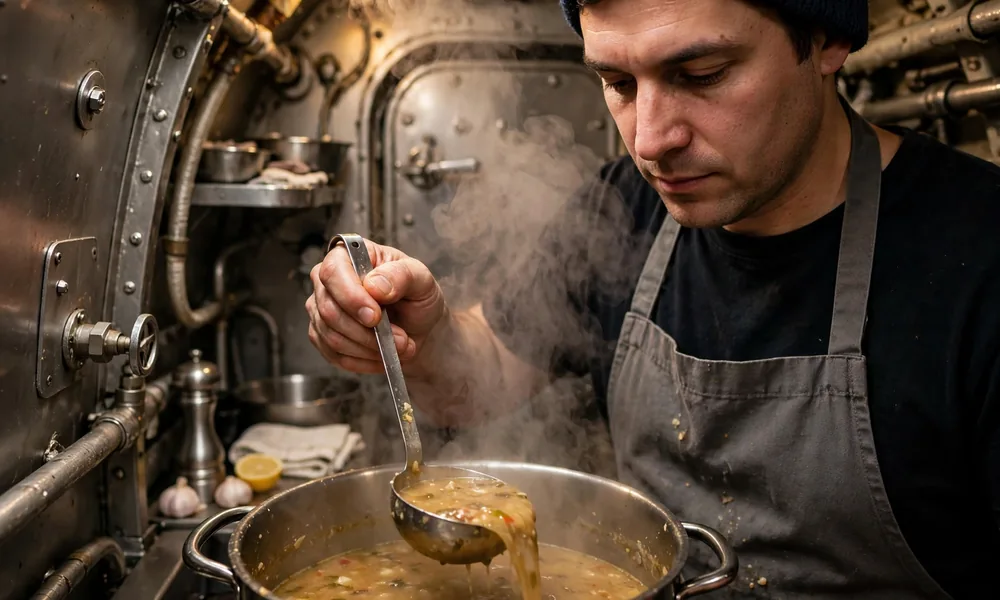
A submarine never sleeps, so the galley never really closes. The crew work in watches, usually six hours on and six hours off, which means someone is always waking up hungry and someone else is going to bed. The cook serves four meals a day: breakfast, lunch, dinner and a midnight meal for the night watch, with snacks and hot drinks available in between. The cook keeps a pot of soup or stew on the hob around the clock, because a sailor coming off watch at three in the morning needs hot food, not a cold sandwich. The menu is the clock of the boat: when the smell of baking bread drifts through the corridors, the crew know it is morning, even though no sun has risen for days.
Step 6: Washing up, waste and the next patrol
After every meal the cook washes up in the same small sink, with a strict routine that saves water and keeps the galley clean. Plates are scraped, washed in hot water, dried and stacked, and the worktop is wiped down before the next meal begins. Waste is bagged, weighed and stored in a sealed locker, because nothing can be thrown overboard while the boat is submerged, and the bags are only emptied when the boat surfaces or returns to port. At the end of a patrol the galley is deep cleaned, the stores are counted, and the cook writes down what ran out too soon and what came back uneaten, so the next loading is better. The galley is then inspected by the captain, and the boat is ready to load again. The whole machine only makes sense inside the boat around it, and the way that boat works, from its batteries to its hull, is the story that how a luxury submarine works tells.
| Specification | Typical submarine |
|---|---|
| Crew fed | About thirty people for weeks underwater |
| Galley size | Barely two metres wide, one cook working alone |
| Cooking | Induction hob and small oven, no open flame |
| Ventilation | Filtered extraction, grease and smell stripped out |
| Cold stores | Small fridge and freezer with control-room alarms |
| Stores | Food packed in every spare space, fresh first, tinned last |
| Meals | Four a day to the watch system, plus a midnight meal |
| Waste | Bagged and sealed until the boat surfaces |
A luxury submarine galley costs an estimate of $400,000 to $900,000 to fit out, depending on the size of the boat, the number of crew it carries and how much of the cooking and cold storage is custom-built. The price covers the steel room, the induction hob and oven, the fridge and freezer, the filtered ventilation, and the storage fitted through the boat.
Here is a rare fact worth knowing. On some submarines the cook bakes fresh bread every day, and the smell of it is the only way the crew can tell morning from night, because the boat runs on artificial light around the clock. The bread is baked in a tiny oven that holds a single loaf at a time, and the cook starts it before dawn so the smell reaches the bunks as the night watch ends. Sailors say the bread is the best thing on the boat, and the cook who bakes it well is remembered long after the patrol ends.