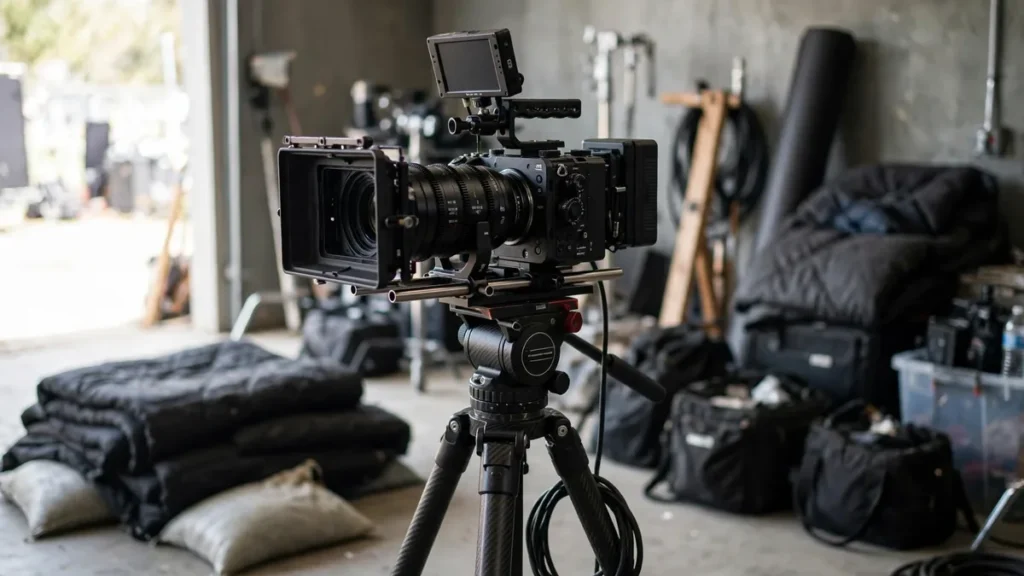
Watch a film and you are watching a sensor. Every frame, every colour, every shadow that falls across an actor’s face was once light hitting a small rectangle of silicon inside a camera, and the quality of that rectangle decides what the audience feels. The sensor is the part that turns light into a story.
A cinema camera sensor looks like a simple chip, but its specification sheet is one of the most misunderstood in all of filmmaking. Resolution is only the beginning. Sensor size, pixel size, dynamic range, and readout speed all shape the image, and a camera with fewer megapixels can still produce the better picture.
Each number on the sheet answers a question about the image: how much light it can gather, how much detail it can hold, and how far it can stretch between the brightest highlight and the darkest shadow. Here is what they mean.
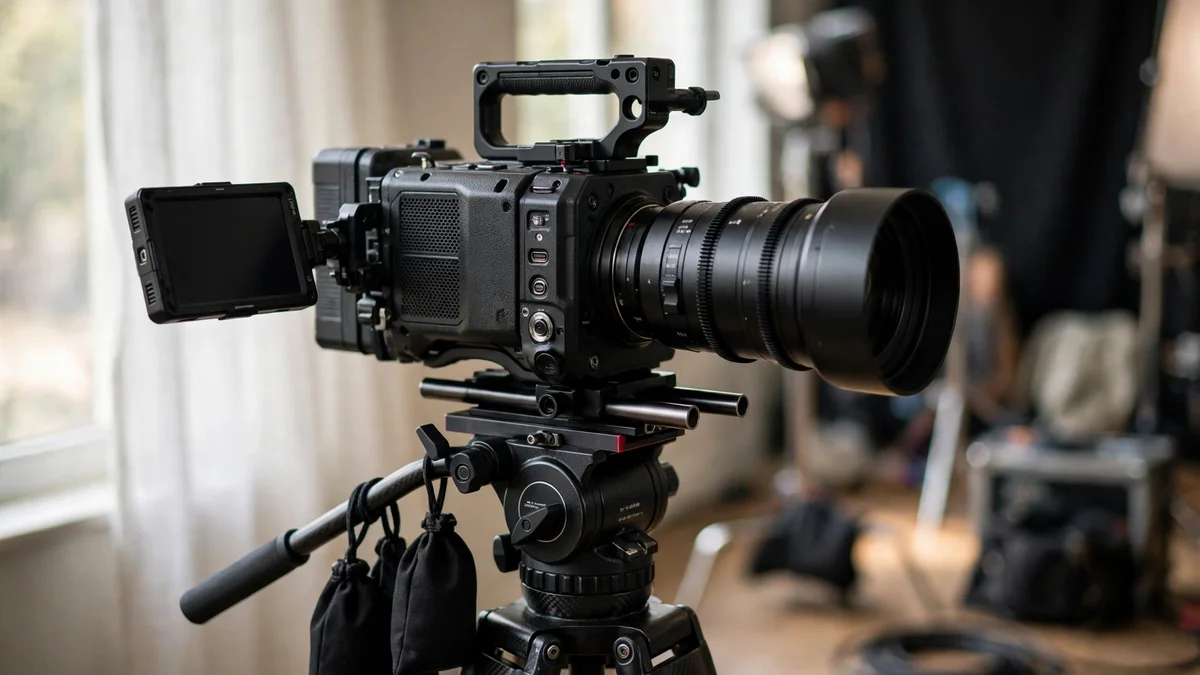
Cinema Camera Sensor Specs Explained
1. Sensor size: full frame, Super 35, and larger
Sensor size is the physical size of the light-sensitive chip, and it shapes everything else. The common cinema sizes are Super 35, about 24 by 13 millimetres, and full frame, about 36 by 24 millimetres, with larger formats like 65 millimetre digital sitting above them. A bigger sensor gathers more total light for the same exposure, which means less noise in dark scenes and a shallower depth of field, the soft background blur that makes a subject stand out. Super 35 remains the workhorse of cinema, while full frame is the choice for the shallowest focus and the cleanest low-light image.
2. Resolution: megapixels and recorded pixels
Resolution is the number of pixels on the sensor, and cinema cameras are usually described by their recorded width: 4K is about 4,096 pixels across, 6K about 6,144, and 8K about 8,192. A 4K sensor holds roughly 8 to 12 megapixels, while an 8K sensor holds 35 or more. More pixels mean more detail and more freedom to crop afterwards, but also larger files and a heavier workload. Resolution alone does not make a sharp image: the lens, the sensor’s colour filters, and the way the camera processes the picture all matter as much as the pixel count.
3. Pixel size and light gathering
Pixel size is the hidden number behind resolution. It is measured in microns, millionths of a metre, and on a cinema sensor it is typically between 3 and 9 microns across. Bigger pixels collect more light each, which means a cleaner image in the dark and less noise, the grainy speckle that appears in shadows. This is why a 4K full-frame sensor often outperforms an 8K sensor of the same size in low light: its pixels are bigger. When two cameras claim the same resolution, the one with the bigger sensor, and therefore the bigger pixels, usually wins in the dark.
4. Dynamic range: stops
Dynamic range is the range between the brightest and darkest parts of a scene that the sensor can record at the same time, and it is measured in stops, where each stop is a doubling of light. A modern cinema sensor records 13 to 16 stops, against about 10 to 12 for a good stills camera and far less for a phone. More stops mean the camera can hold detail in a bright window and a dark room in the same shot. The number matters most in uncontrolled light, like a documentary shoot, where the crew cannot relight the scene. The cinema camera sensor materials lay out the engineering of the chip step by step.

5. Native ISO and dual native ISO
Native ISO is the sensitivity at which the sensor produces its cleanest image, and on a cinema camera it is usually 800, with some cameras offering a second native ISO of 3,200 or higher. Dual native ISO means the sensor has two separate circuits, one tuned for bright light and one for darkness, so the camera can switch to the high circuit in a night scene without the noise that comes from simply turning up the gain. The rule is simple: shoot at a native ISO whenever possible, because pushing far beyond it is how a night scene turns grainy.
6. Readout speed and rolling shutter
Readout speed is how fast the sensor can read all of its pixels, and it decides whether fast movement looks natural or distorted. Most cinema sensors read line by line, top to bottom, in a process called rolling shutter. If the readout is slow, a fast-moving subject leans or skews, and a camera pan makes vertical lines bend. A fast sensor reads out in under 10 milliseconds, quick enough that the skew is hard to see. The fastest cinema sensors use a global shutter, reading every pixel at once, which removes the problem entirely but costs more and can reduce dynamic range.
7. Colour science and bit depth
Bit depth is the number of bits the sensor uses to describe each pixel’s colour, and it decides how smoothly the image grades. A 10-bit recording holds about a billion colours, while a 12-bit recording holds about 68 billion, and a 16-bit raw recording holds far more still. More bits mean the colourist can push the image further in post-production without it breaking into bands. Bit depth works with colour science, the camera maker’s recipe for how the sensor’s raw data becomes the colours on screen. Two cameras with the same sensor can look different because their colour science differs. How the focus motor keeps all of this sharp is set out in the camera autofocus motor specifications.
Cinema Camera Sensor Specs
| Specification | Typical range |
|---|---|
| Sensor size | Super 35 to full frame, about 24 to 36 millimetres wide |
| Resolution | 4K to 8K recorded width |
| Pixel size | About 3 to 9 microns |
| Dynamic range | About 13 to 16 stops |
| Native ISO | Usually 800, with dual native up to 3,200 |
| Readout speed | Under 10 milliseconds on fast sensors |
| Bit depth | 10-bit to 16-bit raw |
| Shutter | Rolling shutter, global on some cameras |
What Does a Cinema Camera Sensor Cost?
The sensor is the most expensive part of a cinema camera, and a complete camera body is estimated to cost roughly $6,000 to $60,000 (estimate), depending on the sensor size and resolution. The sensor alone, as a replacement part, is estimated at roughly $3,000 to $25,000 (estimate), and the price rises steeply with size: a full-frame sensor costs far more than a Super 35 one, because fewer of them fit on each silicon wafer. The action camera housing specifications show the other end of the scale, where a tiny sensor in a tough shell trades image quality for size and survival.
A Rare Fact
The first digital cinema cameras used sensors borrowed from stills photography, and early digital films looked flat because the sensors could not hold the range of light that film could. It took more than a decade for digital sensors to match film’s dynamic range, and the turning point was pixel size and readout, not resolution.

A cinema camera sensor earns its specification sheet every time the light gets difficult. Read the size, the pixel size, the dynamic range, and the bit depth together, and the chip stops being a list of numbers: it is the eye of the camera.