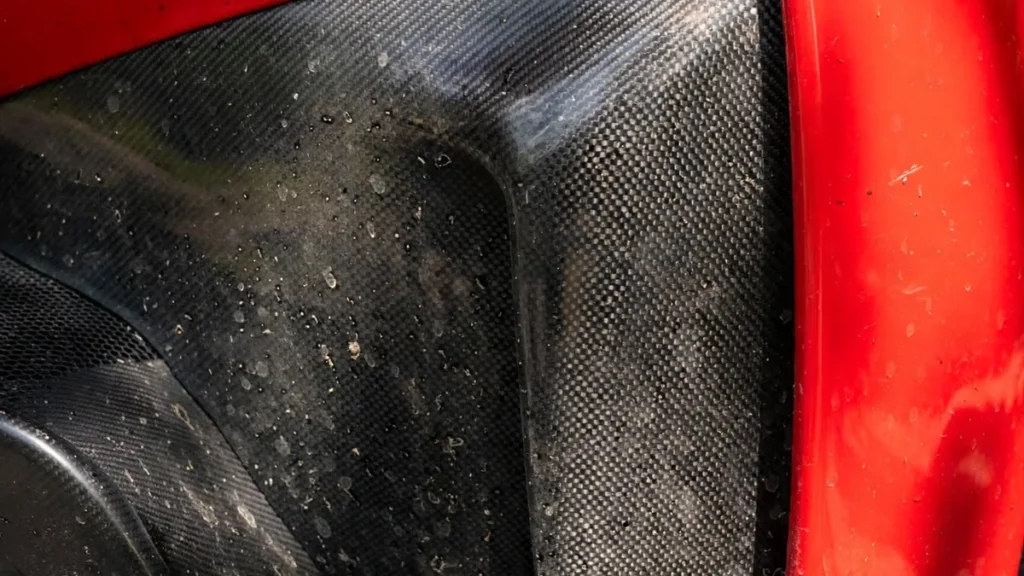
A Formula 1 car comes into the pits with a cracked front wing, and the replacement wing the mechanics bolt on in seconds took weeks to make. It weighs less than a bag of shopping, yet it can carry the load of a car at two hundred miles an hour. It was not machined or cast. It was laid up, one thin sheet at a time, by hand.
A composite layup is exactly that: layer upon layer of carbon fibre cloth, each sheet cut, placed and smoothed by a technician, bonded with resin and baked until the layers become one solid part. The result is stronger than steel at a fraction of the weight, which is why racing cars, aircraft, racing yachts and spacecraft are built this way. But every layer is a cost, and the bill adds up in ways that surprise even engineers.

Why a Composite Layup Costs So Much
The price is not one big cost. It is a dozen small ones, stacked like the layers themselves.
1. The carbon fibre itself is expensive to make
Carbon fibre starts life as a plastic thread called polyacrylonitrile, heated, stretched and baked at more than a thousand degrees until almost everything except carbon burns away. The process takes days, uses enormous amounts of energy, and only a handful of factories do it at scale. Aerospace-grade fibre can cost many times more than aluminium by weight, and a large part may need dozens of kilograms. The cloth is a woven engineering material, and the materials behind the carbon fibre weave show why that weave is worth the price.
2. Prepreg has a shelf life, like food
Most high-performance layups use prepreg, cloth already soaked in resin by the manufacturer. Prepreg must be kept frozen, and once thawed it has only days or weeks before the resin starts to harden on its own. A roll left out too long becomes scrap worth thousands, so every delay or scrapped sheet is money thrown away.
3. The mould costs more than the part
Before a single layer is laid, someone must build the mould, a perfect negative of the finished part, machined from aluminium, steel or carbon fibre itself, polished and treated so the part releases cleanly. A mould for a racing car body panel can cost more than a family car, and it is used for only one shape. The mould is the hidden capital cost behind every composite part, paid before the first sheet is cut.
4. The work is done by hand, slowly
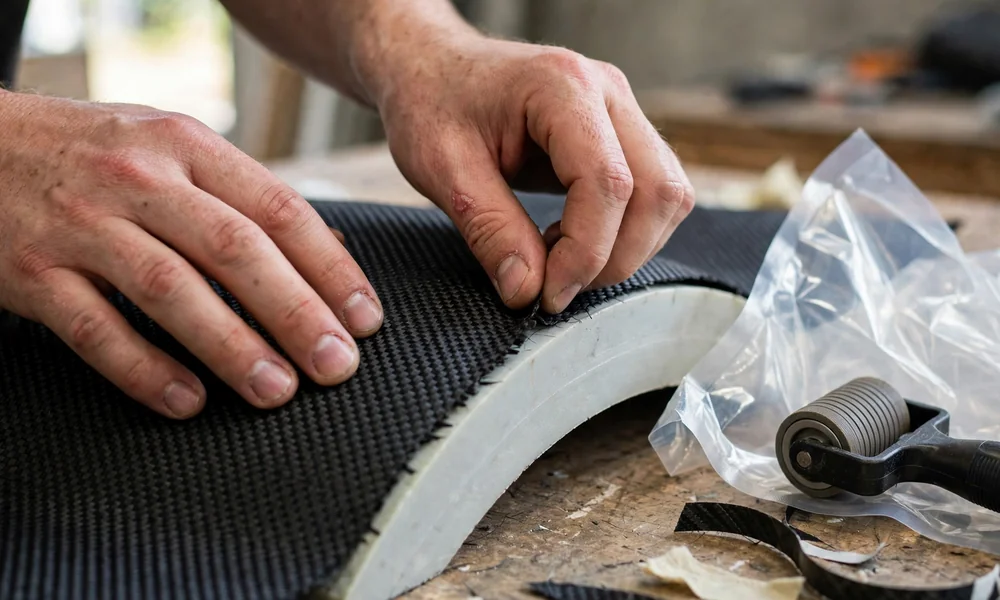
No machine can yet lay up a complex curved part as well as a skilled technician. Each layer must be placed at a precise angle, smoothed into every curve without wrinkles, and rolled flat to push out trapped air. A single trapped bubble can become a weak spot that fails under load. A large part can take a team days to lay up, and the technicians doing it train for years. Each layer has a job, and the materials behind the composite layup explain what every layer is doing in the stack.
5. The cure takes hours in a giant oven
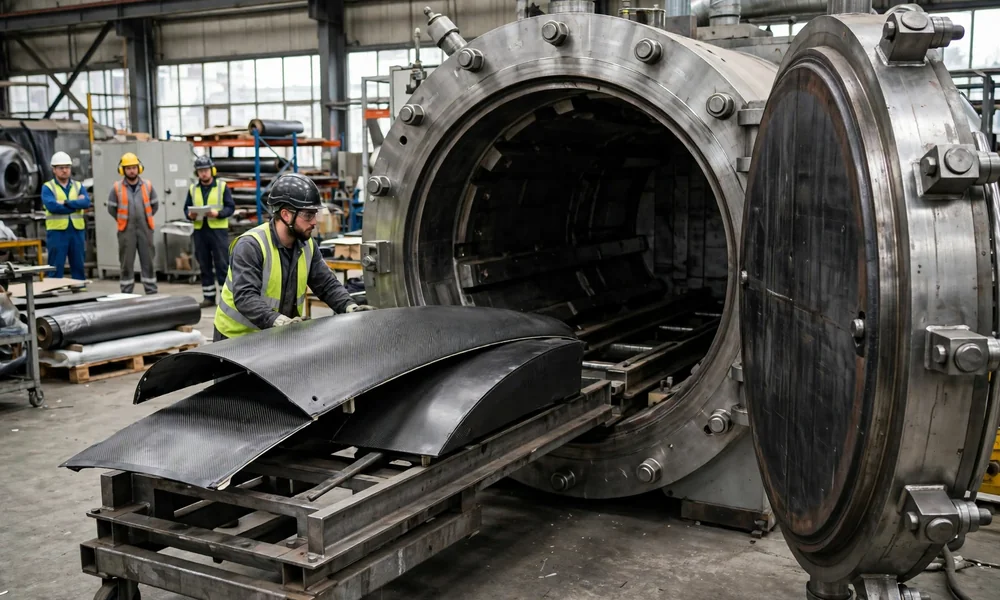
Once the layers are in place, the whole part is sealed in a vacuum bag and wheeled into an autoclave, a pressurised oven the size of a small room that heats the part and squeezes it under several atmospheres of pressure. A cure cycle can run for eight hours or more, and the autoclave holds only a few parts at a time. The machine costs millions and burns a great deal of energy. The heat and pressure turn soft cloth into a hard structure, and the materials behind autoclave curing show what happens inside that oven.
6. Scrap, inspection and failure are priced in
A composite part cannot be patched like a metal one. If inspection finds a void, a wrinkle or a dry patch, the part is often scrapped entirely, and ultrasound or X-ray inspection is itself expensive. Aerospace parts are checked layer by layer, and one failed part can wipe out the profit on several good ones. That risk is priced into every job.
How a Composite Layup Is Made
Step 1: Cut the cloth
Each layer is cut from a roll of carbon fibre cloth or prepreg, following a pattern that sets fibre direction. The angle of every layer matters, because fibres carry load only along their length.
Step 2: Prepare the mould
The mould is cleaned, polished and coated with release agent so the part can be removed without damage. Any dust or scratch will show on the part.
Step 3: Lay the first layers
The technician places the first sheets into the mould, smoothing out air. The first layer is the one the world will see, so it is laid with extra care.
Step 4: Build up the stack
Layer follows layer, each at a different angle, until the part reaches its thickness. Thick sections may need dozens of layers.
Step 5: Bag and seal it
The layup is covered with release film, breather cloth and a vacuum bag and sealed airtight. A vacuum pump pulls the air out, pressing the layers together.
Step 6: Cure and finish
The part is cured in the autoclave, then removed, trimmed and inspected by ultrasound before it is cleared for use.
Composite Layup at a Glance
| Part | What it is | Why it matters |
|---|---|---|
| Carbon fibre cloth | Woven strands of carbon | Carries load, lighter than steel |
| Prepreg resin | Resin soaked into the cloth | Bonds layers into one part |
| Mould | Negative of the part | Sets shape and surface finish |
| Vacuum bag | Film pulled tight by vacuum | Squeezes out air before curing |
| Autoclave | Pressurised curing oven | Heat and pressure harden the resin |
| Inspection | Ultrasound and X-ray checks | Finds hidden voids before flight |
What Does a Composite Layup Cost?
The price depends on size, complexity and how many are made, and the figures below are estimates. A small carbon fibre panel for a car or a drone is estimated at roughly $500 to $2,000, while a large structural part for a racing car or an aircraft is estimated at $10,000 to $100,000 or more. A one-off mould alone can be estimated at $5,000 to $50,000 before a single part exists. The handwork, the mould, the autoclave time and the inspection often cost more than the fibre itself.
A Rare Fact
Composite layup was once so secret that the first carbon fibre parts for racing cars were built behind closed doors, and rival teams tried to guess how many layers were used. The technique came from aerospace, where engineers needed something lighter than aluminium that would not fatigue like metal. Today a single Formula 1 monocoque contains hundreds of layers, laid by hand, and the chassis is so strong that a driver can walk away from a crash at two hundred miles an hour.
A composite layup looks simple from the outside: cloth, resin, heat. But the price is the sum of rare materials with a short shelf life, a mould that costs more than the part, days of skilled handwork, hours in a machine the size of a room, and inspection that can condemn the whole thing at the last step. That is why a part lighter than a bag of shopping can cost more than the car it is bolted to.