In a quiet workshop in England, twelve people build a car that costs more than a house. There is no moving production line, no robot arm, and no press stamping out panels by the thousand. There is a man laminating carbon fibre by hand, a woman stitching leather at a bench, and an engineer bolting an engine into a chassis that was cured in an oven the day before. The car will take months to finish, it will be one of a few dozen ever made, and the buyer will have waited years for it. A handbuilt hypercar is not expensive because it is fast, although it is very fast. It is expensive because almost everything about it is made by hand, in tiny numbers, by people who have spent their working lives learning to do one thing perfectly.
Hypercar makers like to talk about horsepower and top speed, and the numbers are extraordinary, but the numbers are not the reason for the price. A mass-produced sports car can be almost as quick for a fraction of the money. The handbuilt hypercar costs what it does because of the way it is made: a carbon fibre tub laid up by hand, an engine assembled by one person, a body shaped and finished by hand, and an interior trimmed by hand. Each car is a project, not a product, and the price reflects the hundreds of skilled hands that touch it before it ever turns a wheel.
Why It Costs So Much
The carbon fibre chassis. The heart of a handbuilt hypercar is its carbon fibre monocoque, the single rigid tub that carries the driver, the engine, and the suspension. It is made by laying sheets of carbon fibre cloth into a mould by hand, layer by layer, with the fibres aligned in precise directions to carry the loads. The layup can take days, and the tub is then cured in a giant oven called an autoclave, under heat and pressure, before it is inspected with ultrasound for voids or flaws. A handbuilt hypercar chassis is one of the most expensive single parts on the car, and it is the reason the whole vehicle can be so light and so stiff at the same time.
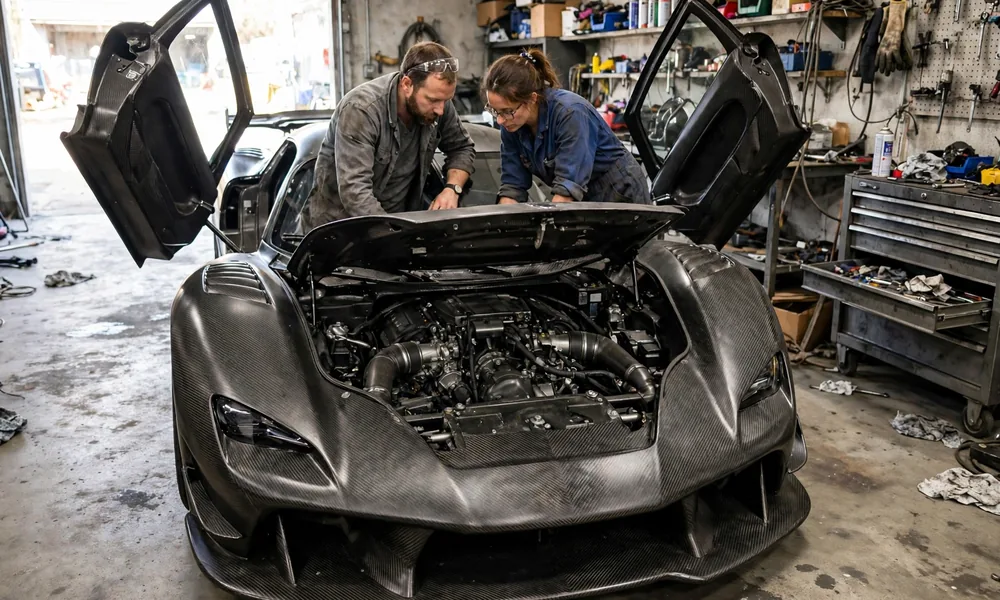
The engine, built by one person. The engines in handbuilt hypercars are often assembled by a single technician, who signs their name on a plaque on the engine when it is finished. The engine may be a twin-turbo V8, a V12, or a hybrid unit with electric motors, and it is built from parts machined to tolerances measured in microns. The assembly takes days, the engine is run on a test bench, stripped, checked, and rebuilt if anything is less than perfect, and only then is it fitted to the car. The same thinking applies to the gearbox, the suspension, and the brakes, each one assembled and tested by hand. The engine builder is not a production worker. They are a specialist, and their time is priced accordingly. The handbuilt V12 engine is the purest expression of this craft, and it is built the same way today as it was decades ago, by one person, with patience.
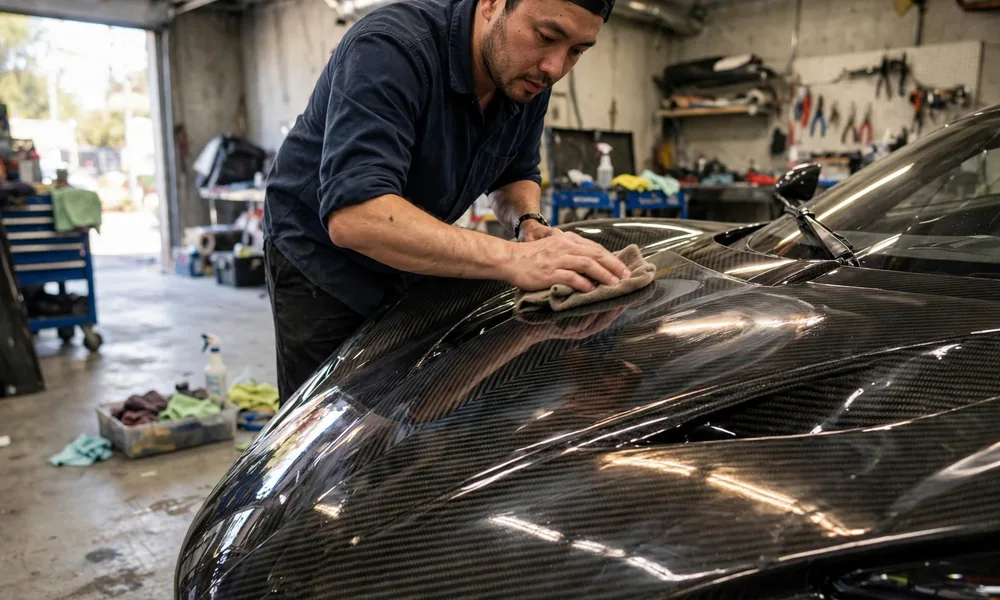
The body and the aerodynamics. The body of a handbuilt hypercar is shaped as much by wind as by styling. The panels are often made from carbon fibre, laid up by hand and finished by hand, and the aerodynamic parts, the wings, diffusers, and ducts, are tuned in a wind tunnel and then made to fit the car exactly. The body is shaped in the same workshop as the chassis, and the aerodynamic body of a hypercar is a piece of sculpture that happens to produce downforce, with every curve serving a purpose that a designer and an aerodynamicist argued over for months.

The rarity and the development cost. A handbuilt hypercar may be made in a run of ninety-nine cars, or fifty, or even fewer, and the cost of developing the car, the wind tunnel time, the crash testing, the emissions certification, and the moulds, has to be spread across that tiny number. A mass-market car spreads its development cost across hundreds of thousands of vehicles. A hypercar spreads it across dozens. That alone can add hundreds of thousands of dollars to the price of each car, before a single part is made. The rarity is also the appeal. The buyer knows that almost nobody else will own the same car, and that the car will be recognised wherever it goes. That exclusivity is priced in, and it is part of what the buyer is paying for, whether they admit it or not.
What Goes Into a Handbuilt Hypercar
| Element | What Makes It Expensive |
|---|---|
| Carbon monocoque | Hand laid, autoclave cured, ultrasound inspected |
| Engine | Assembled by one technician, bench tested, signed |
| Body and aero | Hand finished carbon panels, wind tunnel tuned |
| Interior | Hand trimmed, seats moulded to the buyer |
| Development cost | Spread across dozens of cars, not thousands |
| Build time | Months per car, small team, no production line |
What a Handbuilt Hypercar Costs
Handbuilt hypercars typically cost between two and five million dollars, with the most exclusive examples selling for more. A car with a production run of fewer than a hundred, a hybrid powertrain, and a fully bespoke specification can pass five million dollars, and the price does not include the cost of running it. Servicing a hypercar can cost tens of thousands of dollars a year, a set of tyres can cost thousands, and a single replacement part, a carbon fibre panel or a brake disc, can cost as much as a family car. These are estimates based on list prices and sale results, and the figures vary by maker and by specification, but the shape of the price is the same everywhere: the car costs a fortune to develop, a fortune to build, and a fortune to keep, and the buyers who can afford it are buying something that almost nobody else can have.
A Rare Fact About Handbuilt Hypercars
Here is a detail that captures the whole philosophy: on some handbuilt hypercars, the engine is assembled by a single technician who signs a small metal plaque that is fixed to the engine, and that technician’s name stays with the car for its entire life. If the engine ever needs a rebuild, the maker will try to have the same person do the work, because they know the engine best. It is a personal, almost old-fashioned idea, and it sits at the heart of a machine that can travel at over two hundred miles an hour. The car is the fastest thing its maker has ever built, and it is also the most personal, because a single person’s name is on the part that makes it move.
A handbuilt hypercar is expensive because it is made the slow way, by people, in tiny numbers, with materials and tolerances that mass production cannot justify. The chassis is laid up by hand, the engine is built by one person, the body is finished by hand, and the interior is trimmed to fit a single buyer. The development cost is spread across dozens of cars, not hundreds of thousands, and the time it takes to build each one is measured in months. That is the price, and it is also the point.