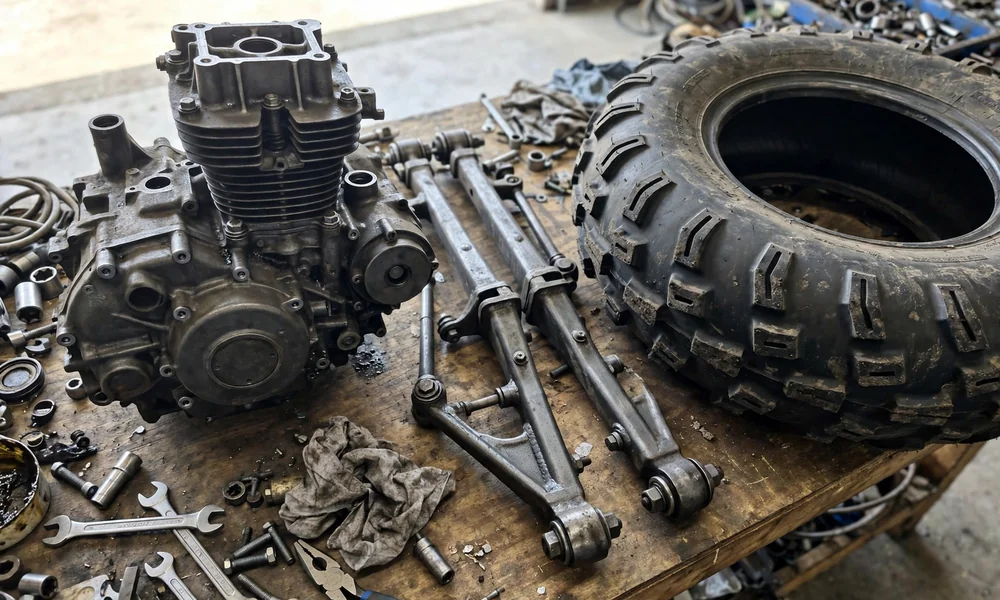
A luxury ATV does not look like a farm tool when it is being built. On the assembly bench it looks more like a small race machine: a welded steel frame, a big single-cylinder or twin-cylinder engine on a stand, and long-travel suspension arms laid out in a row. Everything is clean, torqued, and checked twice.
That care is the whole point. A normal ATV is built to a price, with parts chosen to survive hard use as cheaply as possible. A luxury one is built the other way round, starting with the ride and the finish the maker wants, and engineering every part to deliver it. This is how a luxury ATV is made.
Step 1: The frame
The build starts with the frame, and on a luxury ATV the frame is a welded steel tube structure, built in a jig that holds every tube in exactly the right place while it is joined. Steel is chosen because it can take the knocks of off-road riding and be repaired in the field, and because it gives the chassis the stiffness that keeps the steering precise when the ground gets rough.
Once the frame is welded, it is checked for straightness and then coated against corrosion before anything is bolted to it. How a luxury snowmobile is made follows a similar idea on a winter machine, where the chassis is built around the same priorities: strength first, then lightness, then a finish that survives the weather.
Step 2: The engine and the drivetrain
The engine is the heart of the ATV, and on a luxury model it is usually a large single-cylinder or twin-cylinder four-stroke unit, built for torque rather than top speed. The engine is assembled on its own bench, with the cylinder, piston and crankshaft fitted and measured, and then run on a test rig before it ever meets the frame. That bench run checks compression, oil pressure and noise, and any engine that fails is stripped and rebuilt.
Power reaches the wheels through a continuously variable transmission and a shaft or belt final drive, with selectable four-wheel drive for mud and steep ground. The drivetrain is sealed against water and dust, because an ATV spends its life crossing streams and dusty tracks.
Step 3: Suspension and steering
A luxury ATV rides very differently from a cheap one, and the reason is the suspension. Long-travel independent suspension at both ends replaces the simple solid axles of a basic machine, so each wheel can move on its own over ruts and rocks instead of passing every jolt across the whole axle. Coil springs and gas-charged dampers are tuned for a soft, controlled ride, and many luxury models offer adjustable damping so the rider can firm the machine up for carrying a load.
The steering is a precise rack system with power assistance on most luxury models, which keeps the handlebars light at low speed and steady at high speed.
Step 4: Wheels, tyres, and brakes
The wheels and tyres decide what an ATV can do, and on a luxury model they are chosen for the terrain the buyer will actually ride. Wide, deep-treaded tyres grip mud and loose ground, while the wheels themselves are usually cast aluminium, lighter and stronger than the steel wheels of a work machine. The tyre size is matched to the suspension travel so the tyres never foul the bodywork at full compression.
Brakes are hydraulic discs on all four wheels, with a parking brake that holds the machine on a slope. The brake lines are routed high and protected, because a snagged line on a trail can end a ride. How a luxury sports car is made shows the same attention to braking on a very different machine, where the discs and calipers are sized and cooled for the same reason: stopping power you can trust when it matters.
Step 5: The bodywork and the rider’s controls
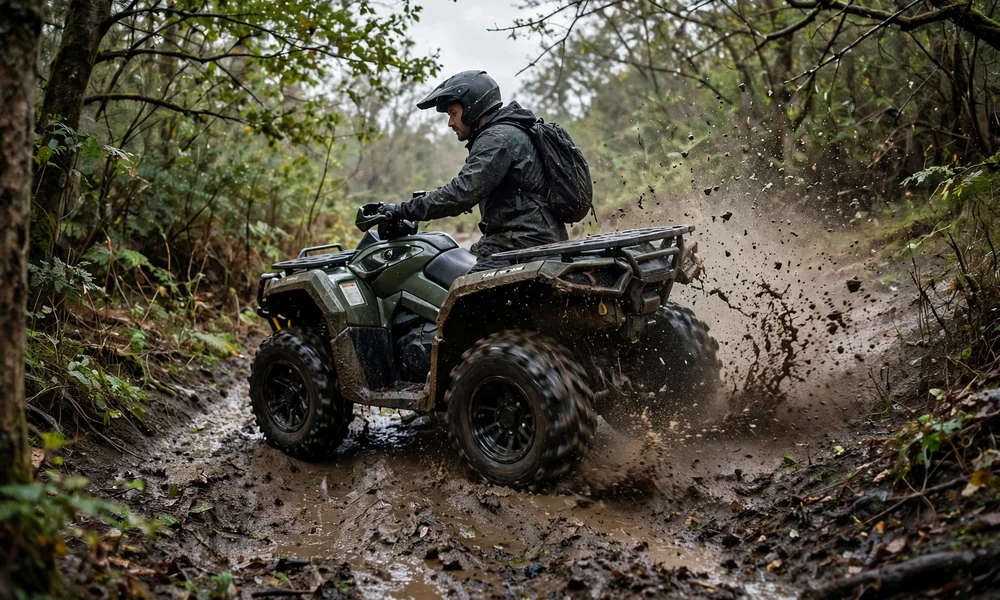
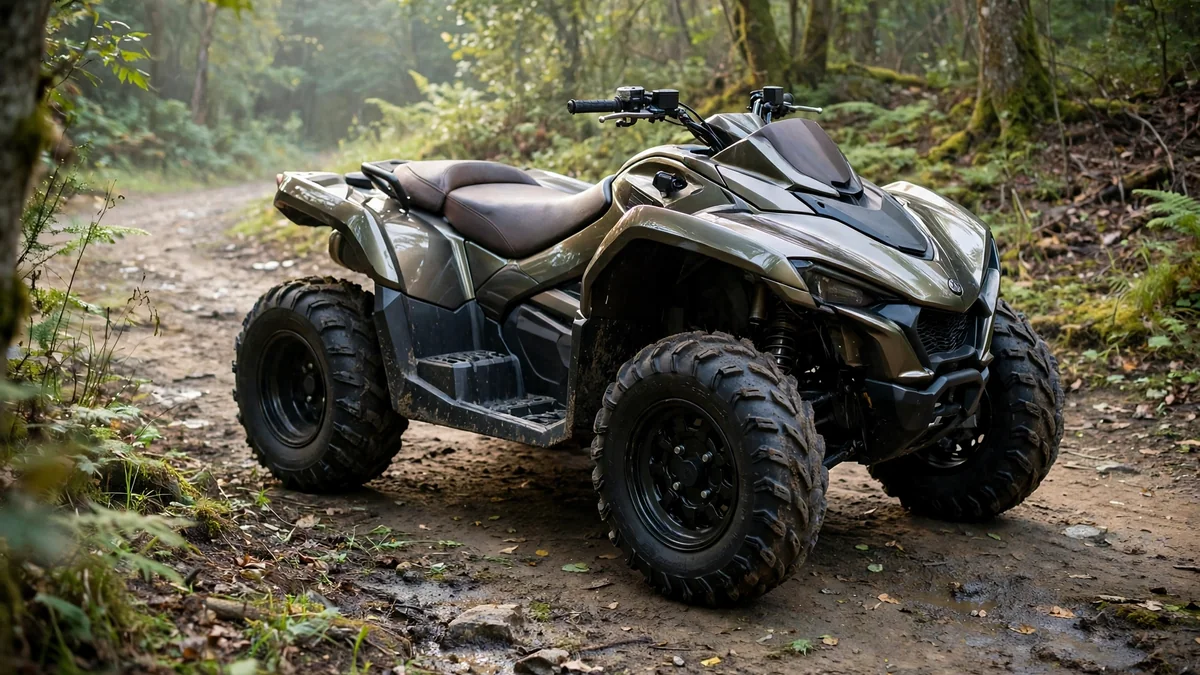
With the chassis rolling, the bodywork goes on. The plastics are moulded panels, shaped to shed mud and to protect the rider’s legs, and they are fitted with even gaps and secure fasteners that will not vibrate loose. The fuel tank sits low and central, under the seat, which keeps the centre of gravity down and the machine stable on side slopes.
The rider’s position is built around long days in the saddle. The seat is wide and shaped, the handlebars are adjustable, and the controls fall to hand: thumb throttle, brake levers, and a switch for four-wheel drive. A digital display shows speed, fuel, and drive mode, and a front rack and a rear rack are fitted for carrying gear.
Step 6: Testing, tuning, and handover
A finished luxury ATV is ridden before it is sold. The test rider takes it through mud, over rough ground, and up steep slopes, checking the drive system, the suspension, and the brakes. The engine is run through its full rev range, the cooling system is checked under load, and the machine is inspected for any leak or loose fastener.
The ATV is then cleaned, the plastics are polished, and the owner gets the machine with a handbook that covers running-in and servicing. How a luxury electric car is made follows the same handover logic on a road machine, where the final test drive and inspection are what turn a collection of parts into a vehicle the maker is willing to put its name on.
Specifications
| Detail | Specification |
|---|---|
| Frame | Welded steel tube chassis |
| Engine | Single or twin-cylinder four-stroke |
| Displacement | Around 700 to 1,000 cc |
| Transmission | CVT with low range, selectable 4WD |
| Top speed | Around 100 to 120 kilometres per hour |
| Suspension | Independent front and rear, long travel |
| Brakes | Hydraulic discs on all four wheels |
| Tyres | Wide all-terrain, around 25 to 27 inches |
| Towing | Around 500 to 800 kilograms |
| Weight | Around 350 to 450 kilograms |
Price
The estimated price of a luxury ATV is around 12,000 to 20,000 dollars, and that figure is an estimate only, because the cost depends on the engine size, the drive system, and the level of equipment. The engine and the long-travel suspension account for a large share, followed by the four-wheel-drive system and the bodywork. A buyer is paying for a machine that can cross rough ground all day, tow a trailer, and still feel controlled and comfortable when the trail turns difficult.
A rare fact
Few people know that some luxury ATVs can sense when they are about to tip over. A small number of high-end models are fitted with a rollover sensor that cuts the engine and applies the brakes if the machine leans past a safe angle, giving the rider a better chance of staying on the ground rather than underneath the vehicle. It is a quiet piece of car safety technology, adapted to a machine that spends its life on slopes no car would ever attempt.
When the ATV rolls out of the factory for the last time, it looks simple, just a tough little machine with wide tyres and clean plastics. That simplicity is the achievement.