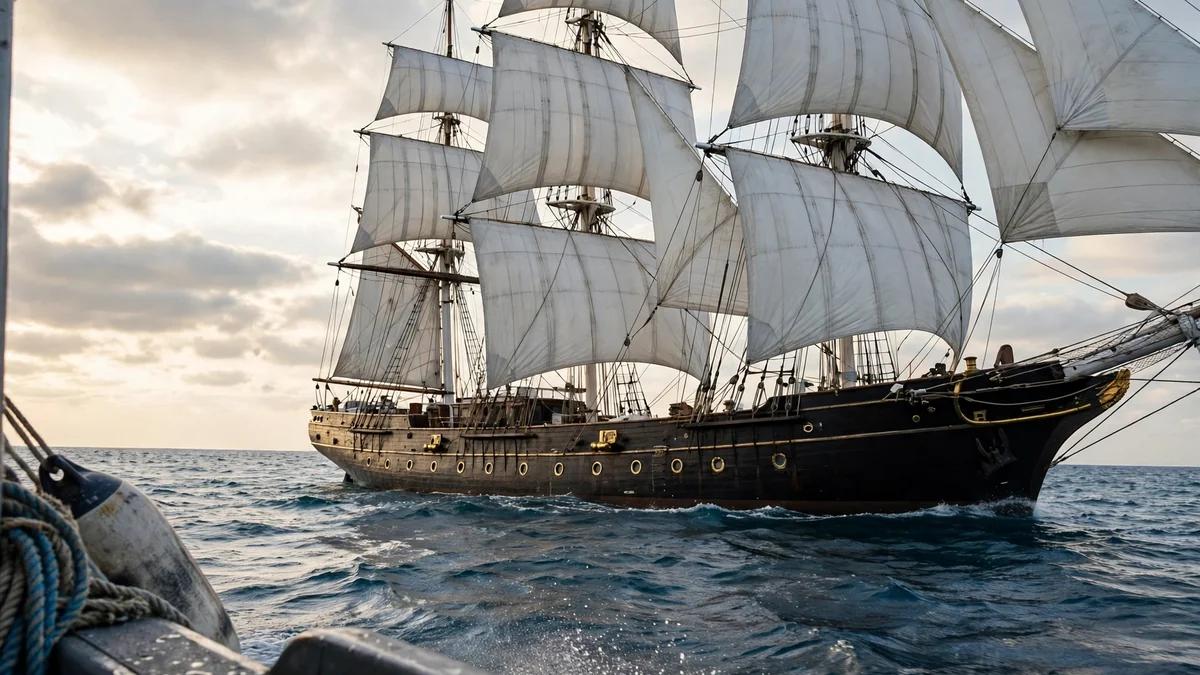
From the shore, a tall ship looks like a drawing that has come to life. Three or four masts rise above the hull, each one carrying a stack of square sails, and the whole vessel moves without a sound except for the creak of rigging and the wash of water along the bow. There is no engine note, no smoke, no hurry. She is travelling the way ships travelled for centuries, and the sight still stops people on the quayside.
A luxury tall ship is a large, multi-masted sailing ship, built or restored to carry guests in comfort while keeping her traditional rig. Below deck there are cabins, a saloon, and a galley; above deck there is a forest of spars, ropes, and canvas. Her specification sheet is unlike any other vessel’s, because the most important numbers describe wind and sail rather than horsepower and fuel, and they reward a different kind of reading.
The spec sheet at a glance
| Specification | Typical luxury figure |
|---|---|
| Length overall | 40 to 90 metres |
| Beam | 8 to 14 metres |
| Displacement | 500 to 2,500 tonnes |
| Masts | 3 to 4 masts |
| Height of main mast | 35 to 55 metres |
| Sail area | 1,500 to 4,000 square metres |
| Sails | 15 to 30 sails |
| Auxiliary engine | 500 to 1,500 horsepower diesel |
| Speed under sail | 8 to 14 knots |
| Cruising range | 3,000 to 8,000 nautical miles |
| Passengers | 12 to 40, plus crew of 15 to 30 |
| Hull material | Steel or wood, traditionally built |
Those figures vary widely because tall ships are built in many forms, from faithful replicas of eighteenth-century frigates to modern steel barques with traditional rigs. Some carry only a dozen guests in grand cabins; others carry forty, with a crew of professional sailors to handle the sails. The common thread is the rig: a tall ship is defined by her masts, not her engine.
Length, beam and the hull
Length and displacement decide how a tall ship rides the sea. A ship of around sixty metres and a thousand tonnes is heavy enough to carry her sail area without heeling dangerously, and that weight gives the motion a slow, rolling rhythm that guests find restful. The hull is long and narrow by modern standards, built to cut through water rather than plane over it, and the bow is shaped to throw spray aside instead of taking it aboard.
Beam matters because a tall ship is a working platform as much as a vessel. A beam of ten or twelve metres gives room for the deck crew to handle sails, for the guests to move about safely, and for the cabins below to be arranged around a central saloon. The luxury sailboat is built on the same principles at a much smaller scale, and the tall ship simply carries them further, with more deck, more crew, and more sail to manage.
Masts, sails and sail area
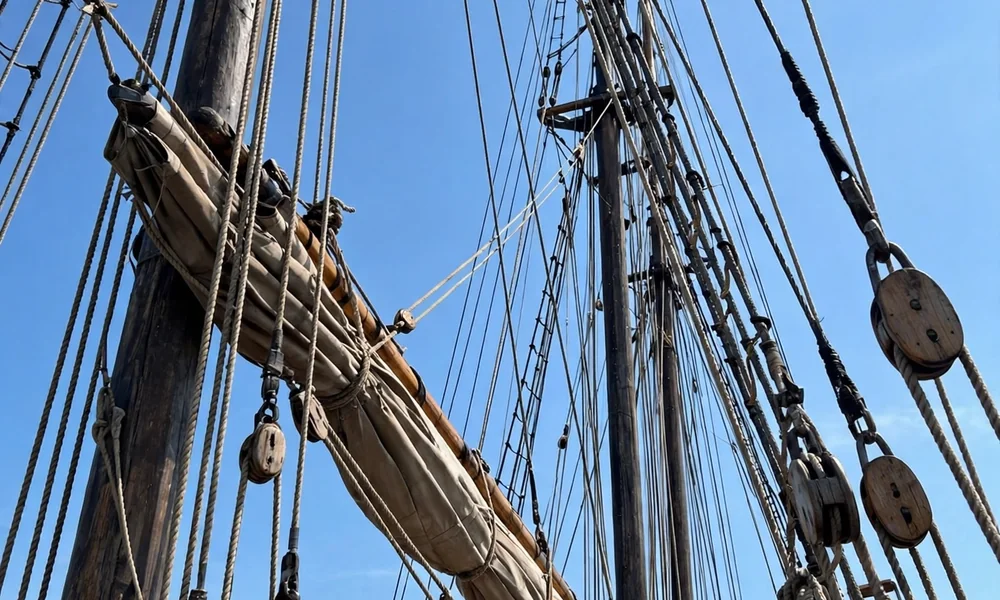
The masts are the heart of the specification sheet. A main mast of forty or fifty metres carries square sails stacked one above another, each one set and furled by hand, and the total sail area of 1,500 to 4,000 square metres is what makes the ship move. To put that in perspective, the largest sail on a tall ship can be bigger than a tennis court, and setting the full suit of sails takes a crew of a dozen sailors working together on deck and aloft.
Sail area is the tall ship’s equivalent of horsepower, and it decides the ship’s speed in a given wind. A generous sail plan means the ship can make good speed in a light breeze, while a smaller plan is easier for the crew to handle in heavy weather. The sails themselves are made from modern synthetic canvas, cut and sewn the traditional way, because it lasts longer and holds its shape better than the cotton and flax of the sailing era. The luxury yacht sail is made in a similar way, though a tall ship’s sails are bigger, heavier, and far more numerous.
Speed, range and the auxiliary engine
Speed under sail is the number that surprises people most, because a tall ship is faster than she looks. A typical figure of 8 to 14 knots, roughly 15 to 26 kilometres per hour, is modest beside a motor yacht, but it is achieved with no fuel at all, using only the wind. In a fresh breeze with the full sail plan set, a well-sailed tall ship can hold 12 knots for hours, and the ride is quiet, with only the sound of water and rigging.
Range is where a tall ship has no equal. A cruising range of 3,000 to 8,000 nautical miles reflects the fact that the wind is free and the fuel is carried only for the auxiliary engine, which is used for entering and leaving port and for calm days. The diesel engine of 500 to 1,500 horsepower is deliberately modest, because it is a helper, not the main drive, and it lets the ship manoeuvre in harbour without waiting for a tug. The best sailing yacht brands build smaller vessels on the same idea, but the tall ship carries it to ocean scale, crossing whole seas under canvas.
What the numbers mean in practice
Life aboard is shaped by the crew number more than any other figure. A crew of fifteen to thirty professional sailors is needed because the sails are handled by hand, and guests are invited to help, hauling lines and steering at the wheel, if they wish. That hands-on character is part of the luxury: the voyage is the experience, not just the destination, and the crew’s skill is what makes it safe.
Comfort comes from the size of the ship. A tall ship of sixty metres can carry cabins with proper beds, a dining saloon, a library, and an open deck where guests can watch the sails being set. The motion is gentle, the air is fresh, and the evenings are quiet, with the ship anchored in a bay that no motor yacht would bother to visit. Maintenance is constant, though, since the rigging, the sails, and the wooden decks all need regular care from specialists.
Price
A restored luxury tall ship typically costs between an estimated $5 million and $25 million, depending on size, age, and condition, with the largest and most famous vessels reaching higher. A new-build tall ship can cost an estimated $15 million to $60 million, because the hull, the rig, and the spars must all be built by specialist yards and riggers. That estimate covers the ship herself, not the crew, the maintenance, or the sail replacement, all of which run well above ordinary yacht costs.
A rare fact
One of the strangest details of a tall ship is that her crew still climbs the rigging by hand, up to fifty metres above the deck, to set and furl sails. There is no lift and no platform, just ropes, ratlines, and a safety harness, and the sailors who do it train for months before they are allowed aloft in anything but calm weather.
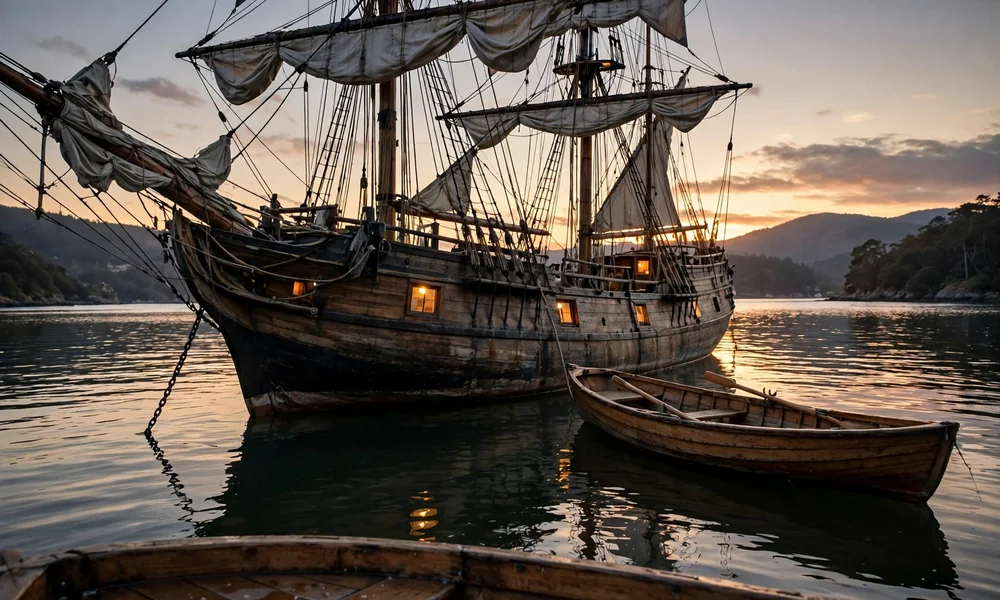
A luxury tall ship is best judged the way her specification sheet asks to be judged: sail area first, then masts, then crew, and only then speed. The ship that gets those numbers right will take her guests across an ocean on the wind alone, and she will do it in a silence that no engine has ever matched.