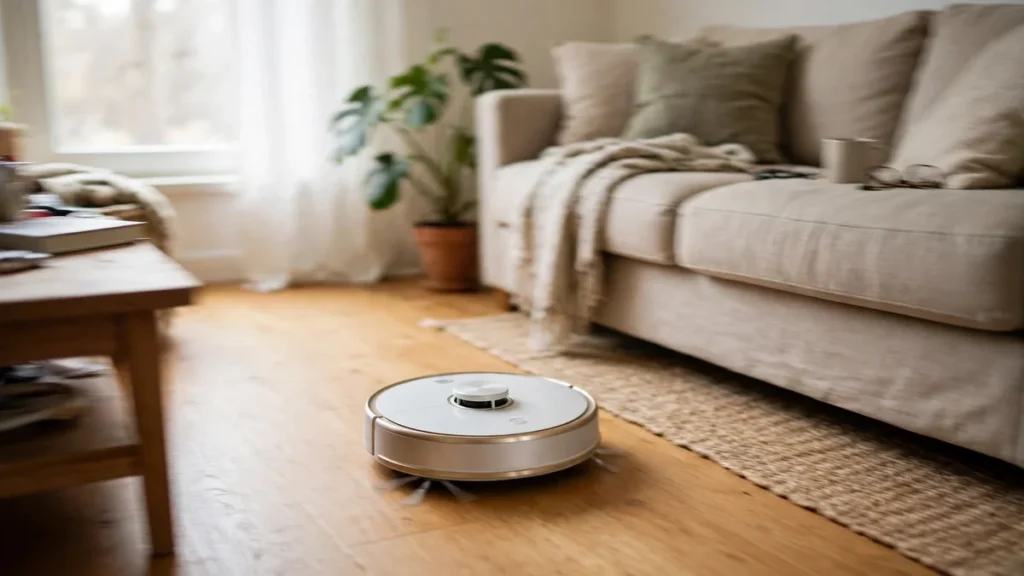
Every evening, while its owner is still at work, a small round machine wakes up in the corner of the living room, maps the flat in its head, and sets off across the floor. It slides under the sofa, circles the table legs, climbs the edge of the rug, and returns to its dock an hour later with a full dustbin and a floor that looks freshly cleaned. Nobody pushed it, nobody steered it, and nobody told it where the dirt was.
A luxury robot vacuum makes that quiet routine look easy, but the spec sheet behind it is a dense list of numbers: suction in pascals, battery in milliamp-hours, mapping in lasers and cameras, dustbin in millilitres. Each number answers a practical question, from whether the machine can lift dust out of a thick rug to whether it will fall down the stairs. This guide reads the sheet the way an owner should, starting with the figures that decide cleaning and ending with the ones that decide how long the machine lasts.
The spec sheet at a glance
| Specification | Typical luxury figure |
|---|---|
| Suction power | 6,000 to 11,000 pascals |
| Navigation | LiDAR plus camera and 3D sensors |
| Mapping | Multi-floor, room-by-room, no-go zones |
| Battery | 5,200 mAh lithium-ion |
| Runtime | 150 to 240 minutes |
| Charging time | 3 to 5 hours |
| Dustbin capacity | 400 to 600 millilitres |
| Self-empty dock | 2.5 to 3 litres, up to 60 days |
| Mopping | Rotating pads or vibrating mop, lift on carpet |
| Climbing height | 20 millimetres |
| Height | 95 to 105 millimetres |
| Diameter | 350 millimetres |
| Noise | 55 to 65 decibels |
| Weight | 3.5 to 4.5 kilograms |
| Obstacle avoidance | Cables, shoes, pet waste, furniture legs |
Suction: what the pascals really lift
Suction is the headline number, and on a luxury machine it runs from about 6,000 to 11,000 pascals. On a hard floor, even half that figure picks up dust and crumbs without trouble, so the top of the range matters most on carpet, where the brush has to pull dirt out from between the fibres. A high suction figure means the machine can clean a deep rug in one pass instead of going over it three times, and it matters most in a home with pets, where hair works its way deep into the pile.
The number is not the whole story. Suction means little without a good brush, and luxury machines use a rubber brush that resists tangled hair, or a pair of counter-rotating brushes that sweep dirt toward the suction inlet. The side brush reaches into corners and along skirting boards, where the round body cannot go. The robot vacuum lidar system also plays a part here, because a machine that knows exactly where it has been can spend its suction on the dirty rooms instead of wandering over clean floor.
Navigation: how it knows where it is
Navigation is the second number that matters, and it is where luxury machines earn their price. A spinning LiDAR turret on top of the machine fires laser pulses around the room hundreds of times a second, building a precise map of walls, doorways and furniture. A camera and 3D sensors add detail, recognising cables, shoes and pet bowls so the machine can steer around them instead of dragging them across the room.
The map is what turns a wandering disc into a household tool. The owner can name the rooms, send the machine to clean only the kitchen after dinner, draw no-go zones around the dog’s bed, and store a separate map for each floor. A machine without good mapping cleans at random and misses corners. A machine with LiDAR cleans in neat rows, remembers where it stopped when the battery ran low, and returns to finish the job after charging. The lidar sensor itself is the same technology used in self-driving cars, shrunk to fit a machine the size of a dinner plate.
Battery and runtime: how much floor one charge covers
A 5,200 mAh battery gives a luxury robot vacuum about 150 to 240 minutes of running time, enough for a large flat or a small house on a single charge. The range is wide because suction, mopping and carpet all drain the battery faster, and a machine cleaning a thick carpet at full power may last half as long as the same machine gliding over hard floors on a quiet mode. The honest way to read the figure is to assume the lower end for a carpeted home and the higher end for hard floors.
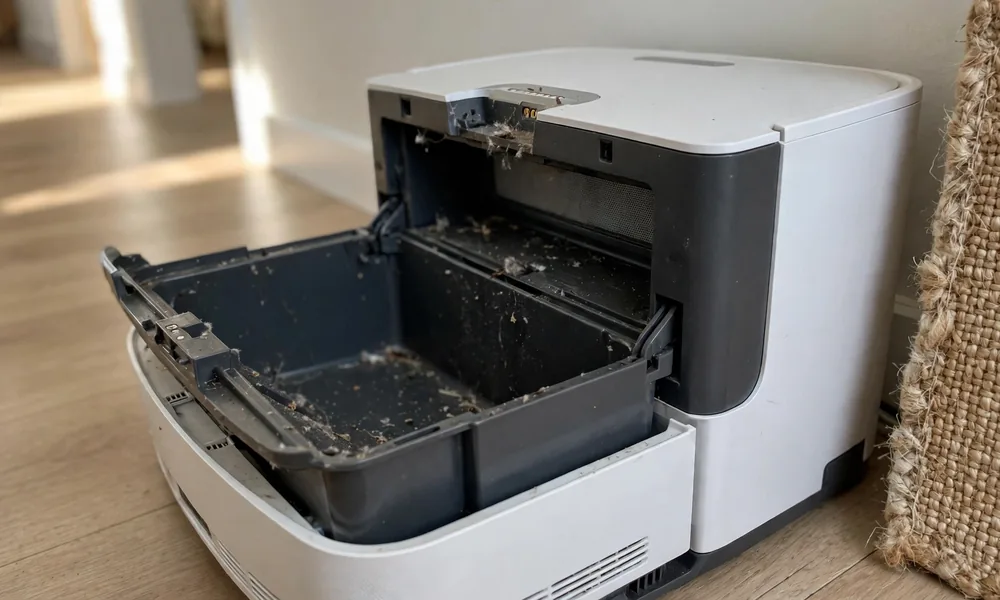
When the battery runs low, the machine drives itself back to the dock, charges, and resumes where it left off, so runtime is rarely a hard limit on cleaning. What matters more is the dock itself. A self-empty dock sucks the dust out of the robot into a sealed bag, so the owner only has to change a bag every month or two, and the lidar sensor spec sheet shows how the same sensing technology is specified across machines of very different sizes and prices.
Mopping, height and noise: the living-with-it numbers
Many luxury machines also mop, and the spec sheet tells you how seriously to take that. The best use rotating pads or a vibrating mop head that scrubs the floor, and they lift the pads when they detect carpet, so they do not drag a wet mop across the rug. A machine that only drags a damp cloth behind it is a light wipe, not a mop, and it is worth knowing which one the numbers describe before paying a luxury price.
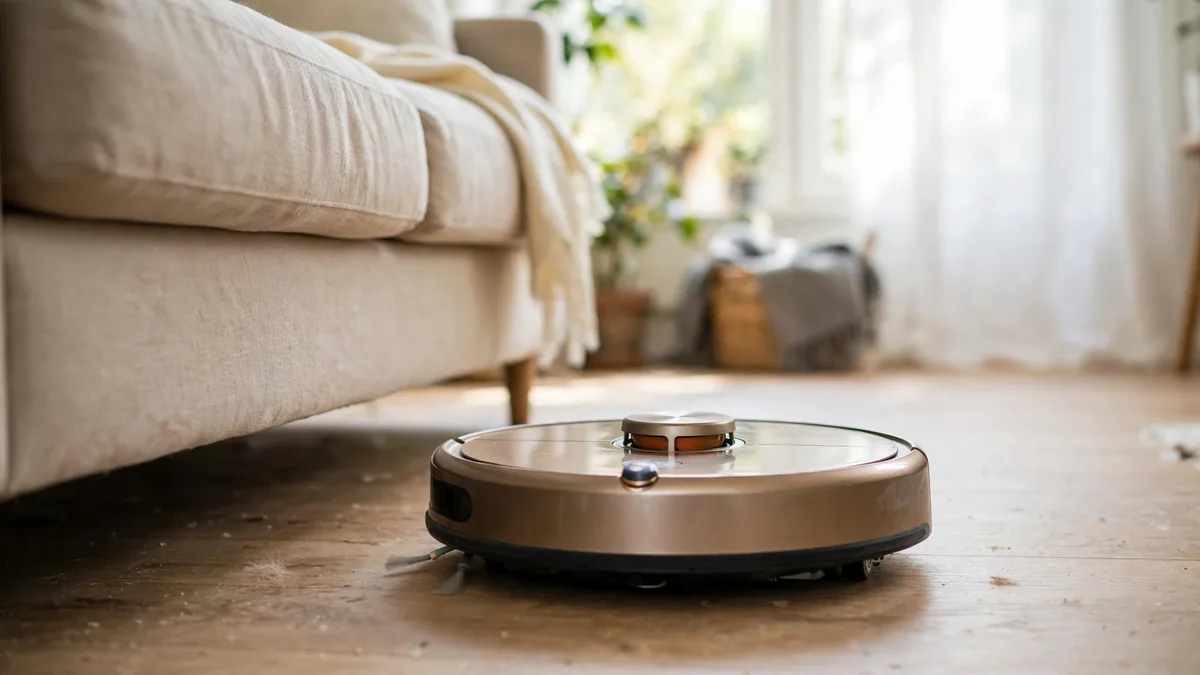
Height decides where the machine can go. At 95 to 105 millimetres tall, a luxury robot vacuum slides under most sofas and beds, but the LiDAR turret on top adds a few millimetres, and a low coffee table can still stop it. Noise runs at 55 to 65 decibels, about the level of a normal conversation, so it can run while the owner is on a call, but full-power carpet cleaning is noticeably louder. Climbing height of 20 millimetres means it can cross a rug edge or a door threshold without getting stuck, which is the difference between a machine that finishes the job and one that calls for help halfway through.

What she costs, and a rare fact
A luxury robot vacuum with a self-empty dock costs an estimated $1,000 to $1,800, depending on suction, navigation and the dock, with the most advanced mopping models costing more. Those are estimates, because prices vary by market and by bundles, but they explain the gap from a $300 machine: the mapping is precise, the obstacle avoidance is real, and the dock turns a daily chore into a monthly one.
Here is the rare fact the spec sheet never mentions. The first robot vacuums, sold more than twenty years ago, cleaned by bouncing off walls at random, and some owners watched them miss the same corner for weeks. The LiDAR machines of today map a home in minutes and clean it in neat rows, yet the job is the same one those first wandering discs attempted: a clean floor, achieved while nobody is watching.