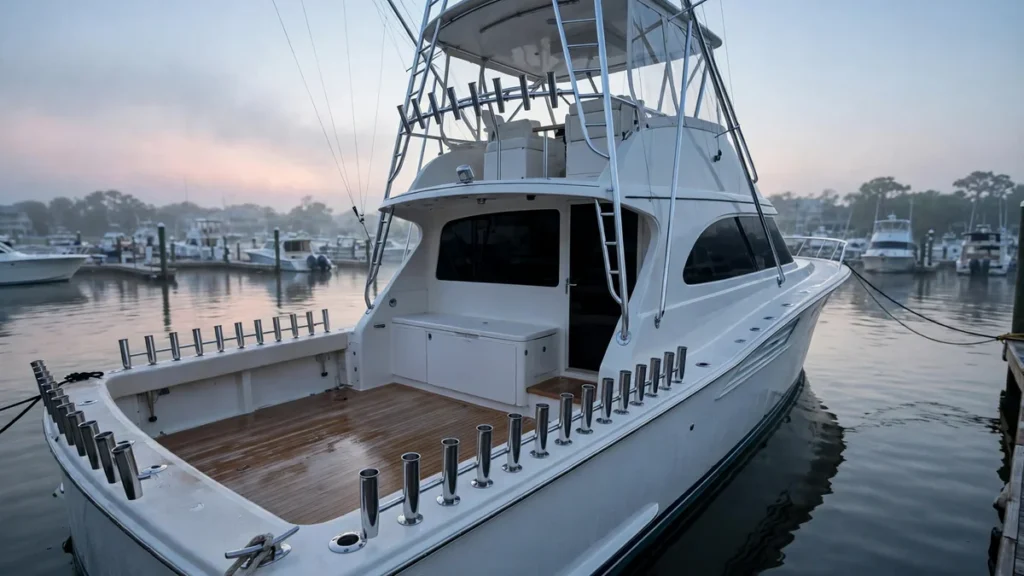
Before sunrise, a fishing boat is already far from shore, and the only sound is the low thrum of the engine and the water slipping past the hull. On deck, an angler stands at the rod, watching the line where it meets the dark water. Below him, in the quiet of the cabin, a screen shows the shape of the seabed and a cloud of fish holding over a reef. He has been waiting for this moment since the night before, and the boat has brought him exactly where the fish are.
That is the luxury fishing boat, a floating workshop built for long days at sea. This is how a luxury fishing boat works, from the keel to the cockpit.
Step 1: The hull is built for a rough sea
Everything starts with the hull, and a fishing boat hull is built to be stable when the boat is drifting and strong when it is running home through a chop. The deep-V shape cuts through waves, while a wide beam at the stern gives the boat a steady platform to fish from, so the deck stays level even when three anglers lean over the same side.
The hull is laid up by hand from fibreglass and resin, with a reinforced transom that carries the weight of two or three large outboard engines. Stringers run the length of the hull like the ribs of a ship, and the whole structure is designed to take the pounding of a long run offshore without flexing or cracking.
Step 2: The engines and the drive get the boat there
From the marina, the boat is pushed by two or three outboard engines, each one a large four-stroke motor that can run at full throttle for hours. The engines are hung on the transom where they are easy to service, and together they can push the boat at more than eighty kilometres an hour, which matters when the fish are sixty kilometres offshore and the weather is coming in.
Electric outboards are joining the fleet too, and the best electric outboard motors ranking shows how quiet, clean motors are finding a place on fishing boats that once ran on petrol alone. Whichever power the boat uses, the propellers matter just as much: large stainless steel blades, shaped to grip the water at speed, turn the engines’ power into forward motion, and the science of the blade is shared with the submarine propeller, where a quiet, efficient blade is the difference between being heard and being silent.
Step 3: The cockpit is the working heart of the boat
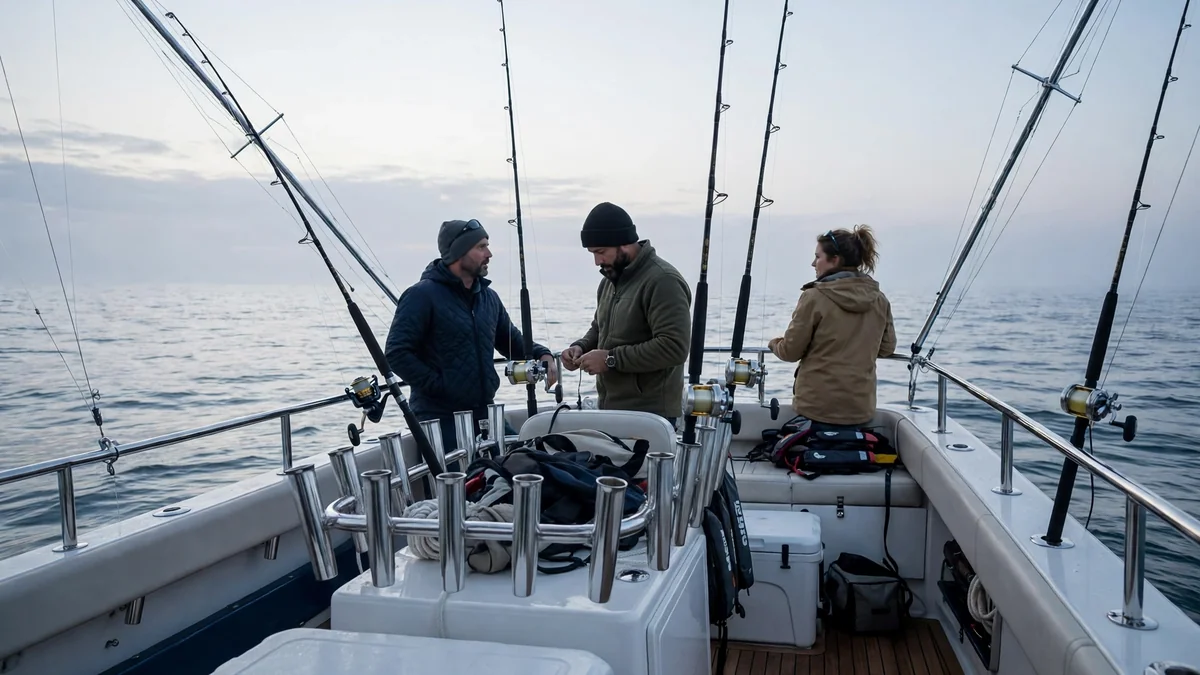
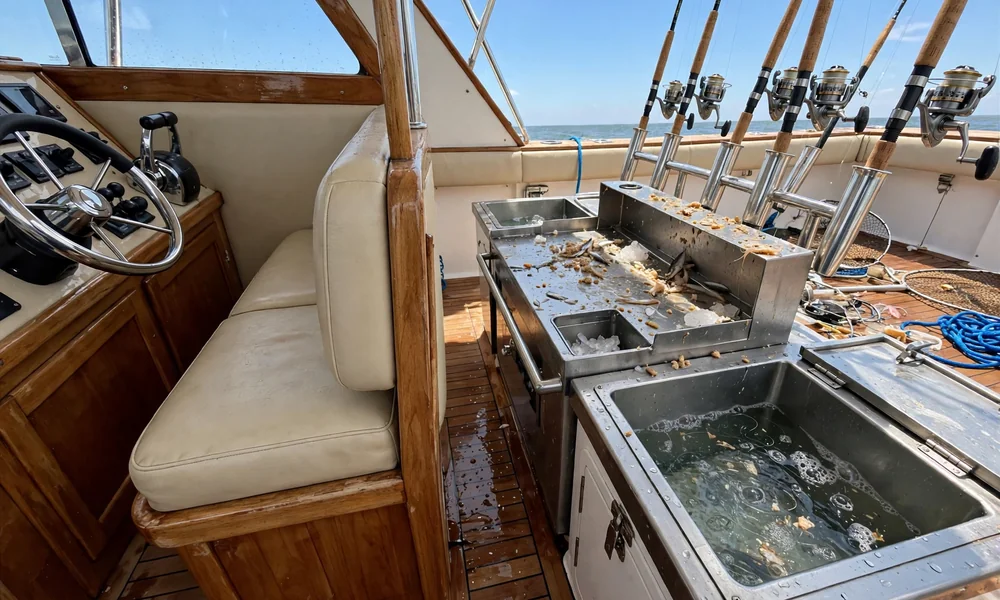
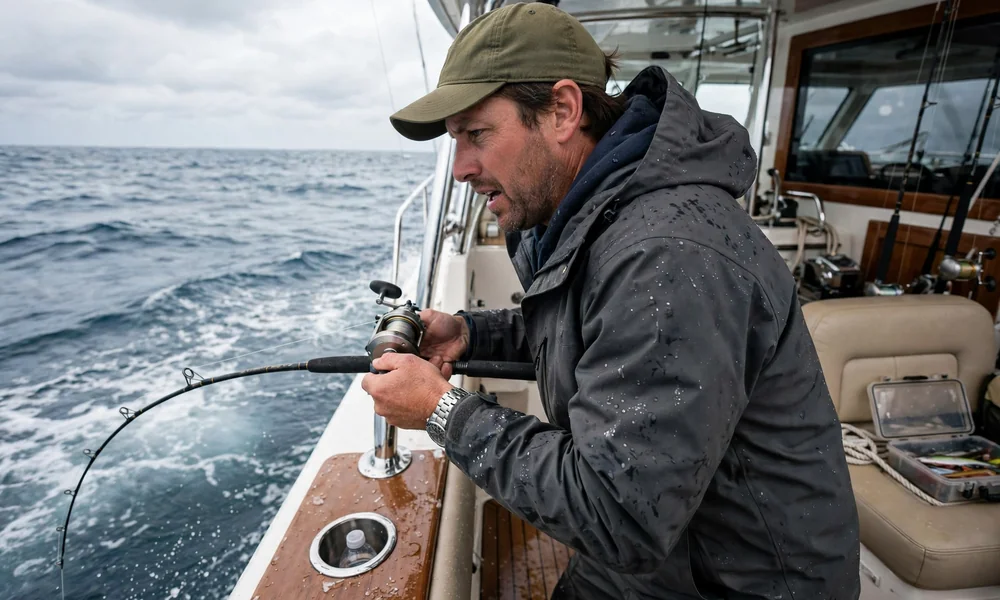
At the stern, the cockpit is where the fishing happens, and it is designed like a workshop. The deck is self-draining, so a wave that comes aboard runs straight back out through the scuppers. Rod holders are set into the gunwales and the transom, a fighting chair or a leaning post gives the angler something to brace against, and the bait station has a cutting board, a sink and storage for knives and tackle.
The live wells sit in the transom and the deck, circular tanks that keep bait fish alive with a constant flow of fresh seawater, and the fish boxes under the deck are insulated and drained so the catch stays cold until the boat is home. A good cockpit is one the crew can hose down in five minutes and be ready to fish again.
Step 4: The electronics find the fish
Up at the helm, the electronics are the boat’s eyes. A fish finder sends sound waves down through the water and reads the echoes, painting a picture of the seabed, the bait and the fish holding over a reef or a wreck. A chart plotter shows the boat’s position on a detailed map of the coast, and radar watches for other boats and for weather in the dark or the fog.
The helm screens are large, bright and readable in full sun, and the throttles, the steering and the trim controls all sit within easy reach of the driver. An autopilot can hold the boat over a fishing mark while the crew works the rods, and a second station at the stern lets the captain steer the boat while watching the lines.
Step 5: The cabin, the power and the systems below deck
Below deck, the cabin is small but comfortable, with a berth, a head and a galley for long days and overnight trips. The systems that keep the boat alive live down here too: batteries, pumps, a generator and a watermaker, all installed with room to reach them, because a boat that cannot be fixed at sea is a boat that must come home early.
The layout follows the same thinking as a yacht engine room, where clean installation, good access and careful cooling matter more than squeezing in one more gadget. Fuel tanks sit low for stability, the bilge is kept clean and dry, and every hose and wire is labelled, so that a fault can be found quickly when the boat is miles from help.
Step 6: The fight, the catch and the run home
When a fish takes the bait, the whole boat comes alive. The angler settles into the chair or the leaning post, the captain works the throttles to keep the line tight, and the crew clears the other rods so nothing tangles.
Once the fish is aboard, it goes straight into the insulated fish box on ice, the deck is washed down, and the rods are reset. At the end of the day the captain turns for home, the engines settle into a cruise, and the boat runs through the evening light with the catch safely stowed. Back at the marina, the fish are weighed, the boat is washed, and the live wells are drained, ready for the next dawn.
The spec sheet at a glance
| Specification | Typical luxury figure |
|---|---|
| Length | 10 to 13 metres |
| Engines | Two or three outboards, up to 1,050 hp total |
| Top speed | 80 to 100 kilometres an hour |
| Cruising speed | 50 to 65 kilometres an hour |
| Hull | Deep-V fibreglass, wide beam at the stern |
| Fuel tank | 1,000 to 1,500 litres |
| Range | 400 to 600 kilometres |
| Live wells | Two, up to 200 litres each |
| Rod holders | 12 to 20 around the cockpit |
| Electronics | Fish finder, chart plotter, radar, autopilot |
| Cabin | Berth, head and galley for overnight trips |
| Weight | 6 to 9 tonnes |
What she costs, and a rare fact
A luxury fishing boat costs an estimated $500,000 to $1,500,000, depending on the length, the engines and the electronics, with the largest fully equipped models costing more. Fuel, berthing, insurance and servicing can add tens of thousands of dollars a year on top of the purchase price.
Here is the rare fact the spec sheet never mentions. The live wells on a luxury fishing boat are round, not square, because bait fish swim in circles and injure their noses on corners, and a bait fish that is calm and healthy is far more likely to attract a strike than one that is stressed and dying. The shape of a tank is a small detail, but on a fishing boat small details are what fill the fish box.