In a dry dock the size of a small town, a ship is taking shape that will one day carry more cargo than a thousand trucks. Cranes swing steel plates the size of rooms into place, welders work on scaffolding five storeys high, and the hull rises out of the dock like a cliff. It is the largest moving thing most people will ever see, and it began as flat steel and a drawing.
A luxury cargo ship is not luxurious in the way a yacht is, but it is built to the highest standard of its kind, with a comfortable crew, quiet cabins and machinery that runs for months without stopping. This is how a luxury cargo ship is made, from the first steel plate to the first voyage across an ocean.
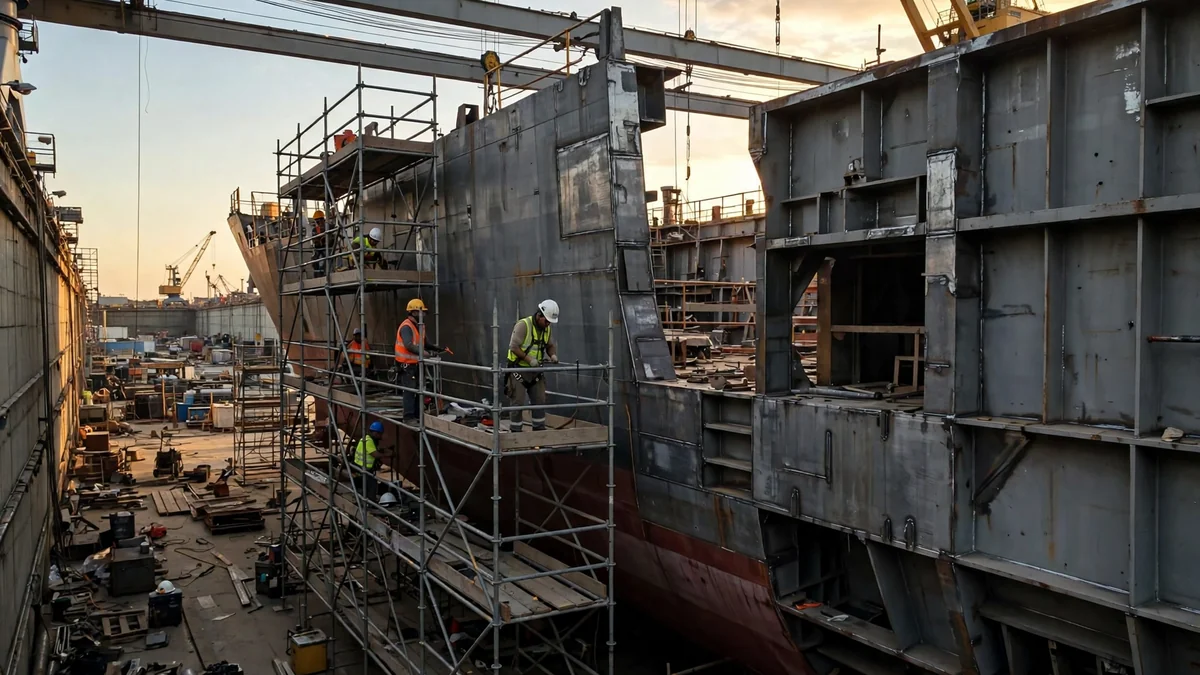
Step 1: The steel is cut and the blocks are built
Everything begins in the plate yard, where steel plates arrive by the shipload and are cut by computer-controlled plasma torches into the exact curved shapes the design calls for.
The plates are welded into blocks, sections of the ship as big as a house, each one built upside down or on its side so the welders can work comfortably.
Step 2: The keel is laid and the hull comes together
The keel is laid in the dry dock, a spine of steel running the full length of the ship, and the blocks are lifted in by giant gantry cranes and welded to it one at a time. The hull grows from the keel upwards and outwards, and surveyors check every joint with ultrasound, because a weld that looks fine on the surface can hide a flaw inside, and a flaw in a hull at sea is not something anyone wants to discover.
The double hull is one of the most important parts of the build. Two layers of steel with a gap between them run along the bottom and sides, so a grounding or a collision has to breach both layers before water reaches the cargo. When the last block is welded on, the hull is painted below the waterline with antifouling paint that stops barnacles from growing and slowing the ship down.
Step 3: The engine and propeller are installed
The engine of a cargo ship is a machine the size of a small building. A two-stroke diesel engine as tall as a three-storey house is lowered into the engine room in pieces and assembled in place, bolted to the ship’s structure on mountings that absorb its vibration. The propeller shaft runs from the engine through the stern in a sealed tube, and the propeller itself, a bronze casting several metres across, is fitted in the dry dock before the ship floats.
The engine is tested long before the ship leaves the yard. It is run on a test bed, then run again inside the ship, with the propeller turning in the dock water and engineers listening for vibration through the hull. The same care goes into the auxiliary engines that make electricity for the whole ship, because a cargo ship at sea is its own power station, and a blackout in the middle of an ocean is a serious matter.
Step 4: Cargo holds, cranes and deck gear are fitted
With the hull and engine in place, the working parts of the ship are fitted. The cargo holds are vast empty spaces with smooth steel walls, guide rails for shipping containers, and hatch covers that seal them against the sea.
On deck, the cranes are installed, each one able to lift a loaded container the weight of several cars, and the mooring winches, anchors and lifeboats are fitted and tested. Every crane is load-tested with weights before the ship is accepted, because a crane that fails at sea cannot be sent back to the workshop.
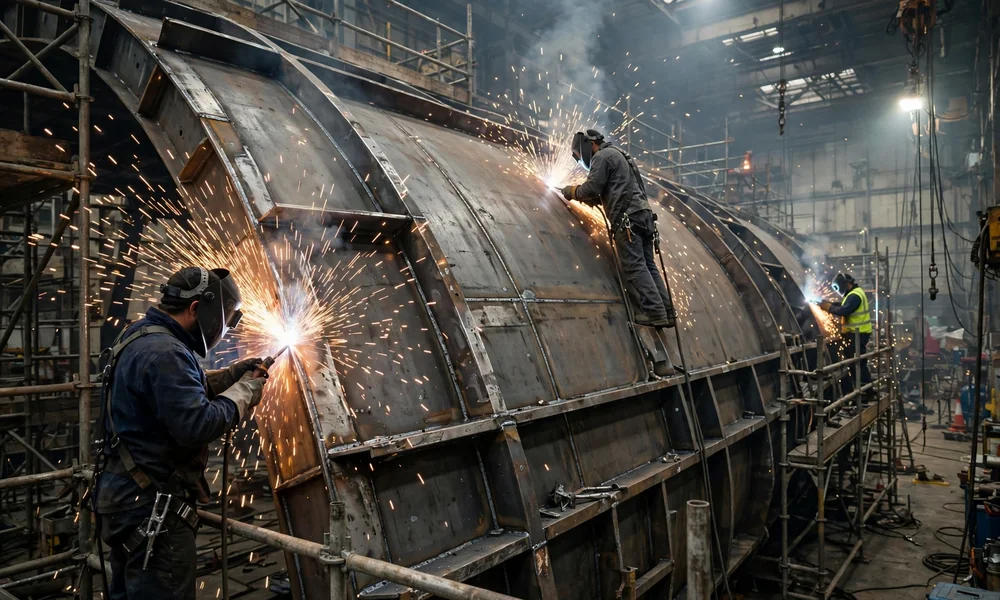
Step 5: The bridge, cabins and crew spaces are built
The accommodation block rises at the stern like a small hotel, and this is where the luxury in a luxury cargo ship lives. The bridge is fitted first, with radar, electronic charts, steering controls and radios, all duplicated so that no single failure can leave the ship blind.
Below the bridge, the crew cabins are finished to a standard far above an ordinary freighter, with proper beds, en-suite bathrooms, quiet insulation and air conditioning that works in the tropics. The same approach to a working vessel’s bridge and accommodation is described in the guide to how a luxury container ship works, where the ship is run like a floating town rather than a machine.
Step 6: Sea trials, delivery and the first cargo
Before delivery, the ship goes to sea for trials. The crew takes it out with the builders on board, running the engine at full power, testing the steering by turning hard at speed, stopping the ship from full ahead to a standstill, and checking that the anchors drop and hold.
The final inspection is done by the classification society, independent surveyors who check the hull, the machinery and the safety equipment against the rules, and only then is the ship handed over. The first cargo is loaded with the same care as a test, and the guide to how a luxury oil tanker works shows the same patient routine on a sister type of vessel, where the cargo itself is the hazard.
The spec sheet at a glance
| Specification | Typical luxury figure |
|---|---|
| Length | 200 to 300 metres |
| Beam | 32 to 45 metres |
| Deadweight | 50,000 to 120,000 tonnes of cargo |
| Containers | 5,000 to 10,000 twenty-foot units |
| Main engine | Two-stroke diesel, 30,000 to 60,000 horsepower |
| Service speed | 18 to 22 knots |
| Fuel capacity | 3,000 to 8,000 tonnes |
| Crew | 20 to 28 officers and crew |
| Hull | Double hull with ballast tanks |
| Cranes | Four to six deck cranes, 40 to 65 tonnes each |
| Range | 20,000 nautical miles between fuel stops |
| Build time | Twelve to twenty-four months in the yard |
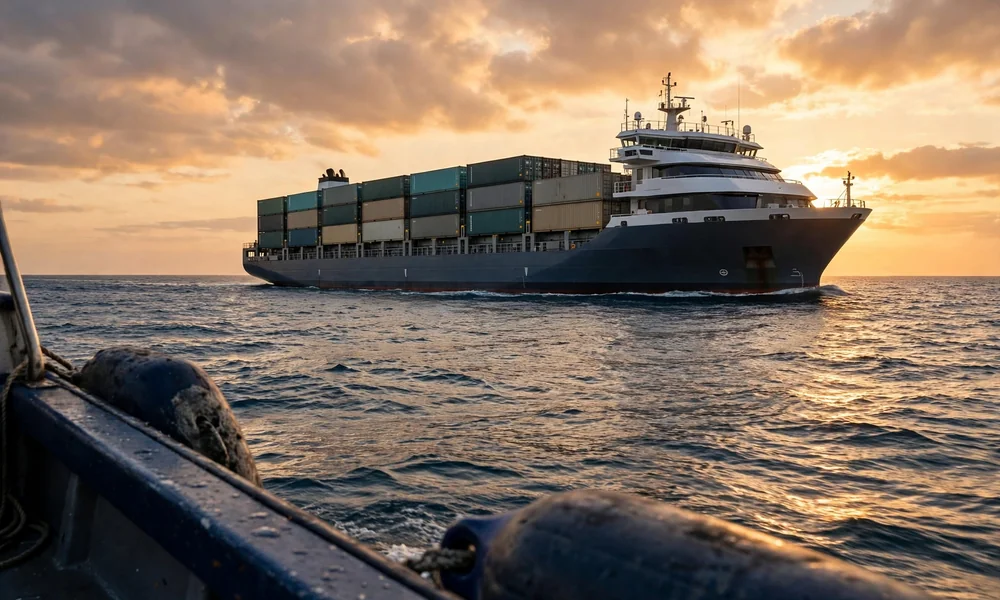
What it costs, and a rare fact
A luxury cargo ship costs an estimated $60 million to $150 million, depending on its size, its engine and how well its crew spaces are finished, with the largest container carriers costing far more. The full breakdown of where that money goes is laid out in the guide to why a luxury cargo ship is so expensive, from the steel alone to the years of design work before the first plate is cut.
Here is the rare fact the brochure never mentions. The biggest cargo ships are so large that they flex in heavy seas, the bow and the stern rising and falling by more than a metre relative to the middle, and the hull is designed to bend like a spring rather than resist it. Surveyors measure that flex on sea trials, and a ship that flexes smoothly is a ship that will last thirty years, while one that fights the sea will crack.