The boat leaves the dock without a sound, and that is what stops people on the pontoon. There is no rumble, no puff of exhaust, no vibration through the deck. The water just starts moving past the hull, and the only noise is the wind and the small wake behind the stern. He has heard the question before, and he knows it is coming at the fuel dock later: how far can it go?
Range is the least useful number on a luxury electric boat spec sheet when it is read alone, and also the one that tells you least about what the boat is like to own. A premium electric boat is judged by a different set of figures: how big its battery is, how efficiently the hull slips through the water, how fast it can charge, how much power the motor makes at cruising speed, and how much weight the battery adds.
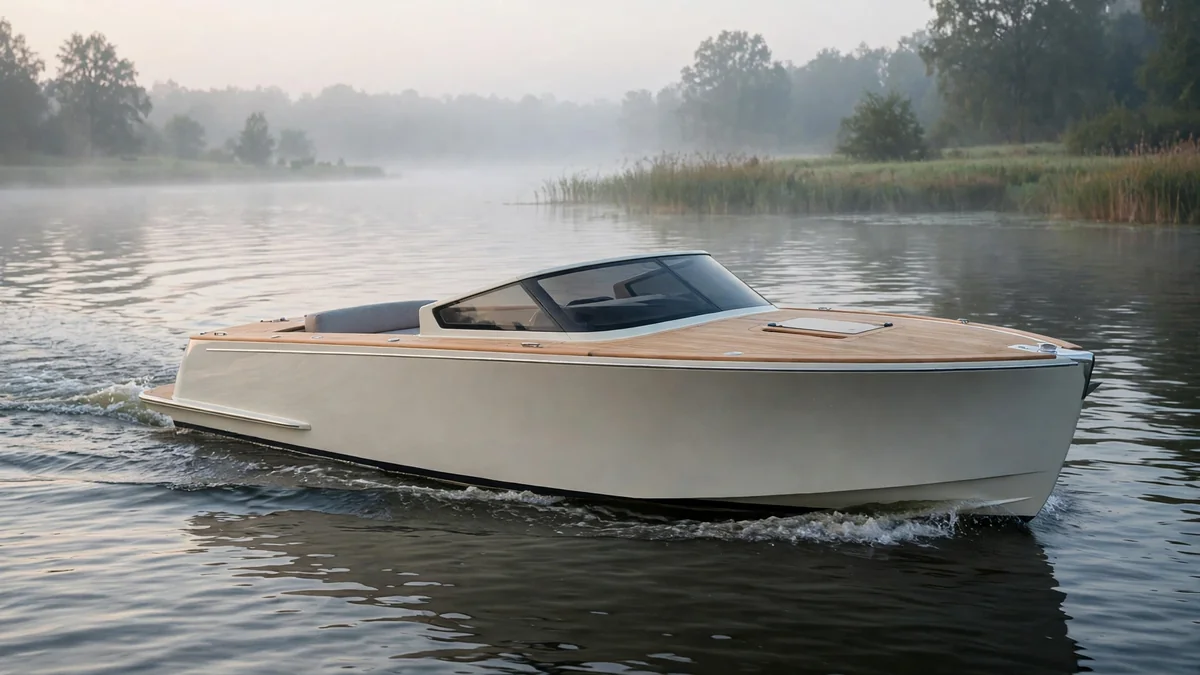
The spec sheet at a glance
| Specification | Typical luxury figure |
|---|---|
| Battery | 60 to 250 kilowatt-hours |
| Motor | 100 to 600 kilowatts, electric |
| Power | 135 to 800 horsepower equivalent |
| Cruising speed | 15 to 25 knots |
| Top speed | 25 to 40 knots |
| Range | 40 to 100 nautical miles |
| Charging | 22 kilowatt AC, up to 150 kilowatt DC |
| Charge time | 2 to 8 hours, depending on charger |
| Length | 7 to 12 metres |
| Weight | 2,500 to 6,000 kilograms |
| Passengers | 8 to 12 people |
| Hull | Planing or foiling, carbon composite |
| Draft | 0.5 to 1 metre |
| Noise | Near silent at cruising speed |
| Solar | Optional panels, 500 to 1,500 watts |
Battery and motor: why capacity matters more than power
A luxury electric boat battery is usually 60 to 250 kilowatt-hours, and its job is not to make the boat fast but to make it useful. The motor, at 100 to 600 kilowatts, is rarely the limiting factor: electric motors deliver full torque from a standstill, so the boat accelerates smoothly and quietly from the dock without the lag of a diesel warming up. What limits the day is the battery, and the honest way to read the sheet is to divide the battery capacity by the power the motor draws at cruising speed. A boat that cruises on 40 kilowatts with a 120 kilowatt-hour battery has three hours of running, while one that cruises on 80 kilowatts with the same battery has half that.
The battery is also where much of the luxury lives. The best packs are liquid cooled, which keeps them efficient in hot weather and protects them during fast charging, and they are placed low in the hull, which lowers the centre of gravity and steadies the boat. The way the whole boat is put together is covered in how a luxury electric boat is made, from the carbon hull moulding to the battery installation.
Hull and efficiency: the numbers that decide the range
The hull is the most honest figure on the sheet. A planing hull lifts out of the water at speed and needs a lot of power to stay there, while a foiling hull lifts the whole boat clear of the water on small wings, cutting drag dramatically and stretching the range. That is why two boats with the same battery can have very different ranges: the efficient hull may go twice as far at the same speed, simply because it wastes less energy pushing water aside. Weight matters too: a battery pack can add a tonne or more, and every extra kilogram costs range, which is why premium electric boats use carbon composite hulls to claw the weight back.
Range and charging: reading both figures together
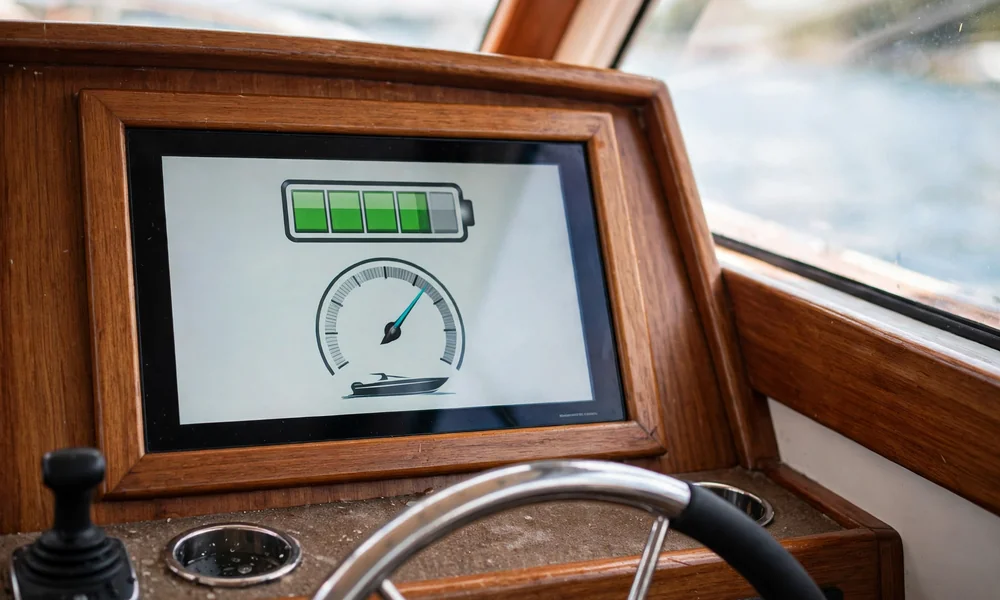
Range on a luxury electric boat is typically 40 to 100 nautical miles, and most honest manufacturers quote it at cruising speed rather than at full throttle. The more useful figure is the range at the speed you actually travel: a boat that manages 80 miles at 15 knots may manage only 30 miles at 30 knots, because water resistance rises steeply with speed. A buyer who plans long crossings should read the range curve, not the headline number, and should remember that wind, waves and a loaded boat all take their share.
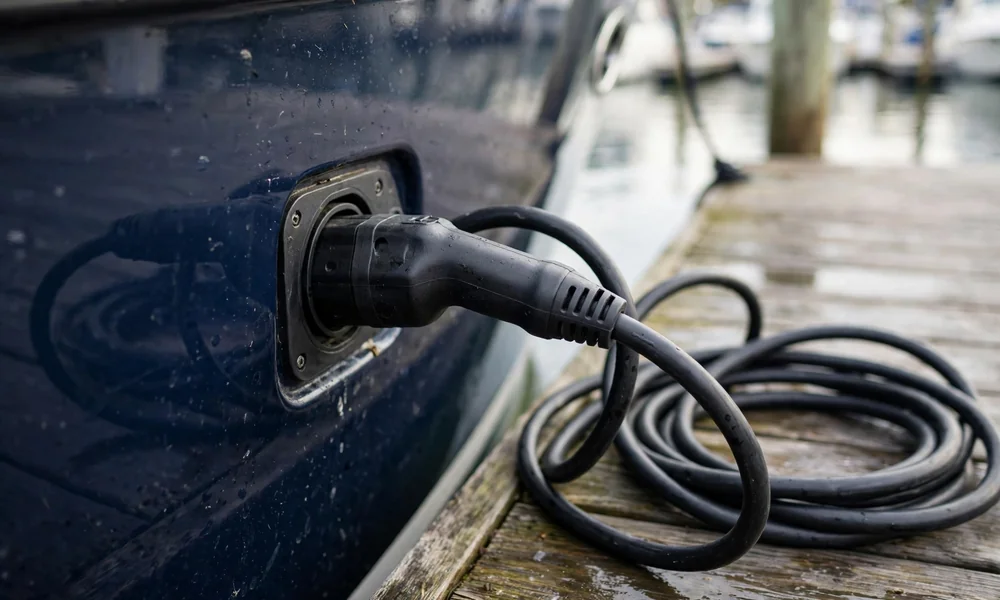
Charging is the practical figure, and it is the one new buyers most often misread. A 22 kilowatt AC charger fills a 120 kilowatt-hour battery in about five hours overnight, which suits a boat that returns to the same marina each evening, while a 150 kilowatt DC fast charger can add a useful charge over lunch. The smart way to read the sheet is to pair the battery size with the charging available at your home marina, not with the fastest charger in the brochure. The batteries themselves are a technology worth understanding, and the best place to start is the best electric boat batteries ranked, which compares the packs by capacity, cooling and weight.
Speed and silence: what electric power changes on the water
Top speed on a luxury electric boat is typically 25 to 40 knots, and the number hides the real change. An electric motor delivers its torque instantly, so the boat accelerates without the roar and vibration of a diesel, and it holds a steady speed with a precision that a throttle cable never could. At cruising speed the boat is near silent, which changes the whole experience: conversation stays easy, wildlife does not scatter, and the journey itself becomes part of the pleasure rather than something to endure.
Price: what the money buys
A luxury electric boat typically costs an estimated 150,000 to 500,000 dollars, with foiling flagships going well beyond that. The base hull underneath may be a fine boat on its own, and the difference is the battery: a large, liquid cooled pack is the single most expensive component, followed by the carbon hull and the fast charging system. Options add up fast: a bigger battery, a foiling package, a premium sound system and a full canvas set can add tens of thousands more to the price, and the marina charging installation at home is often an afterthought that costs more than buyers expect.
Running costs deserve a line on the sheet too. Electricity costs a fraction of diesel per mile, there is no oil to change and far fewer moving parts to service, and the motor itself needs almost no maintenance. The battery will eventually lose capacity, but a well cooled pack should last many seasons, and the savings on fuel and servicing offset a large share of the higher purchase price over the life of the boat. The speedboat world tells a different cost story, and the comparison is covered in the luxury speedboat spec sheet explained, where a supercharged petrol engine meets a much bigger fuel bill.
A rare fact worth knowing
Some luxury electric boats can feed power back to the marina, a feature almost no other boat has. When the boat is plugged in at the dock, its battery can act as a floating power store, running the marina lights or topping up another boat, and the owner can sell that power back when demand is high. It is a tiny line on the spec sheet, listed as a single feature, but for an owner whose boat sits unused most of the week, it turns a parked boat into a small power station that earns its keep.


