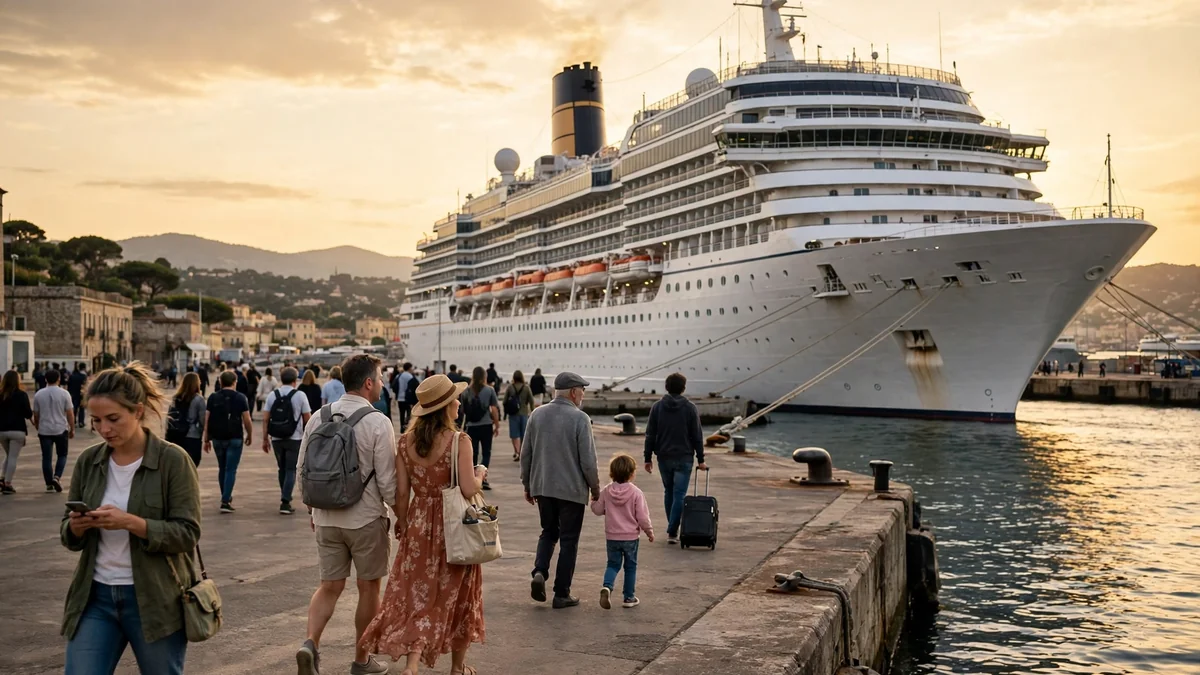
She stood on the quay at dawn, coffee in one hand, and watched the ship arrive. It did not so much dock as settle, a white cliff of balconies sliding slowly past the harbour wall, windows already lit, smoke curling from a single funnel. People on the promenade stopped to stare. A ship that size should have felt industrial, but from the quayside it looked like a small town that had learned to float.
A luxury ocean liner is not a cruise ship with fancier curtains. It is built for long crossings in open ocean, for days when the sea is rough and the nearest port is a thousand miles away. That job shapes every number on its spec sheet: the hull must be stronger, the engines must run for weeks without rest, and the ship must carry enough fuel, food and fresh water to look after thousands of people far from land. The spec sheet tells you whether a liner is genuinely built for the ocean, or whether it is a floating hotel that only sails in calm weather.
Reading a Luxury Ocean Liner Spec Sheet
Step 1: Gross tonnage is size, not weight
Gross tonnage is the first number most people notice, and it is the most misunderstood. It measures the enclosed volume of the ship, not how heavy it is, so a figure of 150,000 gross tons describes a vast interior rather than a vast weight. Luxury liners usually sit between 50,000 and 150,000 gross tons, and that volume is what buys the wide staircases, the high ceilings and the long promenade decks. A bigger number does not always mean a better ship, but it does mean more room per passenger.
Step 2: Length, beam and the shape of the hull
A liner is long and narrow compared with a resort-style cruise ship, often 250 to 350 metres long with a beam of 30 to 40 metres. That shape matters in rough seas, because a longer hull rides over waves more gently and a deeper draught keeps the ship steady. Look for a draught of around 8 to 10 metres, which shows the hull sits deep enough to resist rolling. The steel hull itself is thick and heavily stiffened, and the way that hull is built is explained in our guide to how a superyacht steel hull works, on a smaller scale.
Step 3: Passenger capacity and the space ratio
Capacity alone tells you little. The space ratio, gross tonnage divided by the number of passengers, tells you how crowded the ship will feel. A luxury liner aims for a ratio above 50, and the best ones reach 70 or more, which means wide corridors, uncrowded pools and dining rooms where you can always find a table. A ship carrying 2,000 passengers at 100,000 gross tons will feel far roomier than one carrying 4,000 at the same size, and the spec sheet makes that difference plain.
Step 4: Power, speed and the crossing time
Liners are built to keep a schedule across an ocean, so they need real speed. Most can cruise at 22 to 26 knots, with a top speed a little higher, and they hold that speed for days at a time. Power comes from diesel-electric systems or gas turbines producing 50,000 to 80,000 kilowatts, driving pods or shafts that can be steered from the bridge. A ship that can cross the Atlantic in six days rather than eight is not showing off; it is keeping its promise to arrive on time.
Step 5: Stabilisers and the comfort of the ride
Stabilisers are the hidden luxury on a liner. Large fins extend from the hull below the waterline and move constantly to cancel out rolling, and on a modern liner they can cut the roll by most of its range. The spec sheet should state the stabiliser type and whether the ship also uses anti-roll tanks. A liner without good stabilisers will still cross an ocean, but dinner will be an adventure. Comfort at sea is mostly engineering, and the propulsion behind it is covered in our guide to how a luxury cruise ship works.

Step 6: Cabins, decks and the layout of the ship
Count the decks and the cabin mix, not just the total number of rooms. A luxury liner usually has 12 to 16 passenger decks, with most cabins outside and a high share of balconies. Suites sit at the top and the front, where the motion is gentlest and the views are best, while inside cabins are smaller and cheaper. The layout also matters: public rooms spread across several decks keep crowds thin, while everything stacked on one deck feels like a shopping centre at Christmas.
Step 7: Fuel, water and life at sea for weeks
A liner must be self-sufficient, and the spec sheet shows how. Fuel tanks hold enough for a full crossing plus a reserve, often 5,000 tonnes or more, and desalination plants make hundreds of tonnes of fresh water every day. Cold stores hold weeks of food, and the ship carries its own laundry, hospital and workshops. When a liner leaves port, it carries a town with it, and the numbers for fuel, water and stores are what make that possible.
Luxury Ocean Liner Specs at a Glance
| Specification | Typical luxury figure | What it means |
|---|---|---|
| Gross tonnage | 50,000 to 150,000 | Enclosed volume, the room inside the ship |
| Length | 250 to 350 metres | Long hull rides waves more gently |
| Cruising speed | 22 to 26 knots | Crosses an ocean in about six days |
| Space ratio | 50 to 70 plus | Room per passenger, higher is roomier |
| Power | 50,000 to 80,000 kilowatts | Holds schedule speed for days at sea |
| Passenger decks | 12 to 16 | Most cabins outside, many with balconies |
What a Luxury Ocean Liner Costs
A new luxury ocean liner typically costs an estimated $800 million to $1.5 billion to build, depending on size and finish, and a suite on a transatlantic crossing can cost an estimated $5,000 to $20,000 per person. Running the ship costs an estimated $1 million or more per day at sea, covering fuel, crew, food and port fees. These are estimates, not quoted prices, and they vary widely with the line and the season. The scale is the point: a liner is one of the most expensive machines a company can build, and every crossing has to earn its keep.

A Rare Fact About Luxury Ocean Liners
The fastest ocean liners once raced for a prize called the Blue Riband, awarded for the quickest Atlantic crossing, and ships were built with speed as their headline feature. The record holder, the SS United States, crossed in just over three days in 1952 and still holds the record today, because no liner since has tried to beat it. Modern liners are built for comfort rather than outright speed, but their hulls still carry the long, sharp shape of those racing ships, and on a calm morning they can still surprise their passengers.
The best way to read a liner spec sheet is to imagine a week at sea in bad weather, not a sunny afternoon in port. If the hull is long, the stabilisers are large, the space ratio is high and the speed is honest, the ship will look after you when the ocean turns grey. A liner that only works in calm seas is not a liner at all, and the numbers will tell you that before you ever book. For the full picture of the class, see our guide to luxury cruise ship specs explained.


