Most people picture carbon fibre as bodywork: the black weave on a supercar’s bonnet, the visible grain under clear lacquer, the material that makes a car look expensive before it even moves. That picture is real, but it is only the beginning. In a modern supercar, carbon fibre is a working material, not a decoration, and it shows up in places you will never see — inside the chassis, behind the wheels, and deep in the engine bay — doing jobs that metal used to do, only lighter and better.
The reason is simple. Carbon fibre is stronger than steel for its weight, it does not rust, and it can be shaped into forms that would be impossible to stamp or cast in metal.
This list ranks the uses of carbon fibre in supercars by how much they matter, not by how visible they are.

1. The monocoque tub — the safety cell itself
The single most important use of carbon fibre in a supercar is the monocoque, the one-piece tub that forms the survival cell around the driver. Before carbon fibre, this structure was a welded metal frame; now it is a rigid shell, moulded and cured as a single piece, that is stiffer than steel and far lighter. In a crash, it holds its shape while the structures around it absorb the impact, which is exactly what a survival cell is supposed to do. The engineering behind these structures is extreme, and our guide to Formula 1 monocoque specs shows the same idea taken to the level of a racing car, where the tub must survive impacts no road car will ever face.
2. Body panels — lightness you can see
Body panels are the most familiar carbon fibre parts on a supercar: the bonnet, the doors, the roof, and the engine cover. Replacing steel or aluminium panels with carbon fibre saves weight high up in the car, which lowers the centre of gravity and sharpens the handling. Panels also let designers create shapes that metal cannot hold — deep curves, sharp edges, and air channels moulded straight into the part. The way a single car combines these panels with the rest of its structure is revealing, and our look at the Aston Martin Valkyrie’s materials shows carbon fibre bodywork working alongside titanium and aluminium in one of the most extreme road cars ever built.
3. Wheels — the weight that matters most
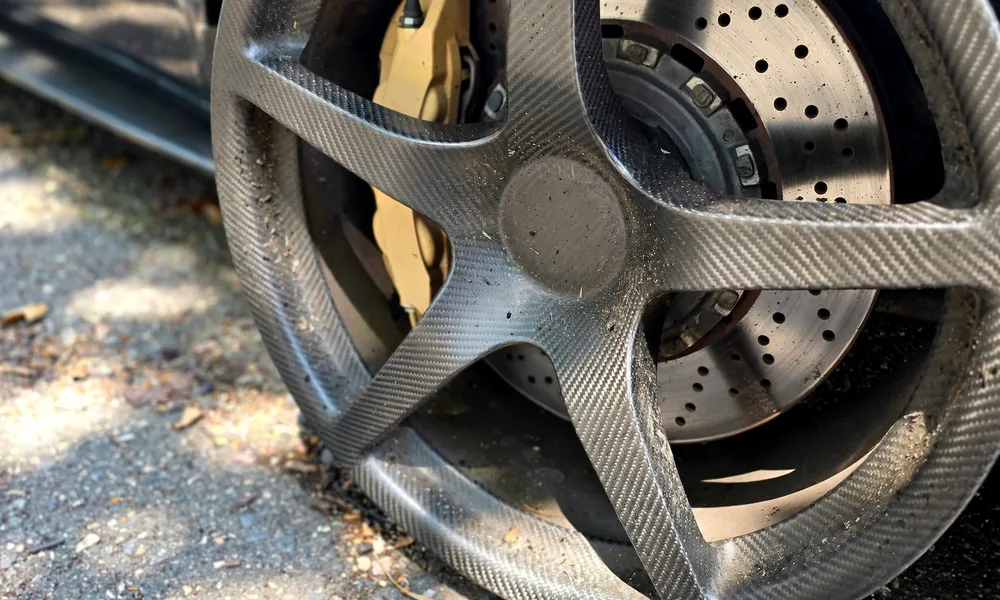
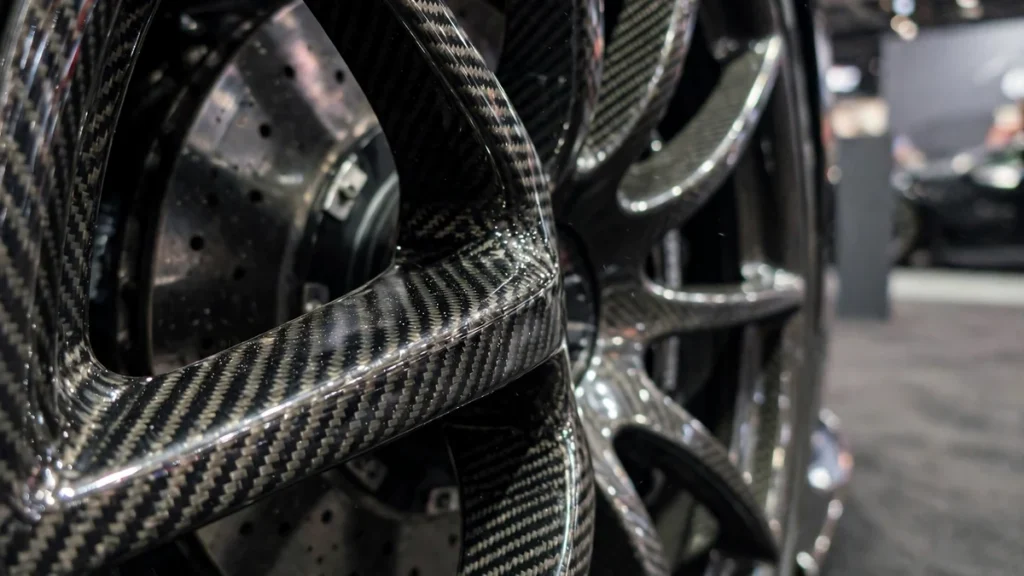
A carbon fibre wheel is one of the most effective upgrades on any supercar, because wheels are unsprung weight: weight the suspension has to control every time the car hits a bump. A carbon fibre wheel can be several kilograms lighter than an aluminium one, and that saving pays off twice — the suspension reacts faster, and the steering feels sharper, because there is less mass swinging around at the end of each corner. The trade-off is fragility: a hard kerb strike that would only dent an aluminium wheel can crack a carbon one, and replacement costs are enormous.
4. Brake discs — stopping power that never fades
Carbon-ceramic brake discs are carbon fibre reinforced with ceramic, and they are the reason a modern supercar can lap a circuit all day without its brakes fading. Steel brakes heat up under repeated hard stops and lose power; carbon-ceramic discs work better when they are hot, shrugging off temperatures that would warp a steel disc. The downside is cost — a full set can cost as much as a small car — and they need to be warm before they bite properly, which makes them less friendly on a cold morning commute.
5. Aerodynamic parts — wings, splitters, and diffusers
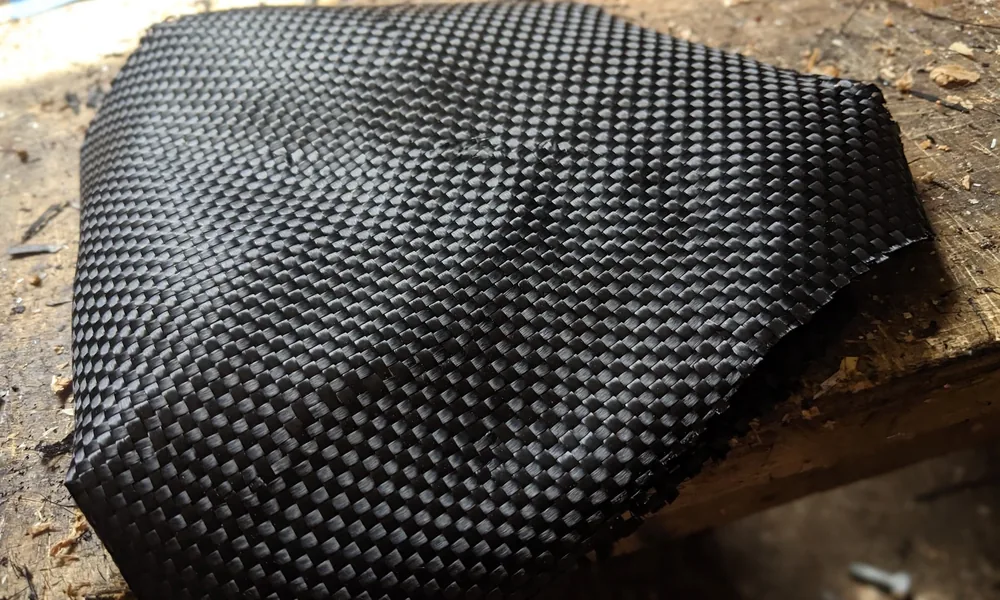
Wings, splitters, and diffusers are where carbon fibre’s ability to hold complex shapes pays off. An aerodynamic part has to be stiff enough not to bend at 300 kilometres per hour, light enough not to upset the car’s balance, and shaped precisely enough that the air does exactly what the engineers want. Carbon fibre does all three, and it can be moulded into the thin, hollow shapes that aero parts need — a wing that is strong but almost empty inside. The weave pattern matters here too, and our guide to carbon fibre weave specs explains how engineers choose the fibre direction for parts that are loaded in one direction more than any other.
6. Seats — the lightest way to hold a driver
A carbon fibre seat shell is a single moulded piece that replaces a steel frame, foam, and brackets, and it can save ten kilograms or more per seat while holding the driver more firmly in place. In a supercar, the seat is part of the driving experience: a rigid shell transmits exactly what the car is doing, and the weight saving sits low in the cabin, where it helps the centre of gravity. Some carbon seats are barely padded at all, which makes them an acquired taste on a long drive, but on a track they are unmatched.
7. Driveshafts and propshafts — spinning lighter
A carbon fibre driveshaft does a job most drivers never think about: it carries power from the engine to the wheels, spinning thousands of times a minute. A metal shaft is heavy and can vibrate at high speed; a carbon fibre shaft is lighter, stiffer, and damps vibration better, which means less noise, less wear on the rest of the drivetrain, and a faster response when the driver asks for power. It is a hidden part, buried under the car, and no one will ever compliment it at a car show.
8. Engine covers and intakes — heat, lightness, and theatre
The last entry is the one most owners actually see: the carbon fibre engine cover and intake system, sitting over the engine like a piece of jewellery. The job is real — the cover has to survive engine-bay heat, stay light, and channel air into the intake — but the theatre matters too. Intake trumpets and airboxes in carbon fibre also help the engine breathe, because the material does not soak up heat the way metal does, so the air reaching the engine stays cooler and denser. It is the least critical use on this list, and also the most visible. That combination is why it survives on almost every supercar built today.
The Takeaway
Carbon fibre earned its place in supercars not by looking expensive but by working harder than the materials it replaced. The monocoque protects the driver, the wheels sharpen the handling, the brakes survive the track, and the aero parts hold their shape at speeds where metal would bend. Body panels and engine covers are the parts people photograph, but the real story is underneath: a material that lets engineers build cars lighter, stiffer, and safer than anything that came before.