Catamarans were made for electric power. Two hulls give room for large battery banks and wide solar arrays, the stable platform suits a quiet drivetrain, and the kind of owner who buys a catamaran usually values silence and self-sufficiency over outright speed. In 2027 the electric catamaran market has moved from experiments to serious cruising boats, and the brands below are the ones doing it properly.
This ranking judges brands on their electric and hybrid catamarans only, not on their diesel range. A brand that bolts a small electric motor onto a diesel design scores lower than one that designs the whole boat around electric propulsion. Solar capacity, battery size, build quality, and after-sales support all count, because an electric catamaran is a system, not a motor.
How the brands are judged
Four things decide the order. Electric range under power comes first: how far the boat travels on battery alone, and how far it goes at a slow, efficient speed with solar helping. Solar capacity is second, since a catamaran that can recharge itself at anchor is a different proposition from one that must plug in. Build quality and seaworthiness are third. Support is last but not least: a catamaran is a big purchase, and the builder’s yard, warranty, and parts network matter for years after delivery.
A note on honesty: some builders describe a diesel generator as part of an electric system, and that is fair when the generator is a range extender rather than the main drive. But a boat that needs its generator running to cruise at normal speed is a hybrid, not an electric boat, and it is judged here as one. Readers who want the basics first should start with what a hybrid catamaran actually is.
1. Silent Yachts
Silent Yachts is the benchmark for solar-electric catamarans, and the Silent 55, 62, and 80 are the boats other builders measure themselves against. The concept is simple and radical: enough solar panels and battery capacity to cruise indefinitely at slow speeds without fuel, with a generator fitted only as a backup. Build quality has improved steadily across generations, the interiors are genuinely liveable, and the company has delivered more electric catamarans than any rival. No other brand offers the same combination of range, solar capacity, and proven deliveries.
2. Sunreef Yachts Eco
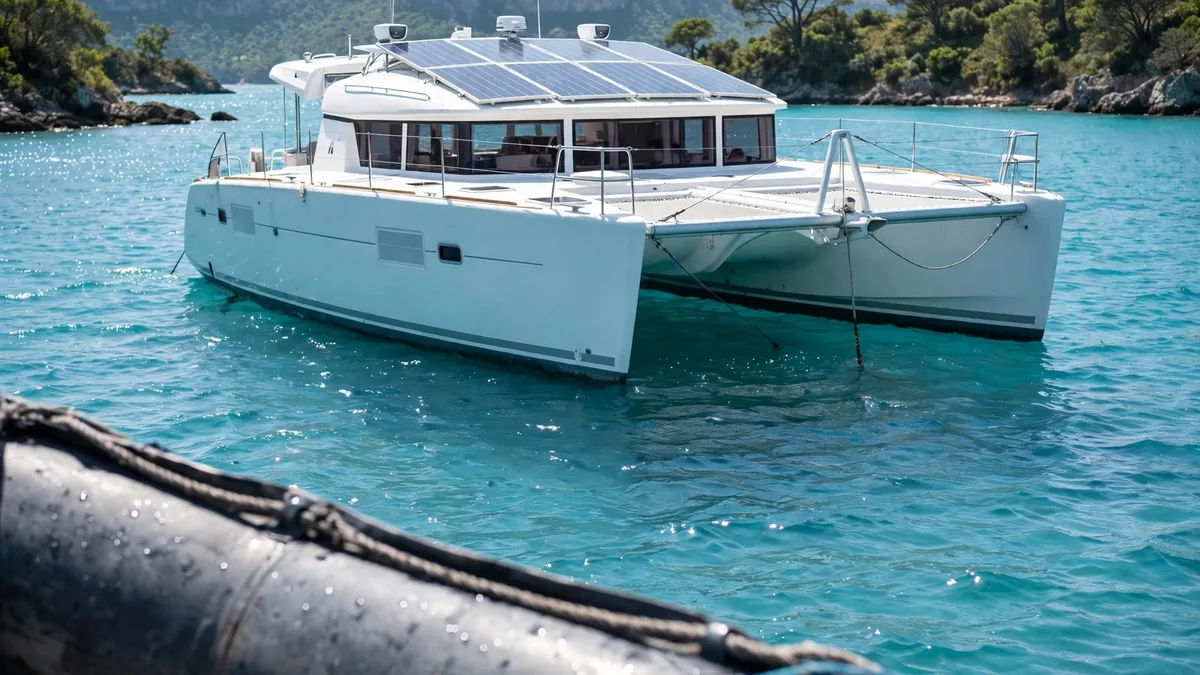
Sunreef’s Eco range takes the Polish builder’s luxury catamarans and rebuilds them around electric propulsion, solar panels integrated into the hull and superstructure, and large battery banks. The result is a boat that is both a serious luxury yacht and a serious electric cruiser, with models from 50 to 80 feet. The solar integration is the best in the business, with panels curved into the composite structure itself rather than bolted on top. Prices are high, but so is the engineering, and the yard’s scale means support is available worldwide.
3. Alva Yachts
German builder Alva Yachts makes the Ocean Eco 60 and 90, solar-electric catamarans designed for long-range cruising with minimal fuel use. The design is distinctive, with a wide beam, a raised saloon, and a huge solar roof that powers the boat at anchor and underway. Alva is a smaller yard than Sunreef, which means longer waits and a thinner service network, but the boats themselves are thoughtful, well built, and genuinely efficient. For owners who want to cross oceans on sunlight, Alva is the most focused choice after Silent.
4. Fountaine Pajot
Fountaine Pajot is one of the largest catamaran builders in the world, and its electric options bring scale to the segment. Models such as the Elba 45 and the Aura 51 are offered with electric propulsion and large solar arrays, backed by a dealer and service network that spans the globe. The electric versions are adaptations of proven diesel designs rather than clean-sheet electric boats, which costs some efficiency, but the trade-off is a known hull, a known yard, and parts available in almost any port. For charter operators and first-time buyers, that safety matters.
5. Lagoon
Lagoon, the world’s biggest catamaran builder, offers hybrid electric propulsion across much of its range, including the Lagoon 51 and the Seventy 8. The systems pair electric motors with a diesel generator, giving silent running in harbour and at anchor, with the generator available for longer passages. It is a pragmatic approach rather than a purist one, and the boats are built for volume production rather than cutting-edge efficiency. But Lagoon’s scale means competitive pricing, a huge owner community, and service almost anywhere a catamaran can sail.
6. HH Catamarans
HH Catamarans builds fast, carbon-fibre performance cruising cats, and its electric and hybrid options appeal to owners who want speed as well as silence. The carbon construction keeps weight low, which matters more for an electric boat than for a diesel one, and the sailing performance is among the best in this ranking. The electric systems are well integrated, but the focus is on performance cruising rather than solar self-sufficiency, and the price reflects the carbon build. For sailors who want to sail fast and motor quietly, HH is the pick.
7. Balance Catamarans
South African builder Balance Catamarans makes performance cruising cats with electric and hybrid drive options, built for owners who plan to cross oceans. The boats are strongly built, sensibly laid out, and designed by people who sail long distances themselves. The electric systems are proven but conservative, with smaller battery banks than the leaders here, and the yard is smaller than the European giants. Owners praise the build and the sailing, and the company supports its boats well, but the electric offering is less ambitious than the top of this list.
8. Seawind Catamarans
Australian builder Seawind offers hybrid electric options on its cruising catamarans, aimed at owners who want quiet harbour manoeuvring and silent nights at anchor rather than full electric cruising. The boats are well made, practical, and popular in the charter market, with a loyal following in Australia and the Pacific. The electric systems are modest compared with Silent or Sunreef, and the solar capacity is smaller, but the price is lower too. Seawind earns its place as the most accessible way into electric catamaran ownership.
What to check before buying
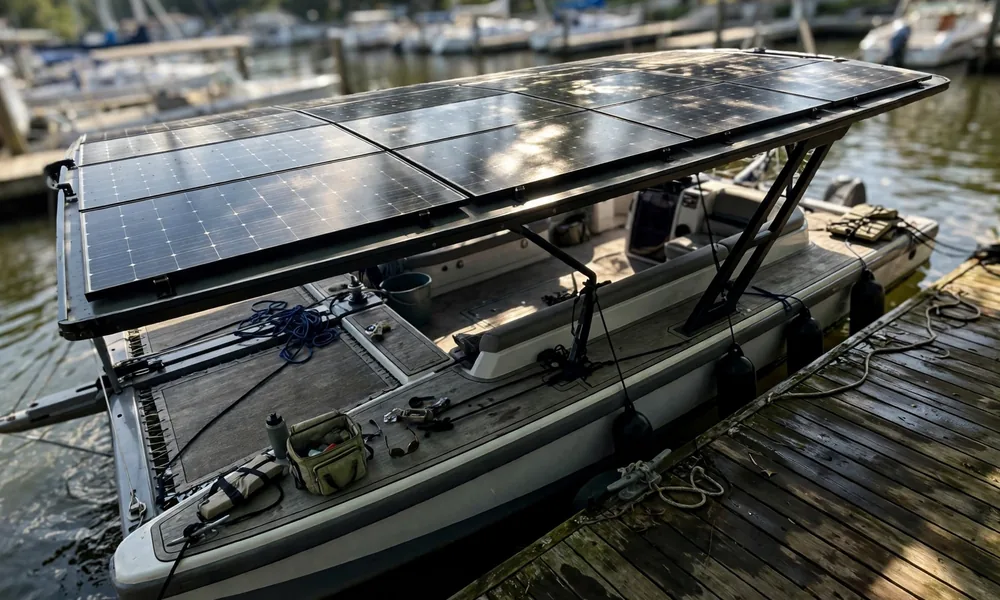
Three numbers matter more than any brochure claim. First, battery capacity in kilowatt-hours, which decides how far the boat motors on electricity alone. Second, solar capacity in kilowatts, which decides how fast the batteries refill at anchor. Third, the generator: its size, its fuel consumption, and whether it is a backup or a necessity. A boat with a small battery and a big generator is a diesel boat with electric manners, not an electric boat.
Also check the yard. An electric catamaran needs technicians who understand high-voltage systems, and not every marina has them. A builder with a global service network is worth a premium. The same logic applies across electric boating: the best electric boat brands ranked for 2027 win on support as much as on engineering.
Which electric catamaran brand should you choose
For a true solar-electric cruiser, Silent Yachts is still the answer. Sunreef Eco suits buyers who want luxury first and electric second, while Alva suits those who want to go furthest on sunlight alone. Fountaine Pajot and Lagoon are the safe, well-supported choices for charter and first-time ownership, and HH and Balance serve sailors who care about speed. Whichever you choose, compare the numbers honestly: the most expensive electric yachts of 2027 show what money buys at the top, but the right catamaran is the one whose range, solar, and support match the way you actually sail.