A hypercar that can reach motorway speed in a few seconds needs brakes to match, and the braking systems on the fastest road cars are among the most sophisticated parts on the whole machine. They have to stop a heavy, immensely powerful car again and again, from high speed, without fading, without drama, and without the driver ever having to think about them. When they work, nobody notices. When they do not, everything else about the car is irrelevant.
Modern hypercar braking is not a single system. It is a combination of friction brakes, regenerative braking in hybrid and electric cars, aerodynamics that press the car into the road, and electronics that balance all of it many times a second. This guide compares the best braking systems in use today, on the things that matter: stopping power, fade resistance, feel, weight, and how they work with the rest of the car.
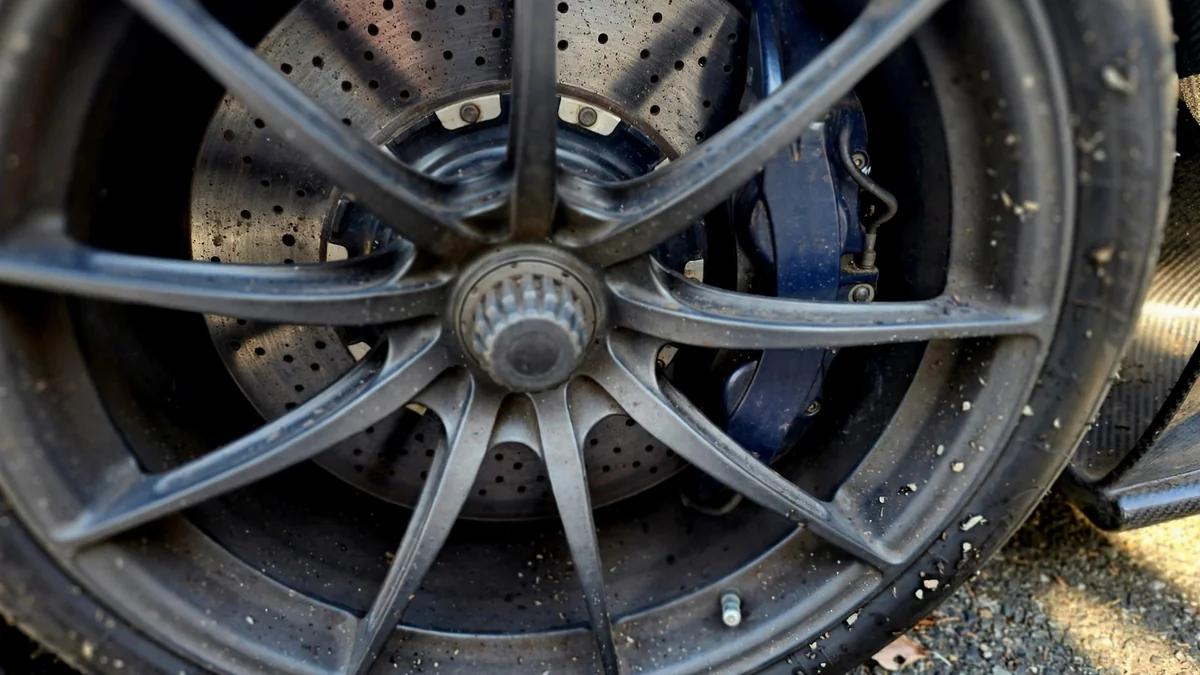
Carbon-ceramic discs: the standard
Carbon-ceramic discs are the standard fitment on almost every modern hypercar, and for good reason. They are made from carbon fibre reinforced with ceramic, and they behave very differently from the steel discs on an ordinary car. Steel brakes heat up under repeated hard stops and lose power — the condition drivers call fade. Carbon-ceramic discs work better when they are hot, shrugging off temperatures that would warp a steel disc, which means a hypercar can lap a circuit all day without its brakes going soft.
They are also lighter than steel discs, which reduces unsprung weight — the weight the suspension has to control — and that sharpens the handling. The downsides are cost, because a full set can cost as much as a small car, and cold performance, because carbon-ceramic brakes need to be warm before they bite properly. On a cold morning they can feel wooden until the first few stops bring them up to temperature. Our guide to how a hypercar brake disc works explains the materials and the ventilation that let these discs survive such extreme heat.
Regenerative braking: free stopping power
Hybrid and electric hypercars add a second braking system that costs almost nothing to use: regenerative braking. When the driver lifts off the accelerator or presses the brake, the electric motors run in reverse, acting as generators that slow the car while charging the battery. The energy that would have been wasted as heat in the friction brakes is recovered instead, which extends range and reduces wear on the discs and pads.
Regenerative braking also changes the driving feel. In many electric hypercars, lifting off the accelerator produces strong deceleration on its own, so the driver can control speed with one pedal for much of the time. The challenge for engineers is blending the two systems smoothly, so the driver feels one consistent brake pedal rather than a handoff between regeneration and friction. Done well, it is invisible. Our guide to how a regenerative braking system works explains how that blending is managed.
There is a limit, though. Regenerative braking cannot stop a car on its own at high speed, and it fades when the battery is full, because there is nowhere for the recovered energy to go. That is why every hybrid and electric hypercar still carries full friction brakes as well.
Steel discs: still relevant
Steel brakes sound old-fashioned next to carbon-ceramic, but they still have a place. They are far cheaper, they work well from cold, and they give excellent pedal feel, which is why some track-focused cars still offer them. Their weakness is fade: under repeated hard use, steel discs overheat, the pads lose friction, and stopping distances grow. For a road car that rarely sees a circuit, steel brakes are more than adequate. For a hypercar that will be driven hard, they are a compromise.
Aerodynamics and downforce
Brakes can only stop a car as fast as the tyres can grip the road, and grip depends on downforce. At high speed, a hypercar’s wings, diffusers and active aerodynamic parts press it into the road with a force far greater than its own weight, which lets the tyres work harder and the brakes stop the car in a shorter distance. Active aerodynamics go further: air brakes, spoilers that rise under braking, and flaps that change angle to add drag exactly when the driver needs it most.
This is why braking performance cannot be judged by the discs alone. A car with modest brakes and enormous downforce can out-brake a car with superb brakes and poor aerodynamics, because the tyres are the limiting factor. The best braking systems are designed as a package, with the aero, the suspension and the tyres all working together.

Electronics: ABS, stability and brake-by-wire
Behind the hardware sits the electronics. Anti-lock braking stops the wheels from locking under hard braking, which keeps the car steerable and shortens stopping distances on slippery surfaces. Stability control watches for slides and brakes individual wheels to keep the car on its intended path. In hybrid and electric hypercars, brake-by-wire systems replace the mechanical link between the pedal and the brakes with sensors and software, which lets the car blend regenerative and friction braking seamlessly.
The best systems are the ones the driver never notices. They intervene only when needed, they preserve the feel of the pedal, and they let a skilled driver explore the limits of the car without the electronics fighting them. Good brake feel is also a safety feature, because a driver who trusts the pedal brakes later and harder. The worst systems are grabby, inconsistent, and impossible to trust, which is why brake feel is one of the first things reviewers judge in any hypercar. The suspension plays a part too, because a car that dives heavily under braking unloads the rear tyres, and our guide to how hypercar active suspension works shows how the suspension keeps the car level so the brakes can work evenly.
Head-to-head
| System | Strengths | Weaknesses |
|---|---|---|
| Carbon-ceramic discs | No fade, light, durable on track | Expensive, poor when cold |
| Regenerative braking | Recovers energy, no wear | Cannot stop the car alone |
| Steel discs | Cheap, good cold feel | Fades under hard use |
| Active aerodynamics | Huge grip at speed | Only works at high speed |
| Brake-by-wire electronics | Seamless blending, precise control | Can feel artificial |
The verdict
The best hypercar braking system is not one component. It is carbon-ceramic discs for fade-free stopping, regenerative braking to recover energy and spare the discs, active aerodynamics to give the tyres the grip they need, and electronics that blend it all into a single pedal the driver can trust. No single system wins on its own, and a car that gets one part wrong will be let down by it, however good the rest may be.
If there is one part to prioritise, it is the carbon-ceramic discs, because they are the foundation everything else builds on. But the cars that stop best are the ones where the whole package was designed together, from the first sketch to the final lap.


