Steering is the one system a hypercar driver touches every second of every drive, and it is the one that most separates a great hypercar from a fast one. The best steering systems tell the driver what the front tyres are doing, weight up as the speed rises, and never filter out the information that matters. The worst ones are accurate but dead, and no amount of horsepower makes up for that.
This ranking judges hypercar steering on feel, precision, feedback and how well the system suits the car around it. The ten systems below range from milled-metal jewellery to racing yokes, and each one earns its place for a different reason.
The 10 Best Hypercar Steering Systems, Ranked
1. Pagani Utopia and Huayra
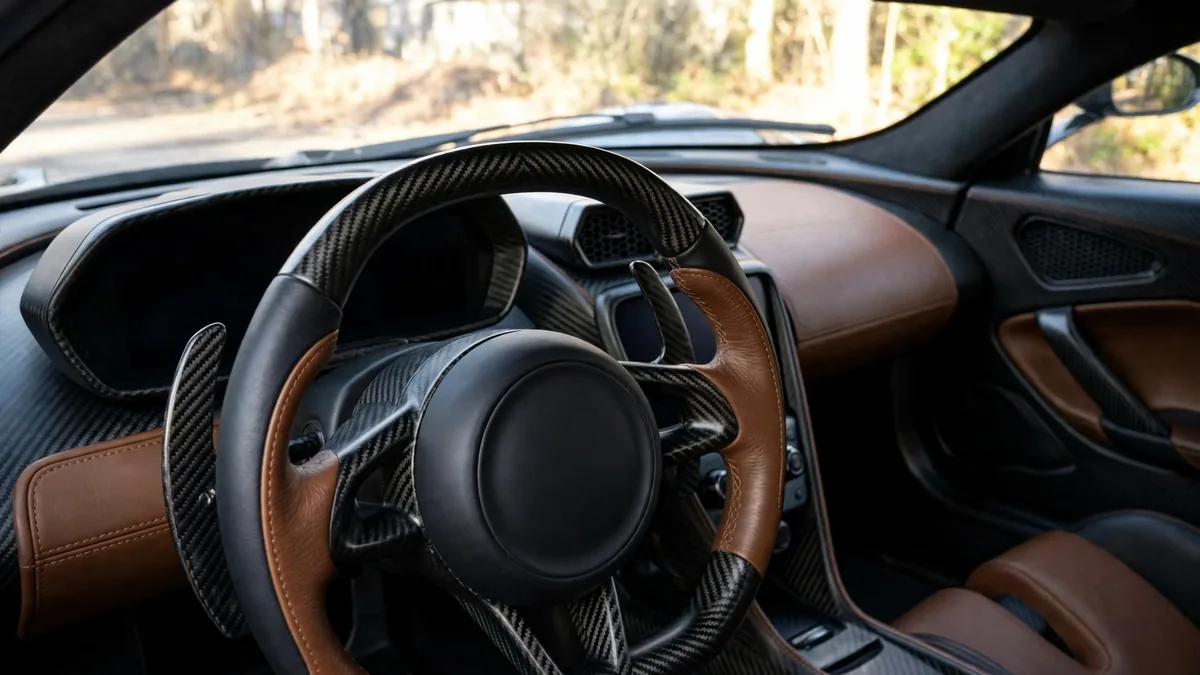
Pagani tops this list because no other maker treats the steering wheel as a piece of engineering art. The wheel itself is milled from solid aluminium, the controls are machined like watch parts, and the steering is weighted to feel mechanical and honest, with the road coming through the rim instead of being filtered out of it. It is not the fastest rack here, and it is not the most high-tech, but it is the most satisfying to hold. A Pagani steering wheel is the reason the car exists, and everything else is built around it.
2. Bugatti Tourbillon
The Bugatti Tourbillon has the cleverest steering wheel in production: a fixed-hub design in which the centre of the wheel, carrying the instruments, stays still while the rim turns around it. The idea is old, borrowed from the great Citroens, but Bugatti executes it to a standard nobody else has attempted, with the dials machined like a watchmaker’s work and the rim weighted to feel calm at any speed. It ranks second because it solves a real problem, keeping the instruments readable at full lock, with genuine ingenuity.
3. McLaren W1 and 750S
McLaren has kept hydraulic steering alive long after its rivals went fully electric, and the feel is the reason. A hydraulic rack talks to the driver in a way an electric one struggles to match: the weight builds naturally with speed, the road surface comes through the rim, and there is no dead spot around the straight ahead. It is the driver’s choice on this list, and the system every rival’s engineers privately measure themselves against.
4. Ferrari Daytona SP3 and 296
Ferrari’s steering is the fastest on this list, with a quick rack that makes the car feel like it turns the moment you think about it, and the steering wheel itself is the car’s control centre. The manettino dial, the indicators, the lights and the drive modes all live on the wheel, so the driver’s hands never leave it, and the SP3 pairs that with a cabin built around the racing position. It is a system, not a component.
5. Koenigsegg Jesko and CC850
Koenigsegg steering is built for a car that can top 300 miles per hour, and it feels like it. The rack is direct and precise, with almost no slack, and the wheel is light in the hand at parking speed and rock steady at the speeds the Jesko was built for. It ranks fifth because it is the most honest system here, and honesty at 300 miles per hour is worth more than cleverness.
6. Lamborghini Revuelto
The Lamborghini Revuelto pairs its steering with rear-wheel steering and a vehicle-dynamics system that coordinates the steering, the hybrid drive and the aerodynamics together. At low speed the rear wheels turn against the fronts to shrink the turning circle, and at high speed they turn with them to steady the car, which makes a big, heavy hypercar feel smaller than it is. It ranks sixth because the system is clever and effective, even if it filters out a little of the feel that the cars above it preserve.
7. Rimac Nevera
The Rimac Nevera’s steering is the most integrated with its powertrain on this list. Four electric motors give the car torque vectoring at each wheel, and the steering works with that system to point the car where the driver wants it, adjusting the power at each corner in real time. It ranks seventh because the technology is remarkable, even if the feel is more synthesised than the hydraulic systems above it. This is the future of steering, done properly.
8. Aston Martin Valkyrie
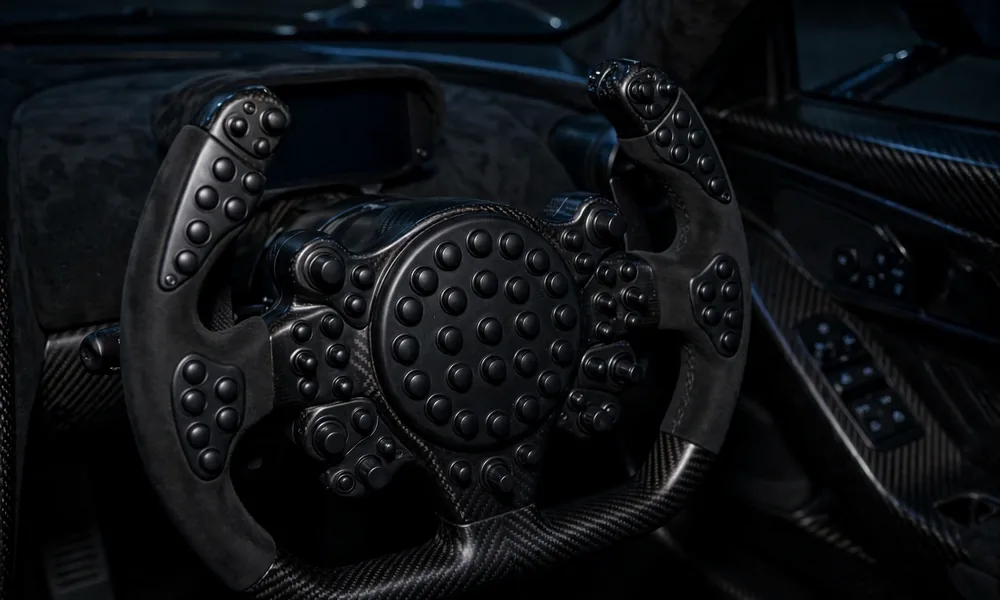
The Aston Martin Valkyrie has the most extreme steering on this list: a rectangular Formula 1 yoke covered in buttons, in a cabin where the driver sits reclined with their feet high, exactly as in a racing car. The steering is brutally direct, with almost no assistance and no filtering at all. It ranks eighth because it is magnificent and almost unusable on the road, which is exactly what a Valkyrie is.
9. Gordon Murray T.50
The Gordon Murray T.50 has the most analogue steering in this ranking, and the lightest. The car weighs under a tonne, the driver sits in the centre, and the steering is tuned to feel like the great sports cars of the past: light, precise, and full of information about the road. There are no drive modes to scroll through and no variable ratio to second-guess, just a rack, a wheel and a car that weighs almost nothing. But for pure feel, nothing here is better, and the T.50 is the car the engineers on this list would choose for themselves.
10. Porsche 918 Spyder
The Porsche 918 Spyder closes the ranking as the car that proved hybrid hypercars could steer properly. It ranks tenth because the cars above it have moved the game on, but the 918 wrote the rules they all follow.

What Separates the Best From the Rest
The steering systems at the top of this list share three things. First, the feel is honest: the weight in the wheel matches what the tyres are actually doing, and the road comes through instead of being filtered out. Second, the wheel itself is designed as a control centre, not a decoration. That is why the case for physical buttons in cars matters so much here: the best wheels put the important functions under the driver’s thumbs, on real switches, where they can be found without looking. Third, the system matches the car. A Pagani wheel could not belong in a Valkyrie, and a racing yoke would be absurd in a Bugatti.
The next step is already visible. Steer-by-wire systems, which replace the mechanical column with sensors and motors, are racing in series like the DTM and are being developed for the road by suppliers such as ZF, promising variable ratios and new cabin layouts. No production hypercar has yet gone fully steer-by-wire, and the cars on this list are the reason why: the mechanical connection is still the benchmark for feel. But the same integration that makes the Nevera and the Revuelto so effective points the way forward, and the best hypercar braking systems are moving the same way, with electronics and mechanics working as one system. The hypercar gearbox changed the same way, from a mechanical box to an integrated system, and steering is following the same path.


