Every superyacht is a compromise between weight, strength, and money, and the material of its hull and superstructure decides all three at once. For decades the choice was steel below and aluminium above, but carbon fibre has moved from racing masts and tenders into the structure of the yacht itself. The question owners and yards now ask is not whether carbon fibre works, but where it earns its price.
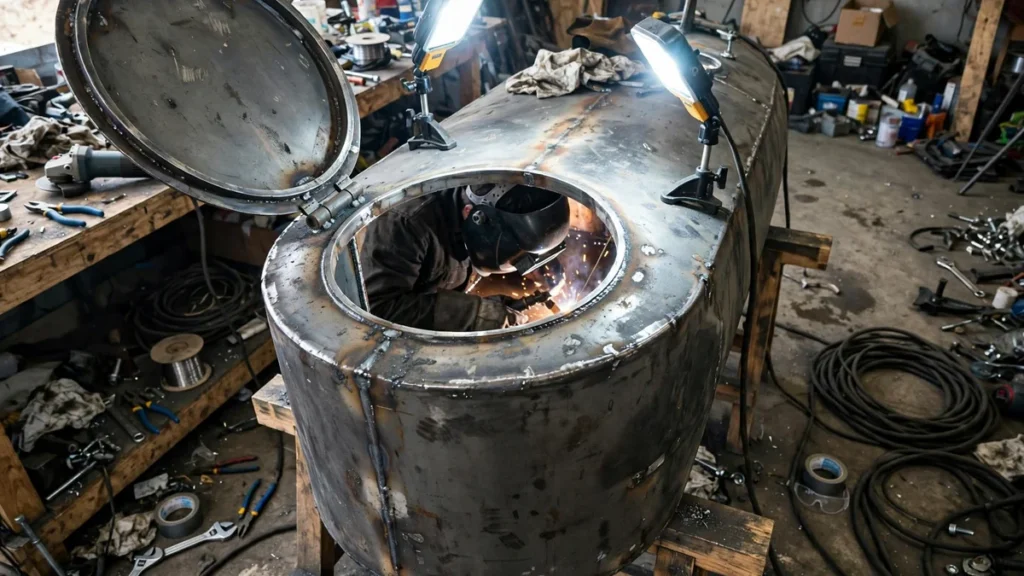
Carbon fibre and aluminium are not rivals in the simple sense of one being better. They are different tools: one is light, stiff, and expensive to build and repair, while the other is proven, workable, and forgiving. The right answer depends on the size of the yacht, how it will be used, and how much its owner is willing to pay for every kilogram saved. The way aluminium is actually shaped for a yacht is shown in how a superyacht aluminium superstructure is made, which is the best starting point for understanding the older material.
The Case for Carbon Fibre
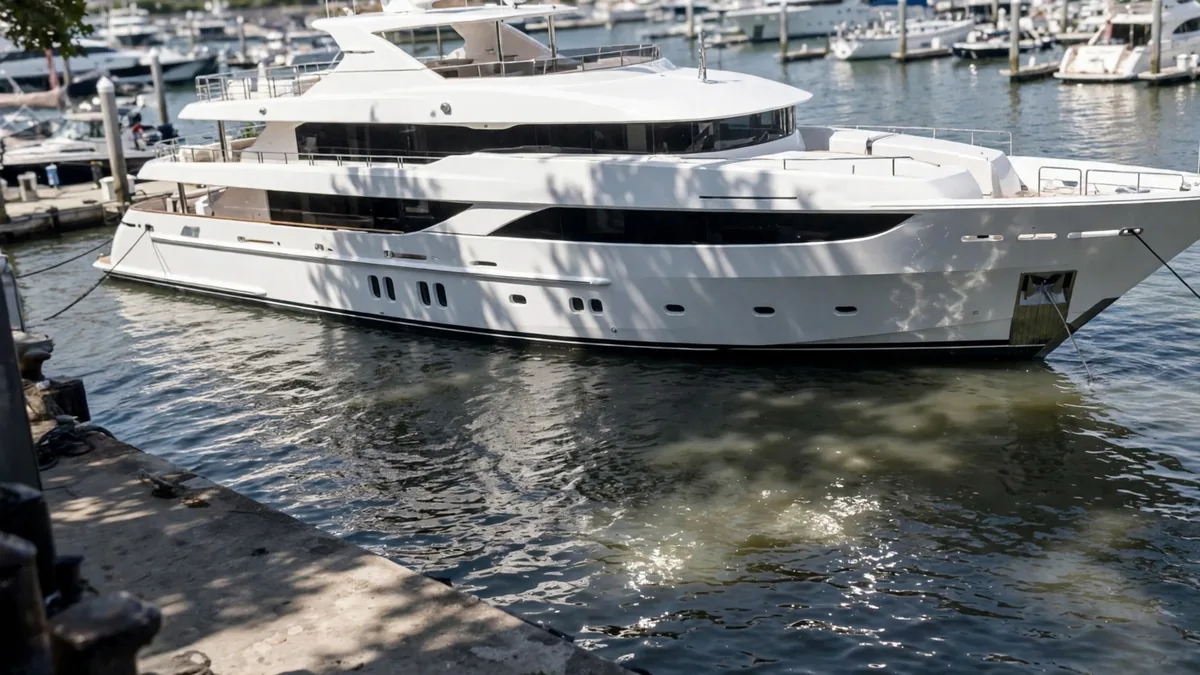
Carbon fibre’s appeal is simple: it is far lighter than aluminium for the same strength, and far stiffer. A carbon superstructure can cut hundreds of kilograms from the top of a yacht, and weight saved high up matters most, because it lowers the centre of gravity and improves stability. Carbon also allows shapes that metal cannot easily follow, with smooth, compound curves moulded in one piece rather than welded from plates.
The material has another advantage that matters at sea: it does not corrode. Salt water, which attacks aluminium and steel relentlessly, leaves carbon fibre untouched, so a carbon structure needs no anti-corrosion coating and suffers none of the pitting that plagues metal hulls. The trade-off is that carbon is brittle compared with metal. It does not dent and bend to absorb an impact; it can crack or delaminate, and damage is often invisible from the outside, which means inspection needs ultrasound or tapping tests rather than a glance.
The Case for Aluminium
Aluminium is the workhorse of modern yacht building, and its record is long. It is roughly a third the weight of steel, it welds well, it can be repaired in almost any shipyard in the world, and its behaviour in a fire and in a collision is well understood by every classification society. A dented aluminium plate can be cut out and a new one welded in, often in days, and the repair is as strong as the original. That repairability is worth real money over a yacht’s life, because yachts are bumped, scraped, and grounded more often than their owners admit.
Aluminium’s weakness is corrosion, and it is a serious one. Salt water attacks it, stray electrical currents eat it, and different metals touching it can set up galvanic corrosion that works unseen. Aluminium also fatigues: repeated flexing over years can weaken a structure, so designers must allow generous margins. Even so, for most yachts, aluminium remains the sensible default, and its proven record is the reason yards keep choosing it.
Weight and Performance
On weight, carbon fibre wins clearly. A carbon structure can be around a third lighter than the same structure in aluminium, and that saving is concentrated where it helps most. A lighter yacht accelerates faster, uses less fuel, and can carry more. On a sailing yacht, a carbon mast and rig transform performance, because weight aloft is the enemy of stability. Aluminium cannot match that, though it is still far lighter than steel, which is why it replaced steel above the waterline in the first place.
Strength and Safety
Strength is more complicated than weight. Carbon fibre is stronger than aluminium by weight, and stiffer too, but it fails suddenly, without the warning that bending metal gives. Aluminium dents and deforms, absorbing energy in a collision and showing the damage clearly. In a fire, aluminium softens at temperatures a carbon structure, protected by its resin, may survive longer, though the resin itself can burn. Neither material is simply safer; each demands different design, and both are accepted by the classification societies when engineered properly.
Building, Repair, and Cost
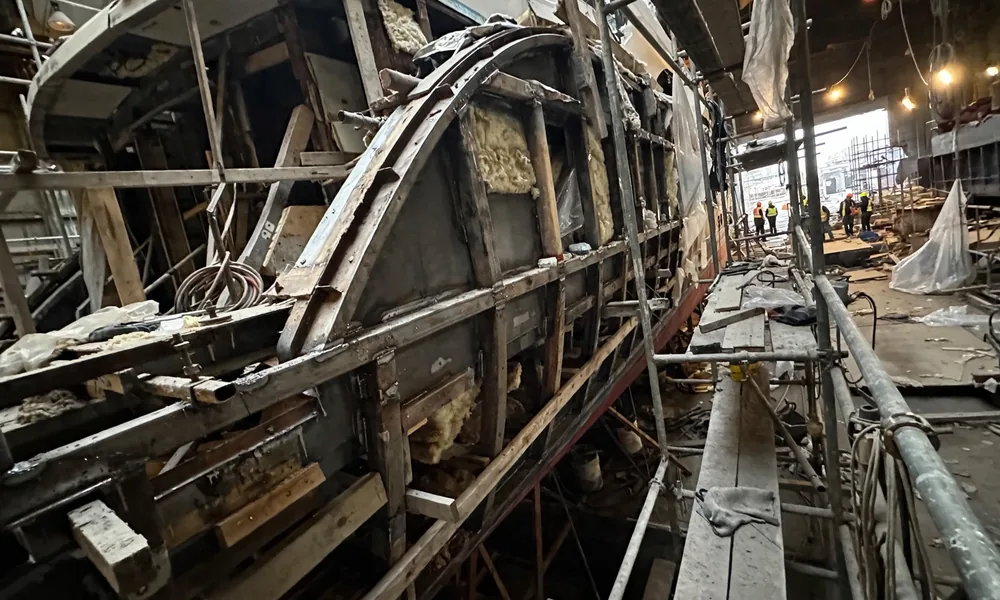
Building in carbon fibre is a different trade from building in aluminium. Carbon parts are laid up by hand or by machine, cured in an oven or autoclave, and finished to a standard that demands clean rooms and skilled labour. The tooling alone is expensive, and the process is slow. Aluminium, by contrast, is cut, bent, and welded by trades that exist in every major port. The result is that carbon costs several times more than aluminium for the same structure, and repairs are harder, slower, and more expensive, often needing the original builder rather than a local yard.
That cost gap is the real decision. A carbon superstructure on a large yacht can add millions to the build price, and the saving in fuel over the yacht’s life will rarely pay it back. Owners who choose carbon are buying performance, not economy: a faster yacht, a more stable yacht, or a sailing yacht that can carry a taller rig. For a yacht that spends its life cruising gently between marinas, the money is better spent elsewhere, and aluminium is the rational choice.
Looks, Noise, and Life Aboard
There are quieter differences too. Carbon fibre damps vibration differently from aluminium, and a well-built carbon structure can feel calmer under way, with less of the drumming that metal hulls transmit. Aluminium, meanwhile, is easier to fair and paint to a mirror finish, and its thermal behaviour is predictable, which matters for air conditioning and insulation. The deck, where owners spend most of their time, is its own question, and the best yacht deck materials, ranked shows how much of a yacht’s feel comes from surfaces rather than structure.
Sustainability and the Long View
Neither material is easy to recycle. Aluminium can be melted down and reused, and a large share of the aluminium in a yacht will be recycled at the end of its life, which is a genuine advantage. Carbon fibre is much harder: the fibres can be recovered, but the process is costly and the recovered fibre is weaker, so most carbon ends up as waste. Builders are working on resins that can be broken down, but the technology is young. On the other hand, a lighter carbon yacht burns less fuel across its life, which offsets some of that disadvantage, and the balance depends on how much the yacht is actually used.

The Verdict
Carbon fibre wins on performance and aluminium wins on practicality, and the verdict depends on the yacht. For a large sailing yacht, a performance motor yacht, or an owner who wants the lightest, stiffest structure money can buy, carbon fibre is the right choice, and its price is the cost of that ambition. For almost everything else, aluminium is the better material: proven, repairable, and far cheaper, with a record of decades at sea. The steel hull beneath both, meanwhile, remains the foundation of the biggest yachts, and how a superyacht steel hull works explains why that part of the equation has changed least of all.
The future is probably a mix rather than a winner. Yards already build aluminium hulls with carbon superstructures, and carbon masts on aluminium yachts, taking the best of each material where it matters most. That hybrid approach is the honest answer to the carbon versus aluminium question: use carbon where weight is everything, and aluminium where repairability and cost matter more. A superyacht is big enough to carry both, and the smartest ones do.